NEW FORENSIC EVIDENCE REVEALS THE TIMELINE OF PRESTON DAVEY’S FINAL WEEKS — AND THE STORY THAT COLLAPSED IN COURT
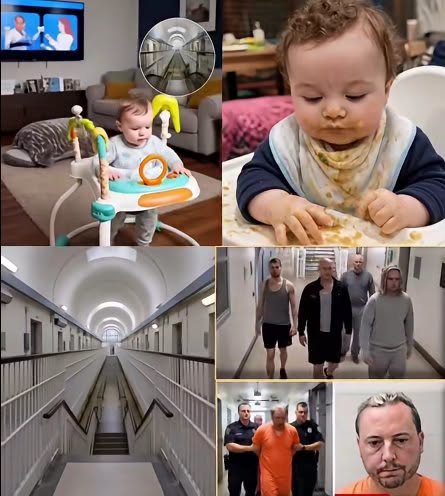
NEW FORENSIC EVIDENCE REVEALS THE TIMELINE OF PRESTON DAVEY’S FINAL WEEKS — AND THE STORY THAT COLLAPSED IN COURT
Medical findings, digital evidence and a pattern of injuries helped prosecutors reconstruct what happened to 13-month-old Preston Davey during the final months of his life.
The case surrounding Preston Davey has raised profound questions about what happened inside the home where the 13-month-old had been placed with a view to adoption.
Preston died on July 27, 2023, after being taken to Blackpool Victoria Hospital in cardiac arrest.
What initially appeared to be an accidental drowning was later challenged by forensic evidence.
A post-mortem examination determined that Preston died from acute upper-airway obstruction, rather than accidental drowning. Prosecutors said the finding meant he had either been smothered or suffered an obstruction caused by something placed in his mouth.
But the most disturbing evidence concerned what investigators discovered about the weeks and months before his death.
 THE INJURIES WERE NOT ONE ISOLATED EVENT
According to the Crown Prosecution Service, Preston had approximately 40 injuries when he died.
Among the findings was a healing fracture to his left arm that experts concluded was non-accidental.
He also had bruising involving multiple areas of his body.
For prosecutors, the significance was the pattern.
The evidence suggested that Preston had suffered repeated harm during the approximately four months he lived with Jamie Varley and John McGowan-Fazakerley—not simply one unexplained medical emergency on the day he died.
THE PHONE EVIDENCE ADDED ANOTHER LAYER
Investigators also examined material recovered from Varley’s phone.
The CPS said the device contained evidence of child cruelty and that experts established Varley had taken indecent photographs and videos of Preston.
Those digital records became part of the wider prosecution case, allowing investigators to examine events surrounding Preston’s care alongside the medical evidence.
 THE FINAL MEDICAL FINDING CHANGED EVERYTHING
On the afternoon of July 27, Preston was in Varley’s sole care for part of the day.
McGowan-Fazakerley later returned from work.
The two men eventually took Preston to hospital, where doctors attempted to revive him.
He was pronounced dead.
Varley’s account was that Preston had drowned accidentally in a bath.
But the post-mortem findings did not support that explanation.
Instead, forensic evidence established acute upper-airway obstruction as the cause of death.
That finding became a central part of the prosecution’s case against him.
A CRUCIAL CORRECTION TO THE VIRAL CLAIM
There is no reliable public evidence establishing that prosecutors revealed an exact “hour” when the fatal obstruction occurred, nor that digital logs proved all 40 injuries developed over a precisely documented number of weeks.
Those details should not be presented as established facts unless they are supported by the court record.
What is established is already disturbing enough: approximately 40 injuries, a non-accidental fracture, digital evidence recovered from a phone, and forensic findings that contradicted the original drowning explanation.
THE VERDICT
The evidence ultimately contributed to the convictions of both men.
Jamie Varley was convicted of murdering Preston, along with multiple child-cruelty and sexual offenses.
McGowan-Fazakerley was convicted of allowing the death of a child, child cruelty and sexual assault.
The case has since raised wider questions about how vulnerable children are monitored after entering prospective adoptive placements.
But one fact remains at the center of everything:
Preston was only 13 months old when his life ended.
The forensic evidence did not reveal one sensational “secret.” It revealed something far more consequential — a pattern of injuries and digital evidence that prosecutors used to reconstruct the final months of a child who could not tell investigators what had happened to him.
His medical records, forensic findings and digital evidence ultimately became his voice.