“I ONLY HAD THREE BEERS”: GRANDFATHER’S CLAIM COLLIDES WITH 0.16 BAC AFTER BOAT CRASH KI//ED TWO GRANDCHILDREN
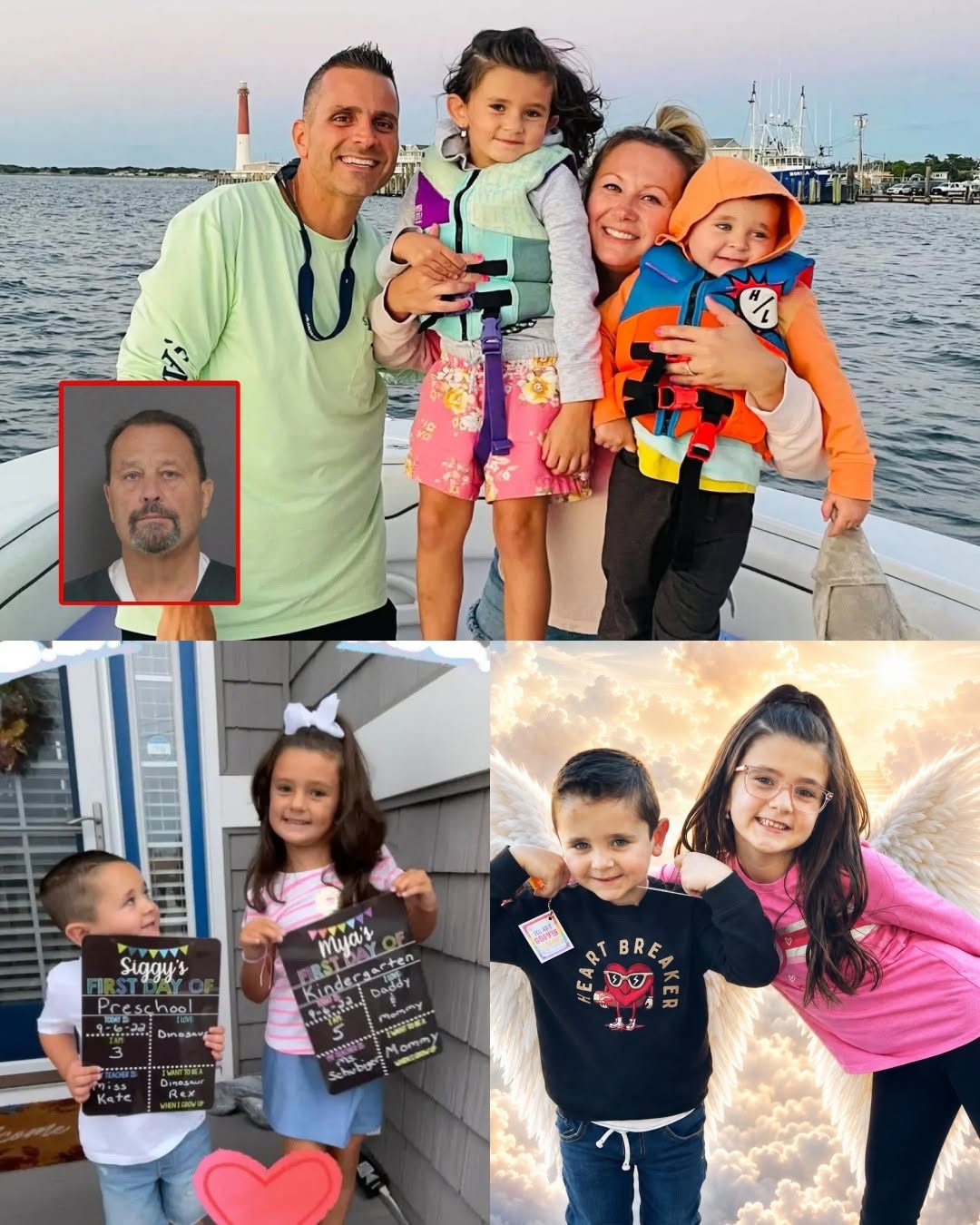
“I ONLY HAD THREE BEERS”: GRANDFATHER’S CLAIM COLLIDES WITH 0.16 BAC AFTER BOAT CRASH KILLED TWO GRANDCHILDREN
Court records and prosecutors have revealed a striking discrepancy between what Stephen Schneider told investigators about his drinking and the blood-alcohol result recorded after the Barnegat Bay crash that claimed the lives of his two grandchildren.
BERKELEY TOWNSHIP, N.J. — What began as a family evening on the water ended in an unimaginable tragedy.
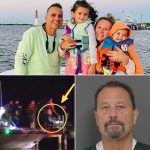
On July 19, 2026, 64-year-old Stephen Schneider was operating his boat on Barnegat Bay when the vessel struck a channel marker, sending his two grandchildren into the water.
The children — 9-year-old Mya Golabek and 7-year-old Sigmund “Siggy” Golabek — were wearing life jackets, but both were later found in the water and ultimately lost their lives. Schneider now faces two counts of reckless vessel homicide, along with charges alleging that he operated a vessel under the influence and operated it recklessly.
But as prosecutors presented the case in court, one detail emerged that has become a major point of contention:
Schneider told investigators he had consumed only three beers.
The subsequent toxicology result was 0.16% BAC — twice New Jersey’s legal limit of 0.08%.
 THE “THREE BEERS” ACCOUNT
According to court documents, Schneider told New Jersey State Police that he had consumed two Guinness beers and one Miller Lite over roughly two hours during dinner at a restaurant before taking the boat back across the bay.
The account became significant once investigators obtained the toxicology results.
Prosecutors say Schneider’s blood-alcohol level after the crash was approximately 0.16%.
At his detention hearing, Assistant Ocean County Prosecutor Kate Burke argued that the result showed Schneider had consumed enough alcohol to reach a level at which his ability to safely operate the vessel was seriously compromised.
 THE CRASH THAT CHANGED EVERYTHING
The families had been together for dinner before the children decided to ride back with their grandparents.
Schneider was operating a Tidewater Custom 280 when the boat struck a channel marker at approximately 9 p.m.
The impact threw Mya and Sigmund from the boat.
Both were wearing life jackets.
Schneider and his wife entered the water, found the children and began attempts to revive them before emergency crews took over.
The children were transported for medical treatment but could not be saved.
For the family, an ordinary summer evening had become a devastating loss.
WHAT THE TOXICOLOGY EVIDENCE SHOWED
The 0.16% BAC figure has become one of the most important pieces of evidence disclosed publicly in the case.
Prosecutors say it was approximately twice the legal limit for operating a vessel in New Jersey.
That result is especially significant because Schneider’s reported consumption was limited to three beers.
However, the discrepancy by itself does not establish exactly how much alcohol Schneider consumed.
BAC can be affected by factors including body size, food intake, the strength and timing of alcoholic drinks, metabolism and the precise interval between drinking and the blood draw.
Those issues could become important if the defense challenges the toxicology evidence at trial.
PROSECORS SAY IMPAIRMENT WAS MARKED
The prosecution has pointed not only to the numerical BAC result but also to conclusions regarding Schneider’s ability to operate safely.
Earlier reporting on the case said state police determined he was unfit to operate and that alcohol had markedly affected functions including alertness, judgment, perception, response time and coordination.
That evidence could become central to the prosecution’s argument that the crash was not simply an unavoidable boating accident.
THE DEFENSE HAS ALREADY RAISED QUESTIONS
Schneider’s attorney, William Cunningham, has challenged aspects of the prosecution’s case.
Among other issues, the defense has questioned whether the channel marker involved in the crash was properly illuminated.
The defense has also indicated that the BAC evidence could be examined further.
Those arguments have not been resolved, and Schneider has not been convicted.
He remains presumed innocent unless and until proven guilty in court.
THEN CAME AN UNEXPECTED REQUEST
Despite the charges and the prosecution’s arguments about the 0.16 BAC, Schneider was released pending trial.
What made the hearing particularly unusual was that the parents of Mya and Sigmund submitted letters asking the judge to release their children’s grandfather.
His attorney told the court that the parents continued to view Schneider as a loving father and grandfather despite the devastating circumstances.
A judge ultimately granted Schneider conditional release.
He was prohibited from operating a boat or motor vehicle while undergoing a court-ordered substance-abuse evaluation.
TWO CHILDREN WHO NEVER MADE IT HOME
The legal arguments now revolve around toxicology, impairment, the circumstances of the crash and Schneider’s decisions that night.
But behind every court document are two children.
Mya was 9.
Sigmund was 7.
They had spent the evening with their family and wanted to ride back with their grandparents.
Instead, the trip home ended when the boat struck the channel marker.
Their family is now left with the painful questions that will likely dominate the criminal case.
THE QUESTION AT THE CENTER OF THE CASE
What happened between Schneider’s statement — “three beers” — and the toxicology result showing 0.16% BAC?
Was the reported alcohol consumption incomplete?
Were there other factors involved?
How will the defense challenge the laboratory evidence?
And what role did alcohol impairment play in the decision to operate the boat that night?
Those questions will ultimately be tested in court.
For now, prosecutors have one number that is impossible to ignore:
0.16%
And a family has two children they will never bring home.
The next court date is scheduled for September 15.