LINDSAY CLANCY TRIAL: PSYCHOLOGIST REVEALS HER FIRST WORDS TO HUSBAND — THEN DEFENSE DEMANDS MISTRIAL
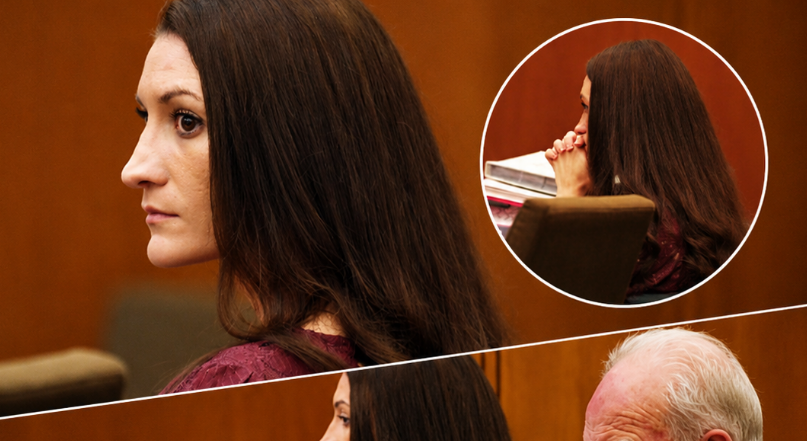
LINDSAY CLANCY TRIAL: PSYCHOLOGIST REVEALS HER FIRST WORDS TO HUSBAND — THEN DEFENSE DEMANDS MISTRIAL
A dramatic day in the Lindsay Clancy trial took an unexpected turn Monday as a forensic psychologist described what Clancy reportedly told her husband after the killings — before a courtroom dispute over religion prompted the defense to seek a mistrial.
Clancy, 36, is charged with the murders of her three children — 5-year-old Cora, 3-year-old Dawson and 8-month-old Callan — at the family’s Duxbury, Massachusetts, home in January 2023.
She has pleaded not guilty and does not dispute that she killed her children. Her defense argues that she was suffering from postpartum psychosis and was therefore not criminally responsible.
:max_bytes(150000):strip_icc():focal(745x298:747x300):format(webp)/Dr-Kirk-Heilbrun-and-Lindsay-Clancy-in-court--5f74f3d0c9a446188ef2da0b37afd462.jpg) WHAT DID CLANCY TELL HER HUSBAND?
WHAT DID CLANCY TELL HER HUSBAND?
Forensic psychologist Dr. Kirk Heilbrun, who evaluated Clancy in April 2026, testified about her mental state and the explanations she gave for what happened.
According to his testimony, Clancy described experiencing intrusive thoughts and claimed she heard a male voice instructing her to kill her children.
Heilbrun rejected the idea that the killings were driven by an acute psychotic episode. Instead, he diagnosed Clancy with Bipolar II disorder without manic episodes and described her actions as consistent with what he called “altruistic filicide” — the belief that a parent is acting to prevent their children from suffering.
That conclusion directly conflicts with the defense’s central theory.
Defense experts have argued that Clancy was experiencing psychosis and command hallucinations at the time, while prosecution experts have disputed that interpretation.
:max_bytes(150000):strip_icc():focal(812x430:814x432):format(webp)/patrick-clancy-court-072726-d9a967cc00a144f39fe641446cc4c43a.jpg) TWO EXPERTS — TWO VERY DIFFERENT EXPLANATIONS
TWO EXPERTS — TWO VERY DIFFERENT EXPLANATIONS
The competing psychiatric opinions have become one of the most important issues in the trial.
Prosecution psychiatrist Dr. Avram Mack previously testified that Clancy suffered a major depressive episode but showed no evidence of psychosis or delusions. He said she understood the difference between right and wrong.
Heilbrun reached a different diagnosis but likewise rejected Clancy’s claim that a hallucinated voice controlled her actions.
Meanwhile, defense expert Dr. Paul Zeizel testified that Clancy’s reported experiences were consistent with postpartum psychosis and that he did not believe she was fabricating her symptoms.
The jury is therefore being asked to weigh radically different interpretations of the same woman, the same medical history and the same tragic events.
THEN THE COURTROOM ERUPTED OVER RELIGION
The testimony took another dramatic turn when Clancy’s Catholic faith became part of the discussion.
Defense attorney Kevin Reddington objected and later asked Judge William Sullivan to declare a mistrial, arguing that references to religion were inappropriate and could prejudice the jury.
The judge rejected the mistrial request but instructed jurors that the religious references were not appropriate for their consideration and should be disregarded.
The courtroom controversy temporarily interrupted testimony and became one of the most striking moments of the trial’s fifth week.
A CASE NOW CENTERED ON ONE QUESTION
The facts surrounding the children’s deaths are not the central dispute.
The defense acknowledges Clancy killed her children.
The question is why she did it — and whether her mental state made her legally responsible for her actions.
Prosecutors argue she understood what she was doing and knew it was wrong.
The defense argues that severe postpartum mental illness, medication issues, sleep deprivation and psychosis fundamentally altered her ability to understand reality and control her actions.
As closing arguments approach, jurors will ultimately have to decide which version of Clancy’s mental state is supported by the evidence.
One mother. Three children. Conflicting psychiatric diagnoses — and a final legal question that could determine whether Lindsay Clancy spends the rest of her life in prison or is found not criminally responsible because of severe mental illness.
The trial is entering its final stage, with closing arguments expected soon.