LEGAL EXPERT SAYS LINDSAY CLANCY MAY ESCAPE A MURDER CONVICTION — BUT A JURY COULD STILL HANG
- ThanhThuy
- August 26, 2026
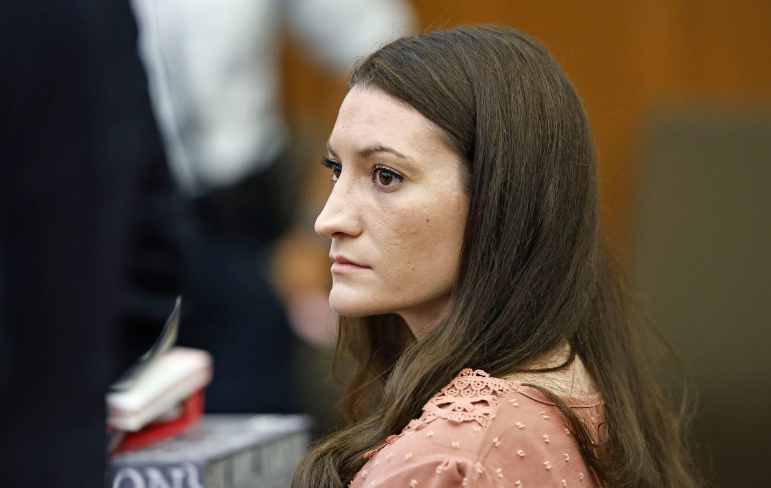
LEGAL EXPERT SAYS LINDSAY CLANCY MAY ESCAPE A MURDER CONVICTION — BUT A JURY COULD STILL HANG
PLYMOUTH, MASS. — As the Lindsay Clancy murder trial enters its final stage, a prominent legal analyst is predicting a dramatic outcome: an acquittal or a hung jury may be far more likely than a murder conviction.
Clancy, 36, is accused of killing her three children — 5-year-old Cora, 3-year-old Dawson and 8-month-old Callan — at the family’s Duxbury, Massachusetts, home in January 2023.
She has acknowledged that she killed the children but has pleaded not guilty by reason of lack of criminal responsibility, with her defense arguing that she was suffering from severe postpartum psychosis and the effects of psychiatric medications at the time.
Now, as closing arguments approach, former federal prosecutor and legal analyst Neama Rahmani tells PEOPLE that he sees a significant problem for prosecutors.
“I don’t think there is any real possibility” of a guilty verdict, Rahmani said.
His reasoning centers on one critical issue: the burden of proof under Massachusetts law.
:max_bytes(150000):strip_icc():focal(749x0:751x2):format(webp)/lindsay-clancy-court-080426-1-0d554916be174019b004a84bdf0e8019.jpg) THE PROSECUTION HAS TO PROVE SHE WAS NOT INSANE
THE PROSECUTION HAS TO PROVE SHE WAS NOT INSANE
Unlike a conventional murder case, Clancy’s trial has focused heavily on whether she was legally responsible for her actions.
Rahmani explained that Massachusetts places the burden on prosecutors to establish that Clancy was not legally insane beyond a reasonable doubt.
If jurors believe there is reasonable doubt about her criminal responsibility, they must acquit her, he said.
And according to Rahmani, the evidence presented during the trial gives jurors more than one reasonable way to interpret what happened.
That could become a major obstacle for prosecutors.
The state has argued that Clancy deliberately killed her children and understood what she was doing.
The defense has presented a dramatically different picture: a mother suffering from a profound psychiatric crisis whose ability to distinguish reality from delusion had deteriorated.
:max_bytes(150000):strip_icc():focal(749x0:751x2):format(webp)/lindsay-marie-clancy-012723-2-6be9d7dff9614fe98ad1395daa3bff5b.jpg) THE DEFENSE HAS PRESENTED A POWERFUL MENTAL-HEALTH CASE
THE DEFENSE HAS PRESENTED A POWERFUL MENTAL-HEALTH CASE
Throughout the trial, defense attorneys have highlighted Clancy’s documented mental-health struggles before the killings.
Evidence presented in court has included her psychiatric treatment, hospitalization and medications.
Defense experts have testified that she was experiencing postpartum psychosis, including hallucinations and delusional thinking.
One of the most important claims has been Clancy’s account that she heard a male voice ordering her to kill her children and then herself.
A defense psychologist testified that she later described the voice and other symptoms consistent with psychosis.
The defense argues that those symptoms were not simply depression or anxiety.
They say Clancy had become severely detached from reality.
THE SUICIDE ATTEMPT COULD ALSO MATTER
Rahmani pointed to another unusual aspect of the case: Clancy’s suicide attempt immediately after the killings.
After the children died, Clancy attempted to take her own life by cutting herself and jumping headfirst from a second-story window.
She survived but was left paralyzed from the waist down.
Rahmani said that a defendant attempting suicide through multiple methods is unusual in insanity cases and could support the defense’s argument about Clancy’s mental state.
The prosecution, however, has offered its own interpretation of her behavior.
Its experts have argued that Clancy suffered from significant mental-health problems but remained capable of making decisions and understanding her actions.
PROSECUTION EXPERTS HAVE ATTACKED HER ACCOUNT
The state’s rebuttal case has focused heavily on inconsistencies in Clancy’s statements and the circumstances surrounding the alleged hallucination.
Forensic psychiatrist Dr. Gregory Saathoff questioned the timing and nature of the male voice Clancy said she heard.
He testified that she described hearing the voice during the approximately 18-minute period in which the killings occurred — something he characterized as highly unusual.
Another prosecution expert, forensic psychologist Dr. Kirk Heilbrun, testified that Clancy had a mental disorder but was still legally responsible for her actions.
He said Clancy described feeling as though she was watching herself commit the killings and responding to the voice.
But he also acknowledged that she had to make choices about where and how to kill the children.
Those details are central to the prosecution’s argument that mental illness did not eliminate her criminal responsibility.
THE JURY COULD STILL BE DIVIDED
Even if Rahmani believes an outright conviction is unlikely, he does not necessarily expect a unanimous verdict for the defense.
He predicted that some jurors could feel an overwhelming need to hold Clancy accountable for the deaths of three children.
That could produce a hung jury if jurors cannot reach a unanimous decision.
Rahmani said he would expect such jurors to be a minority, rather than seeing the panel split evenly.
A hung jury would mean the case does not end with a definitive guilty or not-guilty verdict.
WHY MASSACHUSETTS LAW COULD BE CRUCIAL
Rahmani also described Massachusetts as having a relatively broad insanity standard.
He explained that there are two potential routes to establishing legal insanity in the state: a defendant may be considered legally insane if they did not understand right from wrong, or if they were unable to conform their conduct to the law.
The defense has sought to connect Clancy’s reported hallucinations and psychiatric deterioration to those standards.
The prosecution, meanwhile, has attempted to show that despite her mental-health problems, she retained enough awareness and control to be legally responsible.
That distinction could ultimately decide the case.
A TRIAL THAT HAS BECOME A NATIONAL DEBATE
The Clancy case has attracted national attention not only because three children died, but because it has raised difficult questions about postpartum mental illness, psychiatric treatment and criminal responsibility.
The defense has argued that Clancy was overmedicated and that her treatment contributed to her deterioration.
Prosecutors have challenged that narrative and focused on evidence they say demonstrates planning, awareness and deliberate action.
The courtroom battle has also spilled onto social media, where the case has generated intense speculation and conspiracy theories despite a lack of evidence supporting some of the claims circulating online.
THE FINAL DECISION IS NOW CLOSE
After weeks of testimony, the case is approaching its final stage.
Closing arguments are expected this week, after which jurors will begin considering the evidence and the complicated legal question at the heart of the trial.
The jury is not being asked simply whether Lindsay Clancy killed her children.
That fact is largely undisputed.
The question is far more difficult:
Was she legally responsible for what she did?
The prosecution says she was.
The defense says she was suffering from a catastrophic psychiatric illness that robbed her of criminal responsibility.
And one legal expert now believes that the prosecution may face an uphill battle convincing all jurors beyond a reasonable doubt.
A murder conviction is not guaranteed. An acquittal is possible. And a divided jury could leave one of the most closely watched criminal cases in Massachusetts without a clear verdict at all.