LEGAL EXPERT SAYS LINDSAY CLANCY COULD BE ACQUITTED — OR FACE A HUNG JURY — AS TRIAL NEARS VERDICT
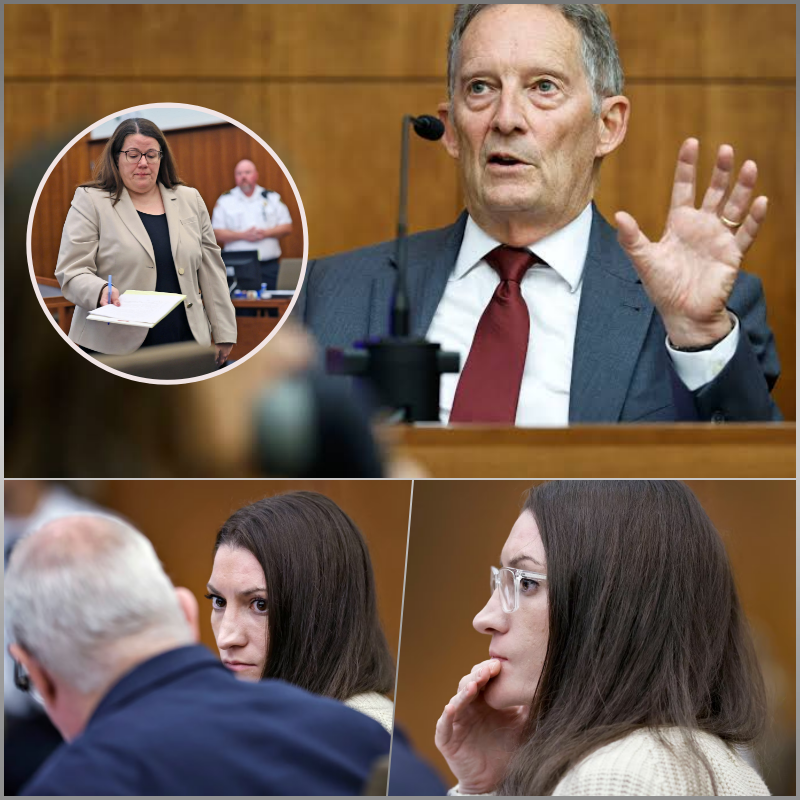
LEGAL EXPERT SAYS LINDSAY CLANCY COULD BE ACQUITTED — OR FACE A HUNG JURY — AS TRIAL NEARS VERDICT
PLYMOUTH, MASS. — The Lindsay Clancy trial is approaching its final stage, and one former federal prosecutor believes prosecutors may face a major obstacle in securing a murder conviction.
Clancy, 36, is charged with killing her three children — 5-year-old Cora, 3-year-old Dawson and 8-month-old Callan — at the family’s Duxbury, Massachusetts, home in January 2023.
The killings themselves are not the central dispute at trial.
Instead, jurors must determine whether Clancy was criminally responsible for what happened. Her defense argues that she was experiencing postpartum psychosis and the effects of psychiatric medication and therefore was not legally responsible. Prosecutors maintain that she intentionally and knowingly killed the children.
:max_bytes(150000):strip_icc():focal(749x0:751x2):format(webp)/lindsay-marie-clancy-012723-2-6be9d7dff9614fe98ad1395daa3bff5b.jpg) A LEGAL EXPERT SEES TWO POSSIBLE OUTCOMES
A LEGAL EXPERT SEES TWO POSSIBLE OUTCOMES
Neama Rahmani, a former federal prosecutor and legal analyst who is not involved in the case, gave PEOPLE a striking assessment as the trial nears its conclusion.
Rahmani said he does not believe there is a realistic possibility that Massachusetts prosecutors will obtain a guilty verdict.
His reasoning centers on the state’s burden of proof.
Under Massachusetts law, prosecutors must establish criminal responsibility beyond a reasonable doubt. Because Clancy has raised an insanity defense, the Commonwealth must prove that she was not legally insane at the time of the killings.
That means jurors are not simply deciding whether Clancy committed the acts.
They are being asked to determine whether she was legally responsible for them.
THE DEFENSE HAS BUILT ITS CASE AROUND PSYCHOSIS
Clancy’s attorneys have argued that their client was experiencing a profound psychiatric crisis after giving birth.
The defense has pointed to symptoms they say were consistent with postpartum psychosis, including hallucinations and delusional thinking.
Clancy reportedly told mental-health professionals that she heard a male voice instructing her to kill her children and then herself.
Her attorneys have also argued that medications and treatment contributed to her deteriorating mental state.
The prosecution, however, has challenged that explanation and presented experts who questioned whether Clancy’s reported symptoms actually prevented her from understanding or controlling her actions.
PROSECUTORS HAVE PRESENTED A VERY DIFFERENT PICTURE
The Commonwealth’s case has focused on evidence suggesting Clancy retained awareness and made deliberate decisions during the events of January 2023.
Prosecutors have argued that she intentionally created an opportunity to be alone with the children before killing them.
Their experts have acknowledged that Clancy suffered from a significant mental disorder but have argued that mental illness did not make her legally irresponsible.
Forensic psychologist Dr. Kirk Heilbrun, for example, testified that Clancy experienced a mental defect but remained legally responsible. He also described her as experiencing dissociation while acknowledging that she made choices during the killings.
That distinction could become decisive.
:max_bytes(150000):strip_icc():focal(749x0:751x2):format(webp)/lindsay-clancy-court-080426-1-0d554916be174019b004a84bdf0e8019.jpg) THE “18-MINUTE VOICE” HAS BECOME A MAJOR ISSUE
THE “18-MINUTE VOICE” HAS BECOME A MAJOR ISSUE
One of the prosecution’s recent witnesses, forensic psychiatrist Dr. Gregory Saathoff, questioned Clancy’s account of a male voice commanding her to kill.
According to trial reporting, Clancy described the voice as persistent and external during the roughly 18-minute period in which the killings occurred.
Saathoff questioned aspects of that account and pointed to inconsistencies in Clancy’s descriptions of her mental state.
The prosecution has also highlighted other discrepancies in her statements, including details surrounding medication and her claim that she used lemonade to take medication when investigators reportedly found no lemonade in the house.
The defense has disputed the prosecution’s interpretation of those details.
THE JURY COULD END UP DIVIDED
Rahmani’s second possible outcome is a hung jury.
Even if some jurors believe Clancy was legally insane, others could conclude that she understood what she was doing and should be held responsible.
If jurors cannot reach a unanimous decision, the result could be a hung jury rather than either a conviction or acquittal.
That possibility becomes particularly significant because the case involves emotionally devastating facts while also presenting a complicated psychiatric and legal question.
THIS CASE IS NOT SIMPLY ABOUT WHETHER SHE KILLED HER CHILDREN
One of the most important distinctions in the trial is that the defense is not primarily arguing that the children did not die at Clancy’s hands.
The central argument is why she did it — and whether the law considers her responsible for those actions.
That makes the psychiatric evidence crucial.
Jurors have heard competing interpretations of the same events:
The prosecution’s theory: Clancy intentionally carried out the killings and understood what she was doing.
The defense’s theory: Clancy was experiencing a severe psychiatric episode that fundamentally impaired her ability to understand reality and made her legally not responsible.
The jury must ultimately decide which interpretation is supported by the evidence beyond a reasonable doubt.
THE CASE HAS ALSO SPARKED A MASSIVE ONLINE DEBATE
The trial has generated extraordinary attention online, with TikTok creators, amateur investigators and other social-media users dissecting testimony and evidence.
Some online theories have even attempted to implicate Clancy’s husband, Patrick Clancy, despite no legal evidence supporting those claims.
Legal experts have warned that such speculation can distract from the actual issues the jury must consider.
The case has therefore become more than a courtroom battle.
It has also become a national conversation about postpartum mental illness, criminal responsibility and how social media can reshape public perception of a criminal trial.
CLOSING ARGUMENTS ARE NOW APPROACHING
After weeks of testimony, the trial is nearing its conclusion.
Recent proceedings have focused on prosecution rebuttal witnesses, with closing arguments expected later this week.
Then the jury will face one of the most difficult questions in the case:
Was Lindsay Clancy legally responsible for the deaths of her three children?
A guilty verdict would mean jurors rejected the insanity defense beyond a reasonable doubt.
An acquittal would mean prosecutors failed to meet that burden.
And if jurors cannot agree, the case could end in a hung jury.
For the families involved, there is no outcome that can undo the tragedy of January 2023.
But after more than three years of investigation, testimony and courtroom battles, the final decision is now moving closer.
The question before the jury is not simply what happened. It is whether Lindsay Clancy was legally responsible for what happened — and that distinction could determine everything.