Jim Carrey and Cameron Diaz Turned The Mask Into a $350 Million Smash — Then a 12-Year-Old Won a Part in a Sequel That Vanished
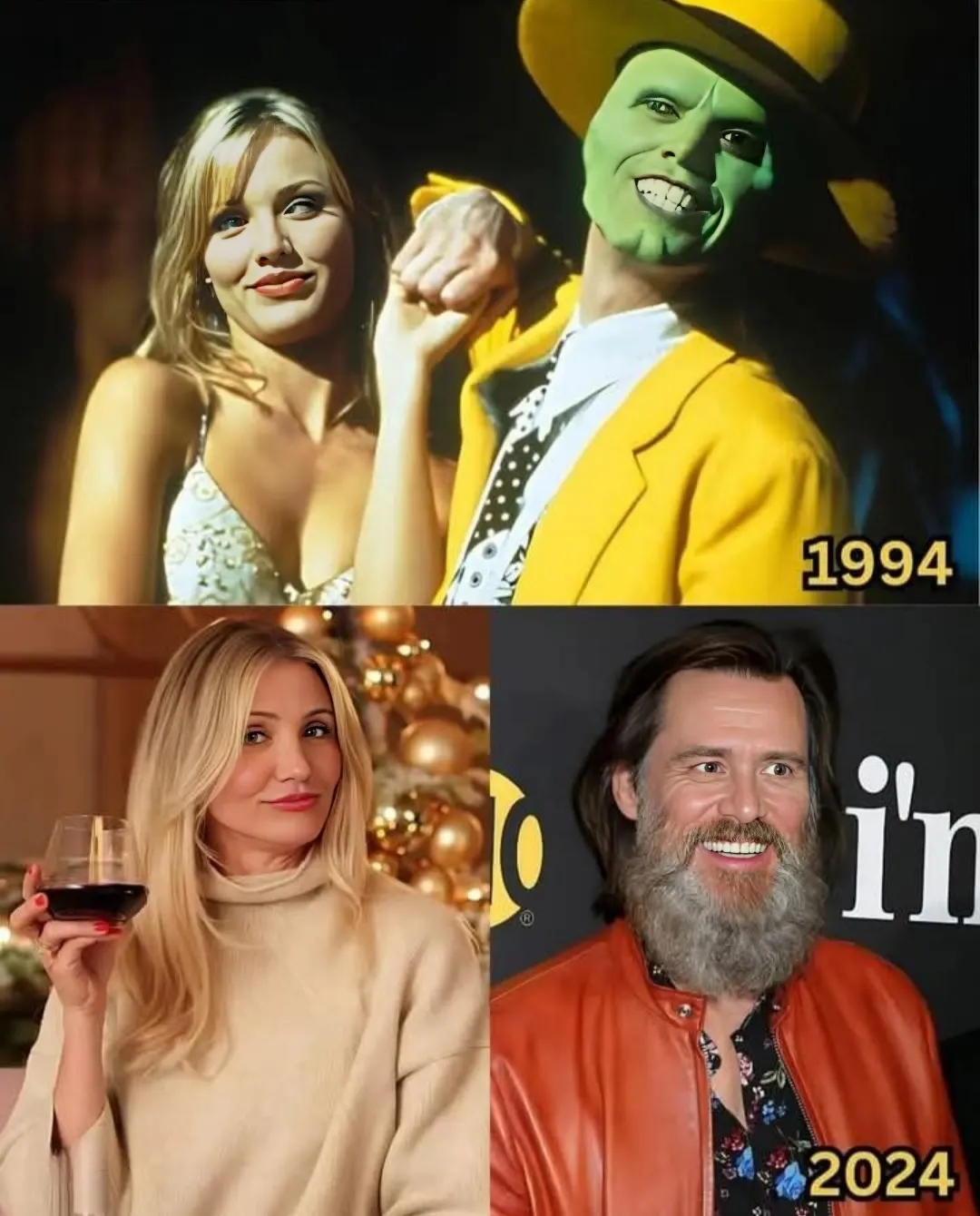
In October 1995, a 12-year-old Nintendo fan entered a contest offering a prize that sounded almost impossible: a chance to appear in the sequel to one of the biggest comedy hits of the previous year.
The movie was supposed to be The Mask II.
The original The Mask had turned Jim Carrey into an international movie star, introduced Cameron Diaz to film audiences and earned roughly $351.6 million worldwide. A follow-up seemed so plausible that Nintendo Power was already promising one reader a walk-on role.
Nathan Ryan Runk of Arbutus, Maryland won.
There was only one problem.
The movie he had won a role in would never be made.
The Movie That Made a Sequel Seem Inevitable
When The Mask opened on July 29, 1994, it arrived at an extraordinary moment in Jim Carrey’s career.
Earlier that year, audiences had seen him explode onto movie screens with Ace Ventura: Pet Detective. Before 1994 was over, Dumb and Dumber would arrive as well.
But The Mask offered something different.
Carrey played Stanley Ipkiss, a timid bank employee who discovers a mysterious wooden mask. Once he puts it on, Stanley becomes a green-faced, physics-defying whirlwind capable of behaving like a living cartoon.
Director Chuck Russell recognized that Carrey’s unusually elastic physical comedy was almost a special effect on its own. The movie then amplified his performance with visual effects that allowed the Mask’s eyes, jaw, body and surroundings to stretch far beyond reality.
New Line Cinema had made a major bet on a performer who was not yet the guaranteed box-office name he soon became.
The studio took another gamble with its female lead.
Cameron Diaz was a model with no previous film acting experience when she entered the casting process for Tina Carlyle. Diaz later recalled enduring repeated auditions before securing the role, while Russell has said he became convinced of her suitability partly because of the chemistry she displayed with Carrey during readings.
She was 21 when the movie was released.
Audiences responded.
With a production budget reported in the neighborhood of $18 million to $23 million, The Mask earned about $120 million domestically and more than $351 million worldwide. Carrey received a Golden Globe nomination, while the movie earned an Academy Award nomination for its visual effects.
For Diaz, it became the beginning of a career that would eventually include There’s Something About Mary, Charlie’s Angels, Shrek and The Holiday.
For New Line, the obvious question was what came next.
Hollywood Was Already Preparing The Mask II
A sequel moved far enough into the conversation that it escaped the usual world of studio meetings and became part of a public promotion.
In its October 1995 issue, Nintendo Power launched a Player’s Poll Contest connected to The Mask II. The grand prize included the opportunity to appear as an extra in the planned movie.
Nathan Runk entered largely because, like many kids in the mid-1990s, he was a huge Jim Carrey fan.
Against enormous odds, he won.
Runk later told Destructoid that he rarely entered the magazine’s contests. After being notified that he had won, he began receiving periodic updates as the people involved tried to determine when his Hollywood adventure would actually happen.
At first, there was little reason for a young fan to assume it wouldn’t.
The Mask had been enormously profitable. Carrey was becoming one of Hollywood’s hottest stars. The sequel even had a title being publicly promoted.
But behind the scenes, the most important piece of The Mask II was becoming uncertain.
Carrey.
Jim Carrey Changed His Mind About Sequels
Carrey’s relationship with the proposed follow-up appears to have changed as his career accelerated.
In a 1995 interview with Barbara Walters, Carrey discussed having signed for a second Mask movie in a deal worth $10 million. Yet the sequel ultimately moved forward without securing his continued participation.
One major turning point was his experience making Ace Ventura: When Nature Calls, released in 1995.
Carrey later became associated with a strong reluctance to repeat characters simply because the first movie had succeeded. Reprising the same performance, he felt at the time, did not necessarily offer the creative challenge he wanted.
That philosophy was especially damaging to The Mask II.
The original movie was not merely a story that happened to feature Carrey. Its entire tone had been constructed around what Carrey could physically and comedically do as Stanley and his uninhibited green alter ego.
Without him, the sequel audiences were expecting became much harder to justify.
And for one kid in Maryland, a Hollywood prize suddenly became something much stranger: a winning ticket to a production that had no production date.
The Contest Winner Had to Choose Between Hollywood and $5,000
Nintendo and THQ, which had been connected to the promotion through The Mask video game, continued communicating with Runk rather than simply forgetting about him.
By November 1996, the situation had become clear enough that THQ sent him a letter explaining that filming had been postponed and that the promised trip to the set could not take place.
Runk received an official The Mask II crew jacket and several video games.
More importantly, he was offered a choice.
He could continue waiting indefinitely for the movie to happen, or he could accept the estimated cash value of the prize package: $5,000.
He took the money.
Nintendo even sent him Pilotwings 64 after asking whether there was anything else he particularly wanted for his new Nintendo 64.
Years later, Runk remained happy with the decision.
The story gained an additional punch line when Nintendo Power published its final issue in 2012. Looking back at memorable moments from its history, the magazine acknowledged the abandoned contest with a brief apology to whoever had won it.
By then, Runk’s mysterious fate had a much happier ending than readers might have assumed.
He had never become an extra in The Mask II, but he hadn’t been left empty-handed either.
A Sequel Eventually Arrived — But It Wasn’t The Mask II
The franchise did eventually return to theaters.
Just not in the form fans had expected in 1995.
After later attempts to revive the property, Son of the Mask arrived in 2005 with Jamie Kennedy in the central role. Neither Carrey nor Diaz returned, and the film told a largely separate story involving a new character who encounters the supernatural mask.
The difference in audience response was dramatic.
Son of the Mask earned only about $60 million worldwide against a reported budget of at least $84 million, a fraction of the original movie’s financial success.
The sequel that audiences originally imagined — Stanley Ipkiss back behind the green face, potentially alongside Tina Carlyle — remained unrealized.
Yet the door has never completely closed.
In December 2024, Carrey said he could imagine returning if someone came up with the right idea. A month later, Diaz said she would be interested in returning if Carrey was involved.
And in June 2026, Russell again expressed affection for the possibility of reuniting with Carrey, while making clear that such a project was not ready.
More than three decades after The Mask, the strangest artifact of its lost sequel may therefore still be Nathan Runk’s story.
A studio believed in The Mask II enough to promote it. Nintendo believed in it enough to promise a child a place in the movie. A winner was selected, contacted and prepared for a trip to a film set.
Then Hollywood changed direction.
Runk never got his moment beside the green-faced Jim Carrey.
Instead, he became something even rarer: the kid who officially won a role in one of the most famous sequels that never existed.