A ‘Clue’ Production Record Shows Tim Curry Went to the Hospital After One Famous Scene
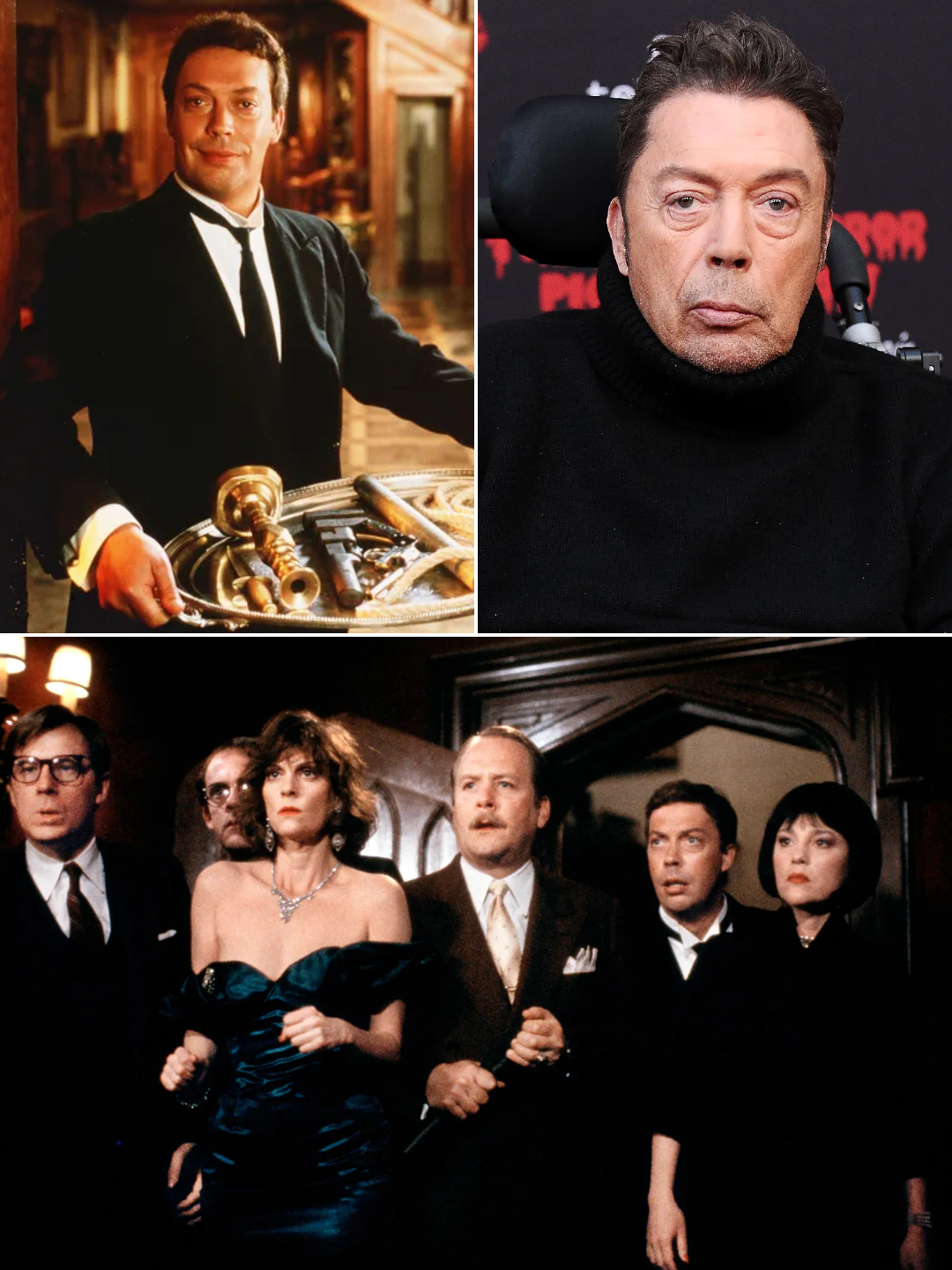
For Clue fans, the final stretch of the 1985 movie is one of Tim Curry’s greatest comic performances.
As Wadsworth, the increasingly frantic butler, Curry races through Hill House trying to reconstruct everything that happened during one extraordinarily murderous evening.
He runs from room to room.
He throws himself into reenactments.
He changes voices, positions the other characters and demonstrates how each victim was killed, all while delivering an enormous amount of dialogue at increasingly ridiculous speed.
The sequence is supposed to look exhausting.
It turns out that it really was.
Decades after Clue was filmed, an old production record shown to Curry at the Academy’s Margaret Herrick Library revealed what happened after one particularly demanding day on set.
According to the paperwork, Curry was taken to a hospital after filming on July 25 because he was not feeling well.
The doctor reported that he had high blood pressure.
When Curry heard the date, he immediately connected it with the scene.
That, he explained, was the day they filmed him running around the mansion demonstrating how all the murders happened.
An Old Production Record Brought the Day Back
The revelation surfaced during an Academy retrospective earlier in 2026, when Curry revisited material connected to some of the best-known roles of his career.
Among the items pulled from the Margaret Herrick Library was production paperwork from Clue.
One entry dated July 25 recorded that Curry had been taken to the hospital after wrap when he reported feeling unwell. The paperwork also noted the diagnosis of high blood pressure.
Curry knew exactly what he had been doing.
“That was the day we shot me running around demonstrating each murder,” he recalled, describing the work as exhausting.
Anyone familiar with Clue can probably identify the sequence immediately.
Near the climax, Wadsworth announces that he knows what happened and effectively performs the entire movie again at high speed.
He charges through the house with Colonel Mustard, Mrs. White, Mrs. Peacock, Professor Plum, Miss Scarlet and Mr. Green following behind.
One murder leads to another.
One clue leads to another.
And Wadsworth becomes part detective, part narrator and part one-man theatrical company.
Onscreen, Curry makes the chaos look almost effortless.
The production record shows there was a very real physical cost behind it.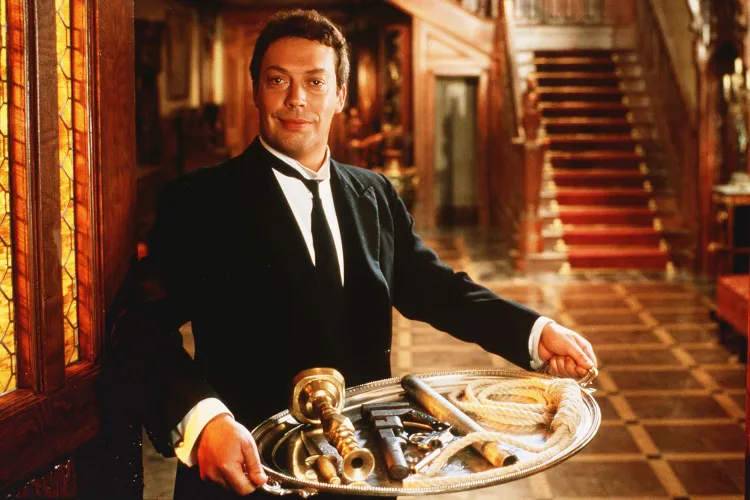
Wadsworth’s Finale Required More Than Fast Talking
Curry had played physically demanding characters before and after Clue.
He famously endured elaborate makeup and prosthetics to become Darkness in Ridley Scott’s Legend. He transformed himself physically and vocally as Dr. Frank-N-Furter in The Rocky Horror Picture Show. Later, he would terrify audiences as Pennywise in It.
Yet Clue did not seem, on the surface, like the role likely to send him for medical attention.
Wadsworth wears a suit.
There are no giant prosthetics.
There are no elaborate action sequences.
But the final explanation scene demands nearly everything at once.
Curry had to remember an intricate chain of events while delivering jokes with precise timing, repeatedly sprinting through the mansion set and keeping his energy high enough to make Wadsworth appear increasingly unhinged.
That escalating exhaustion actually benefits the movie.
By the time Wadsworth reaches the end of his explanation, he looks like a man who has personally relived every chaotic event of the evening.
The audience now knows Curry was much closer to genuine exhaustion than viewers could have realized.
The Same Archive Revealed Another Clue Secret
The hospital record was not the only surprise hidden among the production materials.
The paperwork also pointed to something Clue fans have debated for years:
There were originally four endings.
Most fans know the famous theatrical gimmick surrounding the movie.
When Clue opened in 1985, different theaters received different endings, meaning audiences in one location might discover a different murderer than moviegoers somewhere else.
Three endings became associated with the film and were later presented together in home-viewing versions.
But Curry confirmed that another ending existed.
And it was the one he liked best.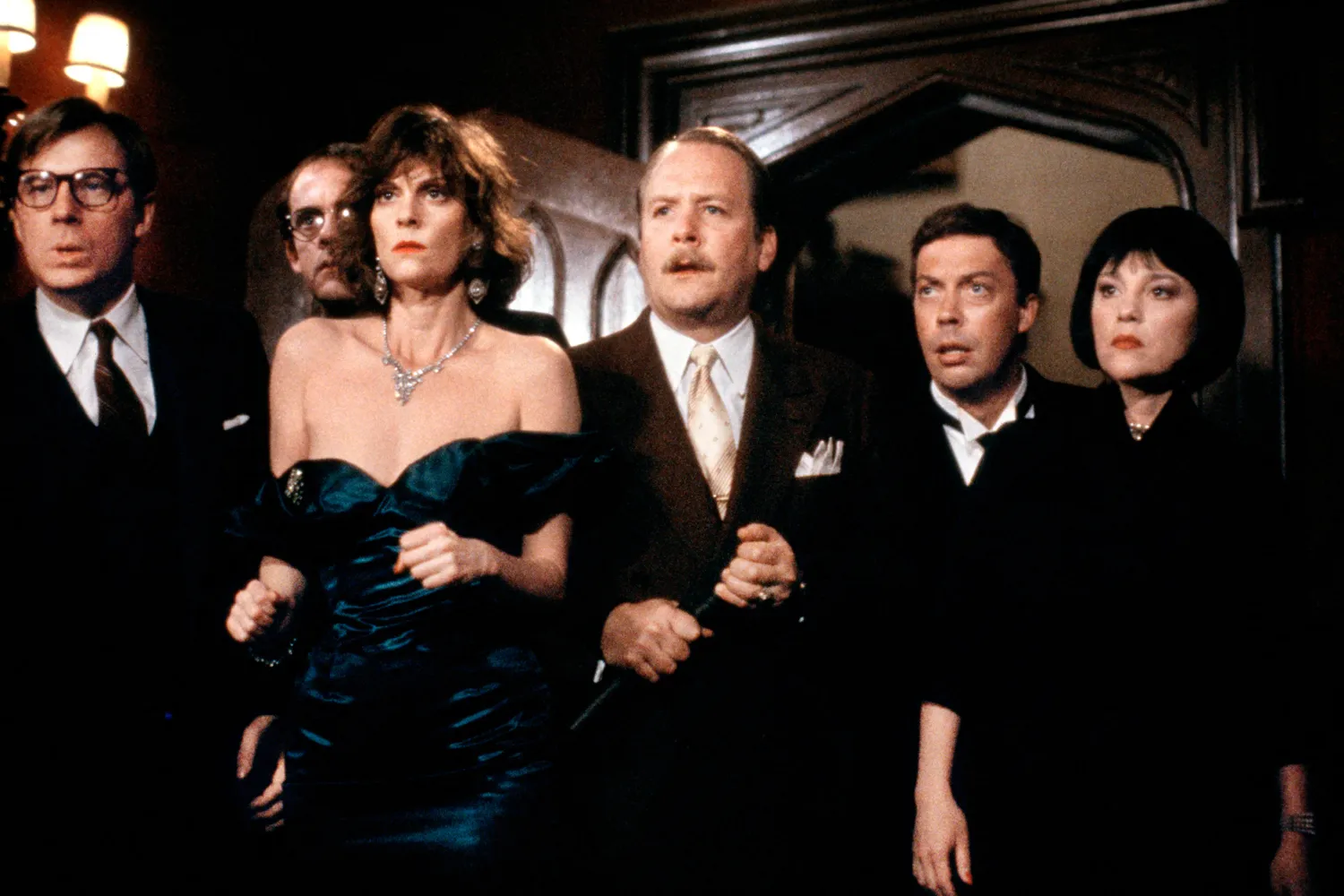
In the Missing Ending, Wadsworth Did It
According to Curry, the unused version revealed that Wadsworth himself had committed all the murders.
“There was one ending where I did all the murder,” Curry recalled, adding that it was naturally his favorite.
The filmmakers ultimately decided not to release it.
Curry said the reason was that they considered Wadsworth being the murderer too obvious.
For fans who have spent decades watching Curry dominate the movie, the reasoning is fascinating.
Wadsworth is the person guiding everyone through the mystery.
He seems to know where everyone was.
He reconstructs each killing.
And during that famously frantic finale, he effectively takes control of the entire mansion.
Making him the killer would have transformed that enormous explanation sequence into something else entirely: the murderer openly demonstrating his own crimes while everyone else struggled to catch up.
Curry clearly appreciated the idea.
Audiences never got to see that version as part of the film’s famous theatrical experiment.
Clue Had to Wait for Its Audience
The strange history feels especially appropriate for a movie that was not initially treated as the classic it later became.
Clue was not a major box-office success in 1985. Over time, however, television broadcasts, home video and word of mouth transformed it into a cult favorite.
Curry later acknowledged that the film had been considerably underappreciated when it first appeared and said he found it satisfying that audiences eventually discovered it.
For many of those fans, Wadsworth became the movie’s defining performance.
Curry balances control and chaos almost perfectly. He begins as the mansion’s formal, mysterious butler and gradually turns into the frantic engine driving the entire story.
The finale pushes that transformation as far as it can go.
Now an old piece of production paperwork gives viewers another reason to look at those scenes differently.
The Discovery Has New Weight After Curry’s Death
The archival story originally emerged earlier in 2026, but it has gained renewed attention following Curry’s death on August 25 at age 80.
His manager confirmed that the actor died peacefully at his Los Angeles home. Curry left behind a career spanning stage, film, television and voice acting, with characters ranging from Frank-N-Furter and Pennywise to Long John Silver and Wadsworth.
For Clue fans, the production document now feels like an unusually tangible piece of that history.
It does not come from a rumor or a story that grew larger through decades of fan discussion.
Someone on the production actually wrote down what happened.
July 25. Curry felt unwell. Hospital. High blood pressure.
And Curry himself could still look at that date decades later and know why.
It was the day Wadsworth ran through the mansion, recreating murder after murder for one of the most memorable finales of his career.
Fans have laughed at the sequence for more than 40 years.
What they could not see was what happened after the cameras stopped.