LINDSAY CLANCY’S LAWYER CALLS HER A “DARN GOOD MOTHER” AS JURY WEIGHS HER FATE
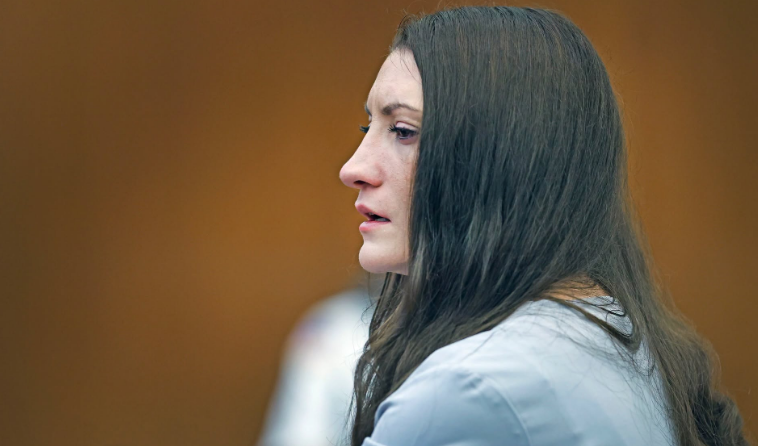
LINDSAY CLANCY’S LAWYER CALLS HER A “DARN GOOD MOTHER” AS JURY WEIGHS HER FATE
PLYMOUTH, Mass. — After weeks of emotional testimony, the fate of Lindsay Clancy is now in the hands of a Massachusetts jury.
During closing arguments Thursday, defense attorney Kevin Reddington urged jurors to remember Clancy as the devoted mother she was before her mental health deteriorated, describing her as a “darn good mother.” He argued that severe postpartum psychosis left her unable to understand the wrongfulness of her actions.
Clancy, 36, is accused of causing the deaths of her three children — 5-year-old Cora, 3-year-old Dawson and 8-month-old Callan — at the family’s Duxbury home in January 2023. She has acknowledged causing their deaths but has pleaded not guilty by reason of lack of criminal responsibility.
 DEFENSE FOCUSES ON HER MENTAL STATE
Reddington argued that Clancy’s psychiatric condition had deteriorated dramatically in the months leading up to the tragedy.
He pointed to her history of seeking medical treatment and argued that the medications and care she received failed to address what he described as a severe psychiatric crisis.
The defense has relied heavily on expert testimony supporting its claim that Clancy was experiencing postpartum psychosis and was not capable of making rational decisions at the time.
Reddington also emphasized the severity of Clancy’s subsequent suicide attempt, which left her paralyzed, arguing that it demonstrated how serious her mental crisis was.
PROSECUTORS SAY SHE KNEW RIGHT FROM WRONG
Prosecutors presented a sharply different interpretation.
Assistant District Attorney Jennifer Sprague acknowledged that Clancy had significant mental health struggles but argued that mental illness does not automatically eliminate criminal responsibility.
The prosecution maintained that Clancy deliberately created an opportunity to be alone with her children and took steps that demonstrated awareness and control.
Sprague also challenged Clancy’s account of experiencing psychosis, pointing to inconsistencies in her statements and testimony from prosecution experts who concluded that she understood the wrongfulness of her actions.
 THE CENTRAL QUESTION FOR JURORS
The case now turns on a critical legal question: Was Clancy criminally responsible for her actions when her children died?
Jurors were instructed to consider whether a mental disease or defect prevented her from appreciating the wrongfulness of her conduct or from conforming her behavior to the law.
Possible outcomes include a conviction for first-degree murder, second-degree murder or manslaughter, as well as findings involving lack of criminal responsibility.
JURY DELIBERATIONS BEGIN
The jury began deliberating Thursday afternoon after the closing arguments.
The panel, made up of nine women and three men, deliberated for several hours but did not reach a verdict before ending for the day. Jurors are expected to return Friday to continue their discussions.
If Clancy is convicted, she could face life in prison. A finding that she was not criminally responsible because of mental illness could instead result in commitment to a secure psychiatric facility.
NOW, THE DECISION RESTS WITH THE JURY
The trial has forced jurors to weigh two dramatically different portrayals of the same woman.
The defense describes a mother overwhelmed by severe psychiatric illness who lost control of her actions.
The prosecution argues that Clancy was struggling but remained capable of understanding what she was doing and that her actions were deliberate.
After weeks of testimony and emotionally charged closing arguments, there is only one step left.
The jury is now deciding whether Lindsay Clancy was criminally responsible for what happened to her three children — a decision that could determine the rest of her life.