LINDSAY CLANCY JURY BEGINS DELIBERATIONS AS ONE QUESTION HANGS OVER THE COURTROOM: WAS SHE CRIMINALLY RESPONSIBLE?
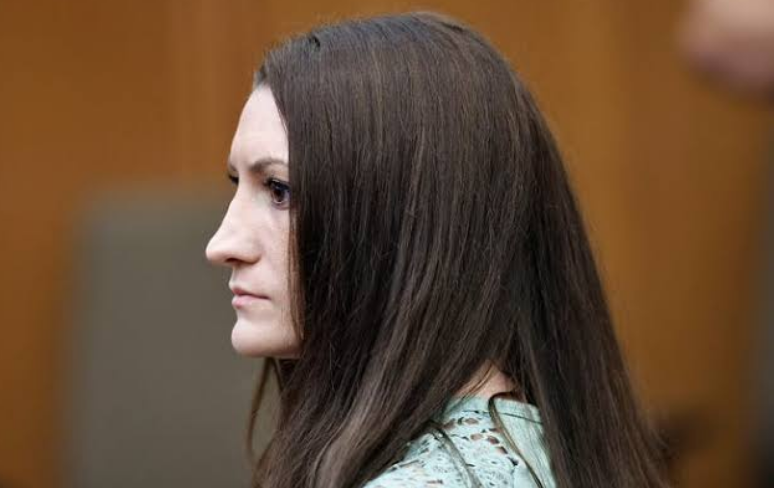
LINDSAY CLANCY JURY BEGINS DELIBERATIONS AS ONE QUESTION HANGS OVER THE COURTROOM: WAS SHE CRIMINALLY RESPONSIBLE?
PLYMOUTH, MASS. — After weeks of emotional testimony and sharply divided arguments, the fate of Lindsay Clancy is now in the hands of a Massachusetts jury.
Jurors began deliberating at 12:34 p.m. EDT, following closing arguments in the highly watched case involving the deaths of Clancy’s three young children.
At the center of the trial is not simply what happened inside the family home.
It is whether Clancy was criminally responsible for her actions at the time.
Her defense says she was experiencing severe mental illness and psychosis.
Prosecutors say she was struggling with depression but still understood what she was doing and could control her actions.
That conflict could ultimately determine the verdict.
 THE DEFENSE: “SHE WAS NOT IN HER RIGHT MIND”
Defense attorney Kevin Reddington spent much of his closing argument focusing on Clancy’s mental state.
He argued that she was suffering from severe psychiatric illness and psychosis when the children died.
The defense repeatedly pointed to Clancy’s history as a devoted mother, arguing that her actions were fundamentally inconsistent with the person her family and friends knew.
Reddington also criticized the medical treatment Clancy received before the tragedy.
Defense experts testified that Clancy was experiencing psychosis and that her mental condition severely affected her ability to understand or control her actions.
The defense is asking jurors to look beyond the horrifying outcome and examine what was happening inside Clancy’s mind.
HER SUICIDE ATTEMPT BECOMES A KEY PART OF THE DEFENSE
Another major point raised during closing arguments was Clancy’s own attempt to end her life after the children were harmed.
Reddington argued that the severity of that attempt contradicted the prosecution’s theory that it was staged or calculated.
Clancy suffered catastrophic injuries after going through a second-story window and was left paralyzed.
Her attorney argued that someone deliberately attempting to create a false appearance of mental illness would not necessarily have subjected herself to such devastating consequences.
For the defense, those injuries are evidence of the depth of the psychiatric crisis she was experiencing.
 PROSECUTORS PAINT A VERY DIFFERENT PICTURE
The Commonwealth presented a starkly different interpretation.
Prosecutors acknowledged that Clancy was depressed and struggling.
But they argued that mental illness does not automatically mean someone is legally insane.
According to prosecutors, Clancy knew right from wrong and retained the ability to control her behavior.
They pointed to what they described as a series of deliberate actions before the children were harmed.
THE HUSBAND’S ERRANDS
One of the prosecution’s central arguments concerned Clancy’s husband, Patrick.
Prosecutors argued that Clancy deliberately created an opportunity to be alone with the children by sending him out on errands.
They also highlighted her calls, text messages and internet searches in the period leading up to the tragedy.
To prosecutors, those actions demonstrated preparation rather than an uncontrolled psychiatric episode.
They argued that Clancy methodically harmed each child before attempting to take her own life.
THE PROSECUTION’S FINAL MESSAGE
In their final moments before the jury, prosecutors shifted the focus from medical evidence to the three children themselves.
They reminded jurors that the victims were not simply names in a courtroom.
Cora, Dawson and Callan were three children with futures that never happened.
Prosecutors told jurors that Cora wanted to become a doctor.
Dawson wanted to become a firefighter.
And Callan, the youngest, “never got a chance to dream.”
The Commonwealth then urged jurors to find Clancy guilty.
THE LEGAL QUESTION IS DIFFERENT FROM THE MORAL QUESTION
The judge’s instructions made one point especially important.
The Commonwealth must prove beyond a reasonable doubt not only that Clancy committed the acts charged, but that she was criminally responsible when they occurred.
Under Massachusetts law, a defendant may be found not guilty by reason of insanity if a mental disease or defect left that person unable to appreciate the wrongfulness of the conduct or unable to conform their behavior to the law.
That means jurors must make a difficult distinction.
They are not being asked simply whether the acts occurred.
They must determine whether Clancy’s mental condition reached the legal threshold for insanity.
TWO COMPETING STORIES
The trial has ultimately presented jurors with two dramatically different narratives.
The prosecution’s story is one of preparation, decision-making and deliberate conduct.
The defense’s story is one of profound psychiatric illness, psychosis and a mother whose mind had become severely distorted.
Both sides agree that Clancy was struggling.
They disagree fundamentally about what that struggle meant.
Was she capable of understanding the wrongfulness of her actions?
Could she have controlled what she was doing?
Or had mental illness made her legally incapable of doing either?
NOW THE JURY MUST DECIDE
Those questions are no longer being argued by attorneys.
They are now being debated behind closed doors by the jurors.
Every piece of evidence presented during the trial — psychiatric testimony, medical records, digital communications, Clancy’s behavior and the circumstances surrounding the children’s deaths — must be weighed against the legal standard explained by the judge.
There is no guarantee of a quick verdict.
The jury could deliberate for hours, days or longer.
Until a verdict is returned, Clancy remains legally presumed innocent of the charges.
A CASE THAT HAS LEFT MASSACHUSETTS WAITING
The Clancy case has drawn national attention because it sits at the intersection of criminal responsibility, severe mental illness and the devastating loss of three young children.
For the families involved, however, the case is much more personal.
Three children are gone.
A mother is on trial.
And twelve jurors now hold the responsibility of deciding how Massachusetts law applies to the evidence they have heard.
At 12:34 p.m., the courtroom grew quiet as the jury began its deliberations.
Now everyone is waiting for one answer:
Was Lindsay Clancy legally responsible for what happened — or did severe mental illness prevent her from understanding or controlling her actions?
The jury’s decision will determine the next chapter of one of Massachusetts’ most closely watched trials.