LINDSAY CLANCY “SCARED” AS JURY REMAINS WITHOUT VERDICT AFTER TWO DAYS OF DELIBERATIONS
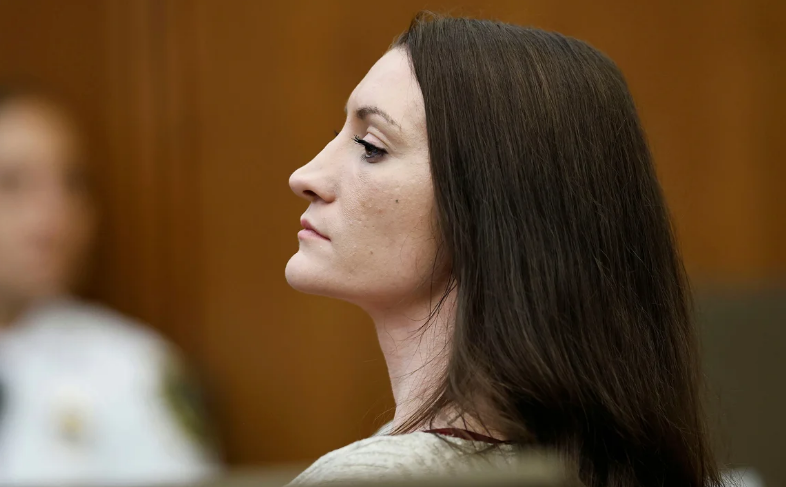
LINDSAY CLANCY “SCARED” AS JURY REMAINS WITHOUT VERDICT AFTER TWO DAYS OF DELIBERATIONS
PLYMOUTH, Mass. — Lindsay Clancy is spending another weekend waiting for a decision that could determine the rest of her life.
The Massachusetts mother is “nervous” and “scared” as a jury weighs whether she should be held criminally responsible for the deaths of her three young children, according to defense attorney Kevin Reddington.
But after two days of deliberations, the 12-member jury still has not reached a verdict.
Jurors were excused Friday afternoon and are scheduled to return Monday morning to continue deliberating.
The delay comes after a five-week trial centered on one extraordinarily difficult question:
Was Clancy legally responsible for her actions, or did severe mental illness leave her unable to understand the wrongfulness of what she was doing?
:max_bytes(150000):strip_icc():focal(749x0:751x2):format(webp)/lindsay-clancy-court-080426-1-0d554916be174019b004a84bdf0e8019.jpg) A JURY STILL SEARCHING FOR ANSWERS
A JURY STILL SEARCHING FOR ANSWERS
The jury — made up of nine women and three men — began deliberations Thursday afternoon after closing arguments and final instructions from Judge William Sullivan.
After roughly three hours on Thursday, jurors were sent home.
They returned Friday and deliberated throughout the day before again leaving the courthouse without a verdict.
During that process, jurors requested to examine two significant pieces of evidence: the knife Clancy allegedly used during her suicide attempt and prescription medications recovered in connection with the case.
The requests do not reveal which side the jurors may favor.
Instead, they show that the panel is closely examining evidence surrounding Clancy’s mental state and the events immediately surrounding the tragedy.
:max_bytes(150000):strip_icc():focal(749x0:751x2):format(webp)/lindsay-marie-clancy-013023-1-176600bdc3614f6ca230e63734b87361.jpg) THE CENTRAL QUESTION: CRIMINAL RESPONSIBILITY
THE CENTRAL QUESTION: CRIMINAL RESPONSIBILITY
Clancy, 36, is charged with three counts of first-degree murder in connection with the deaths of her children — Cora, 5, Dawson, 3, and Callan, 8 months — at the family’s Duxbury home on Jan. 24, 2023.
The defense has not disputed that Clancy was responsible for the children’s deaths.
Instead, attorney Kevin Reddington has argued that she was suffering from postpartum psychosis and bipolar disorder and was experiencing a profound break from reality.
The defense says psychiatric treatment and medication contributed to her deteriorating mental state.
Prosecutors acknowledge that Clancy suffered from mental-health problems, but argue that she remained capable of understanding her actions and knowing that they were wrong.
THE DEFENSE: A MOTHER IN PSYCHOSIS
Reddington has portrayed Clancy as a devoted mother whose mental condition deteriorated dramatically after childbirth.
Defense experts testified that she experienced psychosis and hallucinations and that her perception of reality had become severely distorted.
The defense also criticized the medical care Clancy received before the tragedy, arguing that doctors failed to recognize how serious her condition had become.
Reddington has repeatedly urged jurors to consider the severity of Clancy’s own suicide attempt.
After the children died, Clancy jumped from a second-story window and survived with severe injuries that left her paralyzed.
Her attorney argues that the suicide attempt is evidence of the depth of her psychiatric crisis rather than proof of a carefully calculated plan.
PROSECUTORS: SHE KNEW WHAT SHE WAS DOING
The prosecution has presented a dramatically different account.
Assistant District Attorney Jennifer Sprague argued that Clancy was mentally ill but still understood the consequences of her actions.
Prosecutors pointed to evidence they say shows planning, including Clancy’s efforts to create an opportunity to be alone with the children.
They also relied on phone records, searches, messages and testimony about her behavior before the tragedy.
Their argument is not that Clancy was perfectly healthy.
It is that mental illness alone does not eliminate criminal responsibility.
The prosecution contends Clancy understood what she was doing and deliberately carried out the killings.
FIVE POSSIBLE OUTCOMES
The jury has several options.
Clancy could be found guilty of first-degree murder, second-degree murder or manslaughter.
Jurors could also find her not guilty.
Or they could find her not guilty by reason of mental disease or defect.
That final outcome would not necessarily mean Clancy would simply walk free.
Depending on the circumstances, a finding that she was not criminally responsible could lead to psychiatric hospitalization and continued state custody.
THE CASE HAS DRAWN NATIONAL ATTENTION
The trial has become much larger than one criminal proceeding.
It has sparked national discussion about postpartum psychosis, maternal mental health, psychiatric medication and the ability of the healthcare system to identify women in severe psychiatric crisis.
Postpartum psychosis is rare but considered a psychiatric emergency because it can severely disrupt a person’s perception of reality.
The case has also generated intense public interest outside the courthouse, with supporters and protesters appearing during the proceedings.
THE WAIT CONTINUES
For Clancy, the uncertainty is deeply personal.
Her attorney says she remains frightened as jurors deliberate.
For prosecutors, the evidence supports the conclusion that she should be held criminally responsible.
For the defense, the same evidence demonstrates that Clancy was experiencing a psychiatric crisis so severe that she could no longer fully understand the nature or wrongfulness of her actions.
And now, 12 jurors must decide.
After two days of deliberations, they have not yet reached an answer.
They will return Monday morning and continue examining the evidence.
Until then, Lindsay Clancy remains in legal limbo — waiting to learn whether the jury believes she should be held responsible under the law, or whether her mental illness fundamentally changed her ability to understand what she was doing.
The courtroom has gone quiet for the weekend. But the most consequential decision of the entire trial is still being debated behind closed doors.