THE THIRD BOTTLE WASN’T THE LAST? STEPHEN SCHNEIDER’S 0.16% BAC PUTS HIS FINAL HOURS UNDER THE MICROSCOPE
THE THIRD BOTTLE WASN’T THE LAST? STEPHEN SCHNEIDER’S 0.16% BAC PUTS HIS FINAL HOURS UNDER THE MICROSCOPE
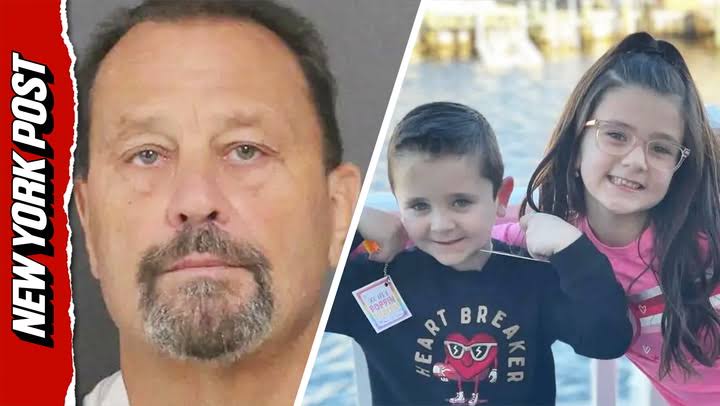
Stephen Schneider told investigators he had consumed only three beers before taking his grandchildren out on the water. But a later blood test showing a BAC of approximately 0.16% has placed his account under intense scrutiny.
According to court documents, Schneider told New Jersey State Police that he had consumed two Guinness beers and one Miller Lite during roughly two hours at MJ’s Restaurant in Bayville.
He then left the restaurant with his wife and two grandchildren aboard his boat.
What happened next would turn a family evening into a major criminal investigation.
 THE TIMELINE BECAME CRITICAL
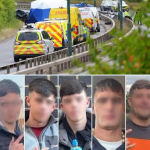
The crash occurred at approximately 9 p.m. on July 19, when Schneider’s 28-foot Tidewater Custom 280 struck Intracoastal Waterway Channel Marker No. 39 in Barnegat Bay.
Schneider reportedly told investigators that he was traveling at around 20 mph and saw the illuminated marker only at the last second.
The impact sent his two grandchildren, 9-year-old Mya and 7-year-old Sigmund, into the water. Both were wearing life jackets.
But investigators were also examining what happened during the hours before the collision.
When exactly did Schneider order his drinks?
How long did he remain at the restaurant?
When did he finish drinking?
And how much time passed between his final drink and taking control of the boat?
Those details could become critical in reconstructing the evening.
 THEN THE BLOOD TEST CHANGED THE FOCUS
After the crash, Schneider was taken to a hospital and a blood sample was obtained under a search warrant.
According to the probable-cause affidavit, laboratory testing of the sample drawn at approximately 12:46 a.m. showed a BAC of 0.16% — twice New Jersey’s 0.08% legal threshold for operating a vehicle.
The timing matters.
The blood sample was taken several hours after the crash, meaning investigators must consider the passage of time when evaluating the result and Schneider’s earlier account.
Doctors cited in the affidavit concluded that alcohol had markedly impaired his alertness, judgment, perception, response time and coordination.
THE BOAT ITSELF IS ALSO PART OF THE INVESTIGATION
Alcohol is not the only issue authorities are examining.
Schneider reportedly told investigators that his radar and infrared/low-light camera were operating at the time.
The channel marker he struck was described in the affidavit as an illuminated navigational aid.
That raises another set of questions about visibility, navigation, speed and the final seconds before impact.
WHAT REALLY HAPPENED DURING THOSE TWO HOURS?
Schneider’s account provides investigators with a specific timeline: three beers over approximately two hours.
But the reported BAC result has made that timeline one of the most closely examined elements of the case.
Restaurant records, witness statements and other available evidence could help investigators determine exactly what happened before Schneider left MJ’s.
There is no confirmed evidence in the court documents that investigators simply counted empty bottles and discovered that Schneider had consumed more than three beers.
Instead, the central question is whether the available evidence ultimately supports or contradicts his account.
Three beers. A 0.16% BAC result. A boat traveling at roughly 20 mph. And a single illuminated channel marker.
As the case moves forward, investigators will continue piecing together those final hours — minute by minute.