People Have Quoted Mrs. Doubtfire for 33 Years. Sally Field Says One of Its Most Famous Moments Wasn’t in the Script
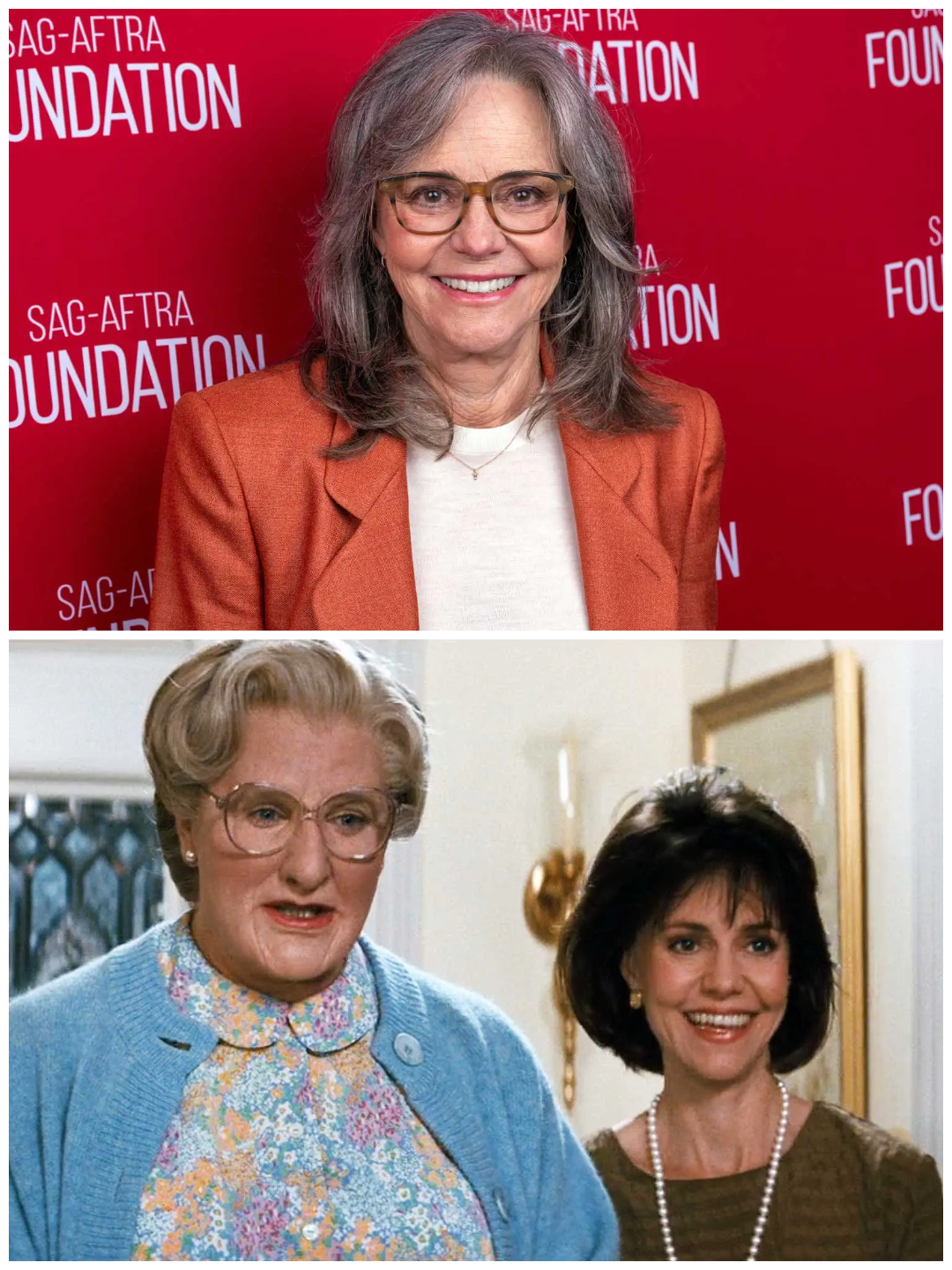
More than three decades after Mrs. Doubtfire became a comedy classic, Sally Field has revealed that one of Miranda Hillard’s most memorable reactions was never supposed to sound the way audiences have heard it since 1993.
And it happens during the scene almost everyone remembers.
By the time Mrs. Doubtfire reaches its chaotic restaurant sequence, Daniel Hillard’s elaborate double life is beginning to collapse. Robin Williams’ character has spent much of the movie disguising himself as the elderly Scottish housekeeper Mrs. Doubtfire so he can remain close to his children after separating from his wife, Miranda, played by Field.
For most of the film, Miranda has no idea that the woman working inside her home is actually her estranged husband.
Then the truth finally comes out.
What follows is one of the movie’s biggest comic and emotional payoffs: Miranda slowly processes the impossible reality that Daniel has been standing in front of her, disguised as Mrs. Doubtfire, all along.
Her disbelief grows into shock.
“The whole time?”
It is a reaction that feels so natural that it is difficult to imagine the scene playing any other way.
According to Field, however, it almost did.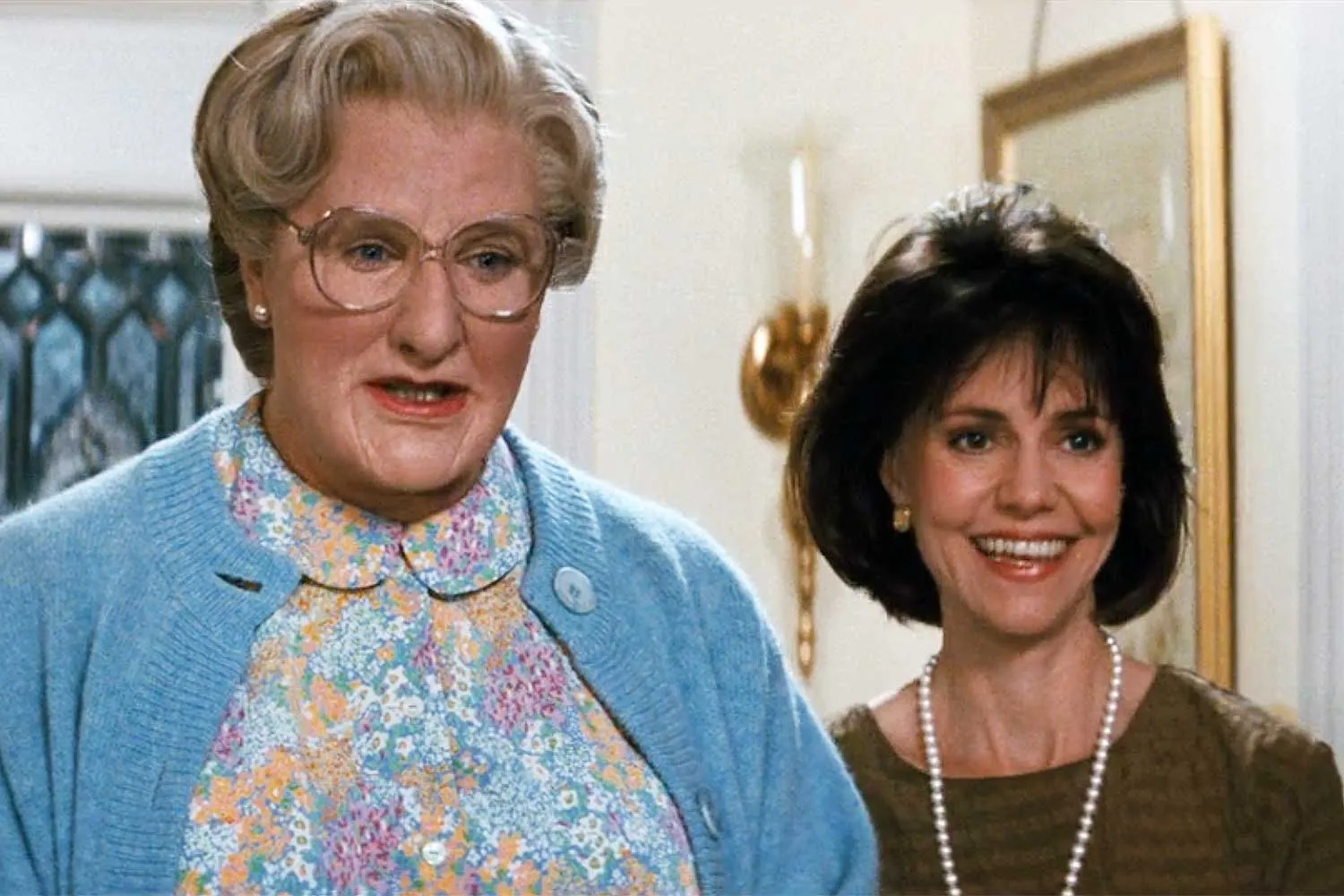
Miranda Was Supposed to React Much More Calmly
Field recently explained that the increasingly horrified way Miranda responds during the restaurant revelation was not exactly what had been written for her.
The original version called for a calmer delivery.
Field decided that did not feel right.
Instead of simply accepting the information with controlled disbelief, she allowed Miranda’s reaction to escalate as the full absurdity of Daniel’s deception sank in.
That included the now-famous delivery of “The whole time?”
What viewers see is not merely Miranda receiving a piece of information.
They see her mentally replaying everything that has happened.
Mrs. Doubtfire had been inside her house.
Mrs. Doubtfire had cared for her children.
Miranda had confided in her.
She had trusted her.
And suddenly Miranda understands that the person behind all of it was Daniel.
Field leaned into that realization rather than treating it as a simple scripted exchange.
The result became one of the most recognizable pieces of the entire sequence.
But the reason Field felt comfortable changing the scene goes deeper than one improvised line.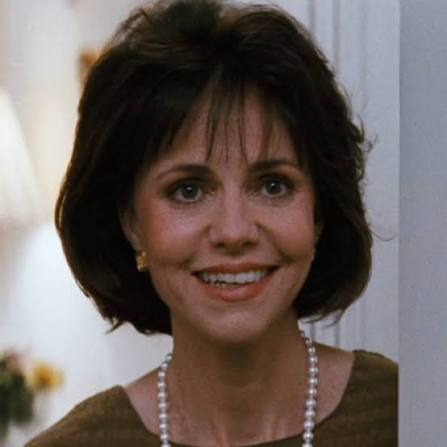
By Then, Sally Field and Robin Williams Had Developed Their Own Rhythm
The restaurant material came late in the production, after Field and Williams had already spent months working together.
That mattered.
Williams was famous for improvisation, but Mrs. Doubtfire did not work simply because the filmmakers pointed a camera at him and allowed him to say anything he wanted.
The comedy depended on the actors around him knowing how to respond.
Field became particularly important in that equation.
Over the course of production, she and Williams developed an improvisational rhythm that allowed scenes to move away from the exact wording on the page without losing their emotional purpose.
By the time they reached the restaurant sequence, they understood how to play off each other.
Director Chris Columbus gave them room to explore.
That freedom helped transform Miranda’s discovery from a straightforward plot revelation into something much messier, funnier and more human.
Field’s performance allows Miranda to become the audience in that moment.
She reacts almost exactly as someone might react after discovering that an already unbelievable situation was even more unbelievable than she imagined.
The comedy comes from the scale of that realization.
But underneath the comedy was another concern Field and Williams took seriously.
They did not want Miranda to become the villain.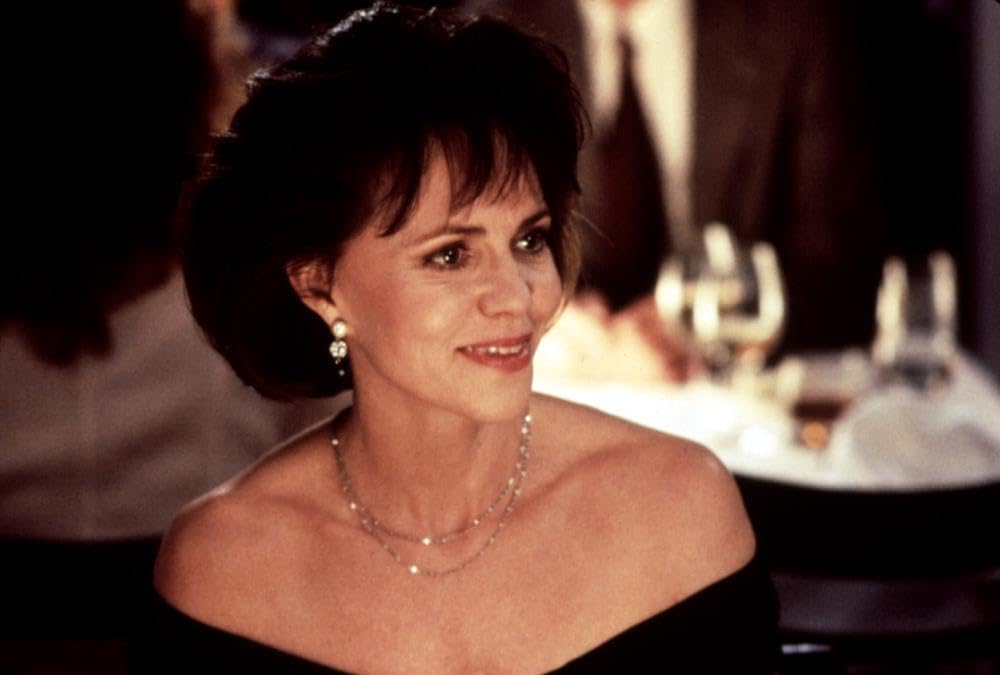
Field and Williams Did Not Want the Divorce to Have a Simple “Bad Guy”
That concern is crucial to understanding why the improvisation mattered.
It would have been easy for Mrs. Doubtfire to tell a much simpler story.
Daniel is the funny, spontaneous father who desperately wants to be near his children. Miranda is the parent who insists on boundaries after the marriage falls apart.
In a less careful version of the movie, Miranda could easily have become the obstacle standing between Daniel and his family.
Field did not want that.
Neither did Williams.
They understood that the marriage ending did not automatically make Miranda cruel or unreasonable.
Daniel may be enormously charming, but he is also irresponsible. His decision to disguise himself as a housekeeper is hilarious as a movie premise, yet from Miranda’s perspective it represents an extraordinary violation of trust.
That balance is one reason the restaurant revelation is so important.
Miranda has every reason to be stunned.
And Field’s improvised reaction allows the audience to feel that.
Instead of making Miranda quietly absorb the information so the movie can quickly move to its next joke, Field gives her character time to understand what Daniel has actually done.
“The whole time?” becomes funny because the situation is ridiculous.
But it also protects Miranda as a character.
Her shock makes sense.
Robin Williams’ Improvisation Worked Because Other Actors Could Meet Him There
Stories about Williams frequently focus on the extraordinary amount of material he could invent on set.
That reputation was deserved.
But Field’s recollection highlights another part of his comedy that is sometimes overlooked.
Improvisation requires someone on the other side.
Williams could create chaos, but scenes still needed structure, emotional logic and actors capable of responding without breaking the reality of the story.
Field could do that.
Her performance as Miranda is generally more grounded than Williams’ work as Daniel and Mrs. Doubtfire. That contrast is precisely what makes many of their scenes work.
Daniel keeps pushing situations toward absurdity.
Miranda keeps pulling them back toward reality.
Then, during the restaurant revelation, reality itself becomes absurd.
For once, Miranda’s reaction has to rise to the level of Daniel’s deception.
Field instinctively understood that.
And Columbus trusted the actors enough to let the scene evolve.
The Moment Has Been Hiding in Plain Sight Since 1993
That is what makes Field’s revelation so satisfying for longtime fans.
The scene was never hidden.
Millions of people have watched it.
Many can probably hear Field’s delivery in their heads without needing to replay the movie.
Yet for 33 years, viewers had little reason to suspect that the exact reaction they remembered was not simply written that way.
It looked too perfect.
That may be the strongest evidence that the improvisation worked.
The change does not draw attention to itself as an actor showing off. It feels completely consistent with Miranda, completely appropriate for the situation and completely necessary to the rhythm of the scene.
Once viewers know what Field changed, however, the sequence becomes interesting in a new way.
Watch Miranda carefully.
The disbelief builds.
Her mind seems to race ahead of her words.
And when she lands on “The whole time?” it suddenly becomes possible to see the acting decision behind the reaction.
The line is not memorable because it contains some elaborate joke.
It is memorable because Field found the exact emotional temperature the moment needed.
Three decades later, she has finally revealed that audiences were watching something more spontaneous than they realized.
One of Mrs. Doubtfire’s most familiar reactions was not simply performed from the script.
It was discovered on set — after Sally Field and Robin Williams had spent an entire production learning exactly how far they could push each other.