WOMAN ARRAIGNED AFTER ALLEGEDLY FILMING LINDSAY CLANCY JURORS — DEFENSE CALLS IT A “COMPLETE MISUNDERSTANDING”
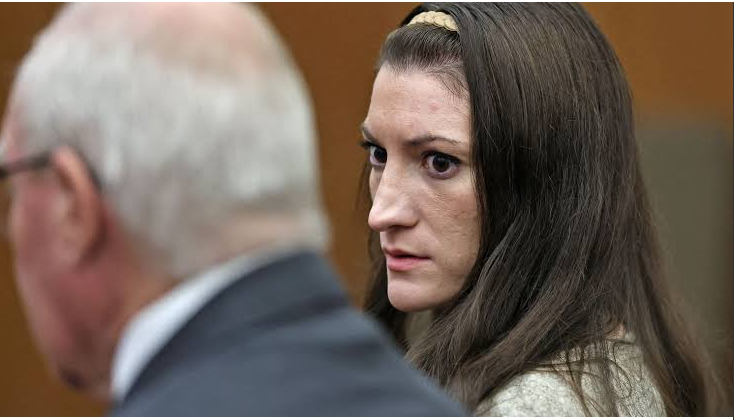
WOMAN ARRAIGNED AFTER ALLEGEDLY FILMING LINDSAY CLANCY JURORS — DEFENSE CALLS IT A “COMPLETE MISUNDERSTANDING”
A shocking development has unfolded outside the Lindsay Clancy trial as a 56-year-old woman faces a felony intimidation charge after prosecutors say she recorded jurors leaving the courthouse.
The Lindsay Clancy case has already become one of the most closely watched trials in Massachusetts.
Now, a separate courtroom battle has emerged — involving a woman accused of recording members of the jury as they left the courthouse.
Dawn Light, 56, of Sutton, Massachusetts, was arraigned Wednesday after state police arrested her the previous afternoon.
Prosecutors allege Light entered a restricted area near Plymouth Superior Court and positioned herself where she could see jurors leaving the building following another day of deliberations in Clancy’s trial.
She pleaded not guilty.
Her attorney, Jennifer White, described the incident as a “complete misunderstanding,” arguing that Light had gone to the courthouse because she wanted to photograph Lindsay Clancy — not the jurors.
But prosecutors say evidence found on Light’s cellphone tells a different story.
 POLICE SAY DELETED VIDEO WAS FOUND ON HER PHONE
According to prosecutors, Light was seen using her cellphone while positioned in a restricted courthouse parking area.
After police questioned her, investigators searched her phone.
They allegedly discovered video showing jurors leaving the courthouse in the phone’s recently deleted folder.
Light reportedly told police that she had been waiting to see Lindsay Clancy and denied intentionally recording the jurors.
Her defense has maintained that she was attempting to get a photograph of Clancy and did not intend to interact with or intimidate members of the jury.
But prosecutors argued that the incident was serious enough to raise concerns about the integrity of the judicial process.
Assistant District Attorney Nicole Piacentini told the court that “the sanctity of the judicial system is at risk” because of the alleged conduct.
 SHE SAID SHE “WANTED TO SEE LINDSAY”
After her arraignment, Light was surrounded by reporters as she attempted to leave the courthouse.
When asked why she had come to court, Light reportedly responded that she wanted to see Lindsay Clancy.
She said she had accomplished that goal when Clancy was being transported from the courthouse.
The moment quickly became part of the unfolding story surrounding the trial.
Light’s attorney has emphasized that her client is a retired registered nurse, has no prior criminal record and has strong ties to Massachusetts.
The defense argued that Light was not a flight risk and should not be held on the $50,000 cash bail requested by prosecutors.
The judge ultimately declined to impose cash bail.
Instead, Light was released on personal recognizance with strict conditions.
JUDGE ORDERS HER AWAY FROM THE CASE
The court ordered Light to stay away from the courthouse and court grounds.
She was also ordered to have no contact with jurors or witnesses connected to the Clancy case and was prohibited from disseminating photographs or videos related to the incident.
Her next court appearance is scheduled for October 15.
If convicted, Light could face significant penalties under Massachusetts law.
For now, however, she remains legally presumed innocent.
THE TIMING COULDN’T BE MORE SENSITIVE
The alleged incident occurred at an especially critical moment in the Lindsay Clancy trial.
The jury has been struggling to reach a unanimous verdict after weeks of testimony.
Jurors have now reported being deadlocked more than once, prompting Judge William Sullivan to issue a Tuey-Rodriguez instruction, urging them to continue deliberating while reminding them not to abandon their honest convictions simply to reach an agreement.
That means the jury’s privacy and security have become particularly important.
Jurors are tasked with making their decision based solely on evidence presented in court.
Any attempt to photograph, contact or otherwise influence them could raise serious concerns about the fairness of the proceedings.
That is why prosecutors have treated the allegations against Light so seriously.
A TRIAL ALREADY UNDER INTENSE SCRUTINY
The underlying case involves Lindsay Clancy, a 36-year-old former labor and delivery nurse accused in the 2023 deaths of her three young children.
Clancy’s defense argues that she was experiencing severe postpartum psychosis and should not be held criminally responsible.
Prosecutors have argued that she acted deliberately.
The jury must now determine whether Clancy is criminally responsible under Massachusetts law — a decision that could result in a conviction, an acquittal or a finding that she was not criminally responsible because of mental illness.
Against that backdrop, the allegation that someone outside the courthouse was recording jurors has added another extraordinary layer to an already highly emotional trial.
NO VERDICT — AND NOW ANOTHER COURTROOM BATTLE
For the Clancy jury, the deliberations continue.
For Dawn Light, a separate legal process has now begun.
She insists the situation was a misunderstanding.
Prosecutors say the discovery of deleted video on her cellphone raises a much more serious concern.
And the judge has made clear that Light must remain completely separated from the people responsible for deciding Lindsay Clancy’s fate.
As the jury returns to its deliberations, the attention surrounding the case shows no sign of fading.
One trial is focused on a mother’s state of mind and the fate of three children.
The other now asks a very different question:
Did a spectator cross a legal line by recording the very jurors entrusted with deciding the case?
That question will now be answered in a courtroom of its own.