‘HER MYSTERY BOYFRIEND’ FINALLY NAMED… THE MARRIED DAD WHO WAS LINKED TO LUCY LETBY IS REVEALED FOR THE FIRST TIME
‘HER MYSTERY BOYFRIEND’ FINALLY NAMED… THE MARRIED DAD WHO WAS LINKED TO LUCY LETBY IS REVEALED FOR THE FIRST TIME
For years, he was known only as “Dr A” — the married doctor whose name became closely linked to Lucy Letby during one of Britain’s most closely watched criminal trials.
Now, his identity can finally be revealed.
Dr Mark Deakin, a 53-year-old consultant paediatrician and married father-of-two, was granted anonymity when he gave evidence during Letby’s trial.
But following his death earlier this year, the Court of Appeal has lifted the reporting restrictions that had protected his identity.
His name is now public for the first time — bringing fresh attention to the complicated relationship between the doctor and the former neonatal nurse at the centre of the case.
And behind the headlines about a supposed “boyfriend” lies a far more complicated story.
 THE DOCTOR AT THE CENTRE OF LETBY’S ATTENTION
Deakin worked alongside Letby at the Countess of Chester Hospital during the period when the crimes for which she was convicted took place.
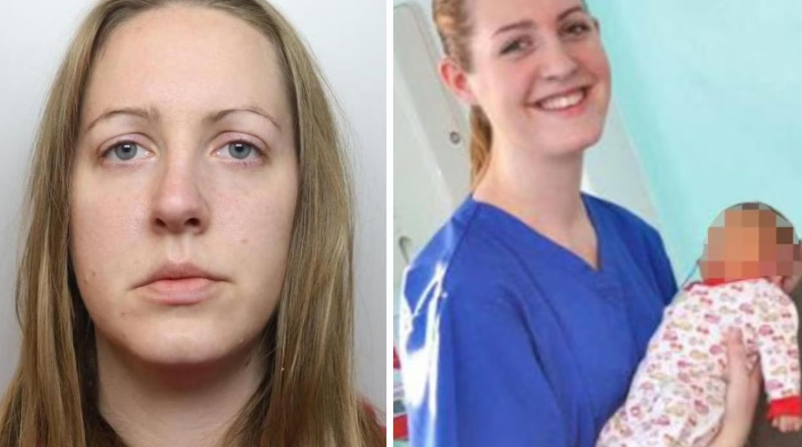
During her trial, prosecutors suggested that Letby had developed a strong emotional attachment to the doctor and described him as a possible romantic focus.
The prosecution even referred to him as her “boyfriend” during questioning.
Letby rejected that description.
She insisted that Deakin was a trusted friend and denied that the pair were romantically involved.
But the court heard that their relationship had generated attention among colleagues.
One nurse reportedly teased Letby about being “flirty” with Deakin, while messages showed Letby referring to him affectionately as “sweetie.”
When Deakin eventually entered the witness box during Letby’s trial, she became visibly emotional.
She broke down in tears and attempted to leave the dock before giving an explanation for her reaction.
Prosecutors argued that her reaction demonstrated how important Deakin had been to her.
Letby disagreed.
 1,355 MESSAGES — AND A RELATIONSHIP THAT BECAME CRUCIAL
The extent of their communication became clearer during the later Thirlwall Inquiry.
Investigators heard that Deakin and Letby exchanged 1,355 Facebook messages over roughly three months, between June and September 2016.
That period was particularly significant because concerns about Letby had already begun to emerge and she had been removed from frontline neonatal duties.
Some of the messages concerned babies under the hospital’s care.
In one exchange, Letby asked Deakin about the condition of Child N, an infant she was later convicted of attempting to murder.
She also asked whether she had done anything wrong.
The messages later became part of a much wider examination of how information about vulnerable patients was handled.
And years later, Deakin would admit that his interactions with Letby had been a serious mistake.
“I WAS MISLED AND MAYBE MANIPULATED”
Giving evidence to the Thirlwall Inquiry in 2024, Deakin said he believed Letby had “misled and maybe manipulated” him.
He acknowledged that he had shared confidential information with her and expressed significant regret over his involvement.
He also supported Letby after she was removed from the neonatal unit and helped her pursue a grievance against the hospital.
But the relationship went even further.
After moving to Alder Hey Children’s Hospital in Liverpool, Deakin helped arrange observational visits for Letby there in December 2016.
At the time, she had already been removed from clinical duties at the Countess of Chester Hospital amid concerns raised by senior doctors.
The arrangement later became a major issue.
Questions were raised over why Letby had been allowed access to another children’s hospital while concerns about her remained unresolved.
THE CONFIDENTIALITY BREACH
Alder Hey later investigated Deakin’s conduct.
The inquiry heard that a complaint had been made after confidential information concerning a child was allegedly passed to Letby.
Deakin was subsequently subjected to an internal disciplinary process.
In June 2026, Alder Hey dismissed him for gross misconduct after concluding that he had breached professional confidentiality and had facilitated Letby’s visits to the hospital.
Then came the shocking final chapter.
FOUND UNCONSCIOUS JUST ONE DAY AFTER HIS DISMISSAL
On June 24, just one day after his dismissal, Deakin was found unconscious inside his car at a retail park in Cheshire.
He was taken to hospital and admitted to intensive care.
Nine days later, on July 3, he died.
He was 53.
An inquest into the circumstances surrounding his death is expected to take place. Reports have noted the timing of his collapse in relation to his dismissal, but there is no established finding that his death was caused by the dismissal.
That distinction is important as speculation surrounding his death continues.
WHY HIS NAME WAS KEPT SECRET
Deakin had been protected by a court anonymity order when he gave evidence at Letby’s trial.
He appeared behind a screen, meaning the public and media could not see him.
The restrictions were intended to protect him during his lifetime.
Following his death, Associated Newspapers applied for the anonymity order to be lifted, with support from The Times.
Lord Justice Singh agreed.
The judge said the original justification for keeping Deakin’s identity secret no longer applied after his death, while principles of open justice and the media’s right to report court proceedings remained important.
His family was consulted during the process.
The decision means the man once identified only as “Dr A” can now be publicly named and pictured.
WHAT DID HE REALLY MEAN TO LETBY?
That question remains one of the most intriguing aspects of the story.
Prosecutors portrayed Deakin as someone who occupied an important emotional place in Letby’s life.
They pointed to the huge volume of messages, affectionate language and handwritten notes discovered after her arrest.
Some of those notes contained references to Deakin and included the phrase “love was all we needed.”
But Letby maintained there was no romantic relationship.
And Deakin himself did not publicly confirm that he had been her boyfriend.
Instead, the evidence paints a complicated picture of a doctor who became unusually close to a colleague who was later convicted of some of the most serious offences in the history of the British healthcare system.
His later testimony suggested that he deeply regretted the trust he had placed in her.
LETBY’S CASE IS STILL NOT COMPLETELY OVER
Lucy Letby, now 36, remains in prison serving 15 whole-life sentences after being convicted of murdering seven babies and attempting to murder seven others at the Countess of Chester Hospital.
She has continued to deny the allegations.
Her convictions are also being examined by the Criminal Cases Review Commission.
Meanwhile, the Thirlwall Inquiry into how Letby was able to commit the offences is expected to publish its findings this month.
That report could provide further scrutiny of the actions of hospital staff — including the decisions that allowed Letby to maintain relationships with colleagues and gain access to information and facilities after concerns had already been raised.
And now, with Dr Mark Deakin’s identity finally public, another previously hidden part of the Letby story has emerged.
For years, he was simply “Dr A.”
Now his name, his messages with Letby and his controversial role in helping her obtain access to Alder Hey can all be examined in the open.
But one question remains particularly difficult to answer:
Was Mark Deakin truly Lucy Letby’s “mystery boyfriend” — or was their relationship something far more complicated than the courtroom label suggested?