BABY AMONG 80 FOUND DEAD ON MIGRANT BOAT AFTER 26 DAYS AT SEA — ONLY 45 SURVIVORS FOUND
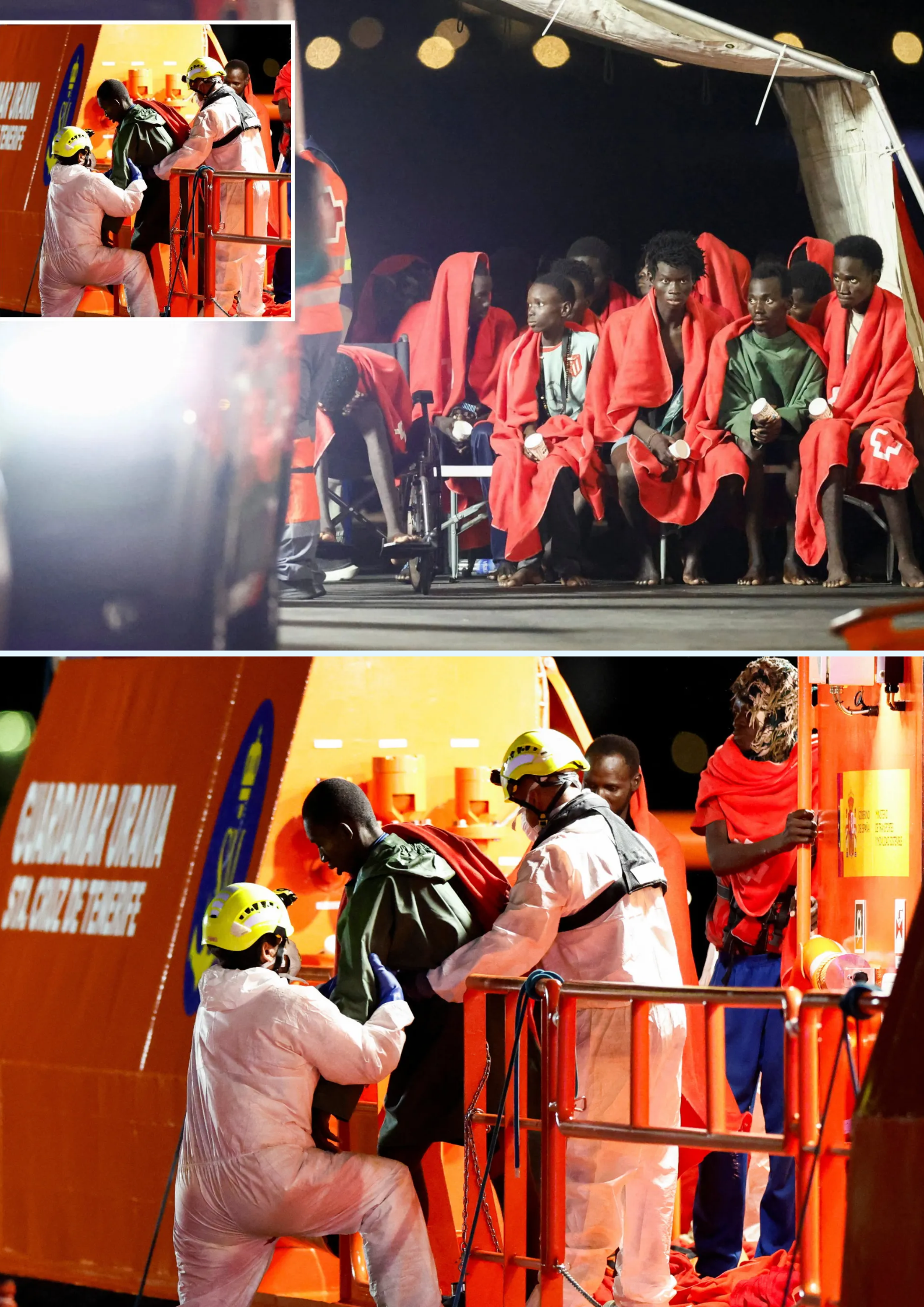
BABY AMONG 80 FOUND DEAD ON MIGRANT BOAT AFTER 26 DAYS AT SEA — ONLY 45 SURVIVORS FOUND
A tiny boat carrying 128 people set out from West Africa hoping to reach Europe.
Twenty-six days later, it was found drifting helplessly in the Atlantic.
Only 45 people were still alive.
Among those believed to have lost their lives was a baby, in what has become one of the latest tragedies along the increasingly dangerous Atlantic migration route to Spain’s Canary Islands.
 THE BOAT THAT DISAPPEARED
The overcrowded wooden vessel, known as a cayuco, reportedly left Gambia on a journey towards the Canary Islands.
The trip was supposed to be a route towards a new life in Europe.
Instead, the passengers spent almost four weeks at sea.
According to reports, the vessel was eventually spotted about 75 miles south of Gran Canaria after a surveillance aircraft detected it drifting in the Atlantic.
An alarm was raised at around 7:40 p.m.
Spanish maritime rescuers reached the boat shortly after midnight.
What they found was devastating.
Just 45 survivors remained — 44 men and one woman.
Five other people were still believed to be aboard but could not be recovered because of difficult sea conditions. They are presumed to have died.
 A BABY WAS AMONG THE VICTIMS
Human-rights organisation Caminando Fronteras reported that at least 83 people had lost their lives, including three women and a baby.
The details surrounding the baby’s journey remain limited.
But the discovery has added another heartbreaking dimension to a tragedy that already involved dozens of people spending weeks on an overcrowded vessel in the middle of the Atlantic.
For the survivors, the journey ended at the port of Arguineguín, on Gran Canaria, where they were brought ashore in the early hours.
Some required urgent medical attention, with three reportedly airlifted to hospital.
THEY HAD BEEN AT SEA FOR 26 DAYS
The length of the journey is one of the most striking details.
The vessel was reportedly missing for 26 days before it was finally located.
The Canary Islands lie hundreds of kilometres from the African coast, and the Atlantic crossing is considered one of the world’s most dangerous migration routes.
Over the years, overcrowded boats, limited supplies, unpredictable weather and long distances have turned the route into a deadly gamble for people attempting to reach Europe.
This latest incident shows just how quickly that journey can become a fight for survival.
THE BOAT MAY HAVE BEEN MISSING FOR WEEKS
Spanish authorities said markings found on the hull appeared to correspond with a missing canoe reported to have departed from Africa on September 7.
Survivors told officials that they had been attempting to reach the Canary Islands.
The vessel was eventually found far from land, drifting in the Atlantic with most of those aboard no longer alive.
The survivors were taken to Arguineguín Port at around 5:20 a.m., where emergency workers and humanitarian organisations were waiting to assist them.
For those who stepped onto land, the ordeal was finally over.
For the families of those who never made it, the journey ended with unanswered questions.
A ROUTE THAT CONTINUES TO CLAIM LIVES
The tragedy has once again drawn attention to the dangers of the Atlantic migration route between West Africa and the Canary Islands.
The islands have become a major arrival point for people attempting to reach Spain from Africa.
But the distance and conditions make the crossing extremely hazardous.
In 2025, Pope Leo XIV highlighted the dangers faced by migrants during his visit to the Canary Islands, warning about trafficking networks and the human cost of dangerous sea crossings.
The latest tragedy adds another grim chapter.
A boat left Africa carrying more than a hundred people.
After nearly four weeks at sea, fewer than half were found alive.
And among those lost was a baby who never had the chance to begin a life beyond the ocean.
The survivors may now be safe on land.
But for the families waiting for loved ones who never arrived, the story is far from over.