HE CALLED HER HIS “SOULMATE.” THEN THEIR ENTIRE LIFE CAME APART.
HE CALLED HER HIS “SOULMATE.” THEN THEIR ENTIRE LIFE CAME APART.
Patrick Clancy once stood by Lindsay Clancy and asked the world to forgive her. Today, the two are divorced, their family home is gone, and Patrick has built a completely different life.
In January 2023, Patrick Clancy’s life changed forever.
He returned to the family’s Duxbury, Massachusetts, home and discovered his three young children — Cora, 5, Dawson, 3, and Callan, just 8 months old — fatally injured.
Lindsay, his wife and the children’s mother, was found outside the home after an apparent suicide attempt.
The tragedy quickly became one of the most closely watched criminal cases in America.
But what makes Patrick’s story particularly striking is what he said in the aftermath.
Rather than publicly condemning Lindsay, Patrick asked people to forgive her.
In an emotional statement released days after the tragedy, he said he had forgiven her and described the woman he knew as loving and caring.
He later told The New Yorker: “I wasn’t married to a monster — I was married to someone who got sick.”
At the time, Patrick’s response stunned many people.
How could a father who had just lost three children speak publicly about forgiveness toward the person accused of causing their deaths?
For Patrick, the answer appeared to be rooted in his belief that Lindsay’s mental illness had fundamentally changed her.
That belief would later become central to the legal battle.
 THEN THE FAMILY’S LIFE BEGAN TO DISAPPEAR
The house where the Clancy family had built their life eventually became another chapter of the tragedy.
Patrick put the Duxbury property up for sale after the deaths and later moved to New York City.
The home was ultimately sold in an off-market transaction in January 2024 for $675,000, according to property records reported by Realtor.com.
Patrick would later describe the painful reality of losing the life he once knew.
The house was gone.
The children were gone.
And the marriage was over.
:max_bytes(150000):strip_icc():focal(886x640:888x642):format(webp)/lindsay-clancy-trial3-9326-b486bdcc6dcf409990e5bd6aaab24ded.jpg) PATRICK MOVED ON — BUT THE CASE DIDN’T
PATRICK MOVED ON — BUT THE CASE DIDN’T
Patrick eventually divorced Lindsay and remarried.
By 2026, he was living in New York and had started a new chapter of his life.
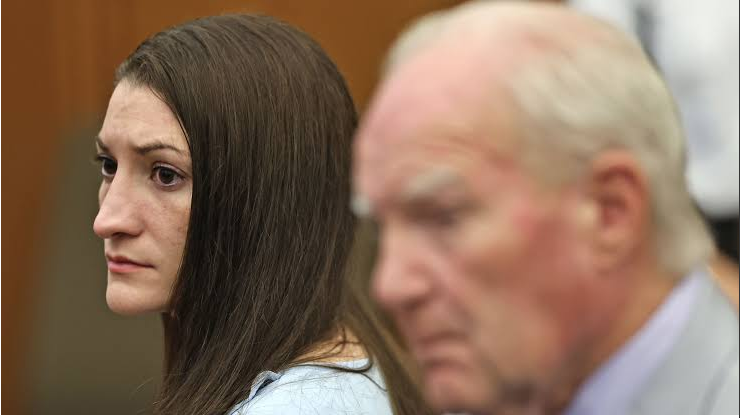
But he returned to Massachusetts this summer for the trial of his former wife.
There, he found himself in the extraordinary position of testifying about the woman he had once called his wife, the mother of his children, and someone he had publicly defended.
Over two days on the witness stand, Patrick described Lindsay’s worsening mental health in the months before the tragedy.
He testified that he had seen her struggle and believed she was becoming increasingly unwell.
His testimony became one of the most emotional parts of the trial.
TWO VERY DIFFERENT STORIES
The prosecution and defense have presented dramatically different explanations for what happened inside the Duxbury home.
Prosecutors argue Lindsay acted intentionally and was criminally responsible.
Her defense argues she was suffering from severe postpartum psychosis and other mental-health problems that left her unable to understand the nature or wrongfulness of her actions.
Lindsay has admitted that she caused the deaths, but her attorneys are asking jurors to find her not guilty by reason of insanity.
Patrick’s testimony has been important to that defense because he described the woman he knew before the tragedy — not simply the defendant sitting in court.
But prosecutors have pointed to evidence they say shows planning and awareness.
That conflict has become the heart of the trial.
AND NOW, THE JURY IS STUCK
After weeks of testimony and more than 80 witnesses, the jury has been unable to reach a unanimous verdict.
The deadlock has now happened more than once.
On Thursday, Sept. 3, the judge sent jurors home after they again reported being unable to reach a unanimous decision. Deliberations are expected to resume Friday.
If the jury ultimately cannot reach a verdict, the judge could declare a mistrial, leaving prosecutors to decide whether to try the case again.
For Patrick, however, there is no verdict that can restore what was lost.
Three children are gone.
The family home is gone.
The marriage is over.
And the man who once asked the public to forgive Lindsay has moved across the country and started a new life.
Yet he still returned to the courtroom to tell the story of the family they once shared.
That may be the most complicated part of the entire case.
Because Patrick’s story is not simply about a husband turning against his wife.
It is about a man trying to reconcile two versions of the same person:
The woman he loved — and the woman accused of destroying the family they built together.
And as America waits for a verdict, one question remains:
Can a person forgive someone for what happened — while still choosing to walk away from the life they once shared?