LINDSAY CLANCY JURY REPORTEDLY SPLIT 11-1 AS DEFENSE DEMANDS ANSWERS OVER HOLDOUT JUROR
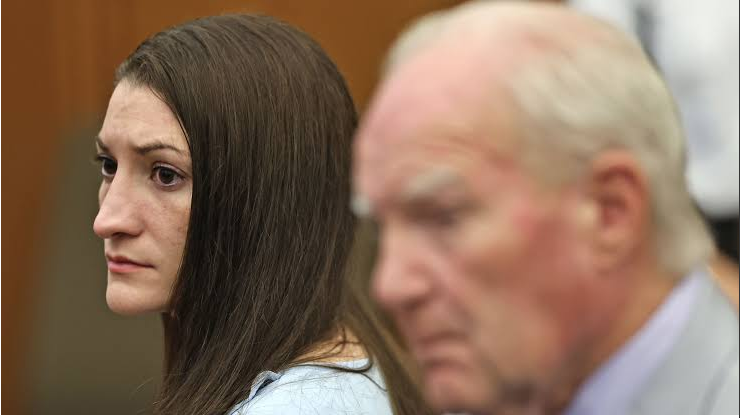
LINDSAY CLANCY JURY REPORTEDLY SPLIT 11-1 AS DEFENSE DEMANDS ANSWERS OVER HOLDOUT JUROR
:max_bytes(150000):strip_icc():focal(886x640:888x642):format(webp)/lindsay-clancy-trial3-9326-b486bdcc6dcf409990e5bd6aaab24ded.jpg) FTER SIX DAYS OF DELIBERATIONS, THE JURY STILL HAS NOT REACHED A VERDICT — AND ONE JUROR HAS BECOME THE CENTER OF A DRAMATIC COURTROOM DISPUTE
FTER SIX DAYS OF DELIBERATIONS, THE JURY STILL HAS NOT REACHED A VERDICT — AND ONE JUROR HAS BECOME THE CENTER OF A DRAMATIC COURTROOM DISPUTE
PLYMOUTH, Mass. — The long-awaited verdict in Lindsay Clancy’s closely watched trial remains out of reach after six days of jury deliberations, with her defense attorney claiming that the panel appears to be divided 11-1.
The reported split emerged after a tense day in court Thursday, when defense attorney Kevin Reddington argued that one juror was refusing to follow Judge William Sullivan’s instructions concerning the legal standard of reasonable doubt.
However, Reddington did not say which side the 11 jurors appeared to favor. The court has not publicly confirmed the reported 11-1 breakdown.
The development has pushed the case closer to the possibility of a mistrial if the jury ultimately cannot reach a unanimous decision.
SIX DAYS WITHOUT A VERDICT
Clancy’s jury has now spent more than 35 hours deliberating after weeks of testimony in Plymouth Superior Court.
The 12-member panel includes nine women and three men.
The jury has already told the judge more than once that it was struggling to reach a unanimous verdict. Judge Sullivan previously issued what is known as a “dynamite charge,” an instruction designed to encourage jurors to continue discussing the evidence and attempt to reach a decision.
But the disagreement continued.
On Thursday, a note from the jury triggered another courtroom confrontation. According to reports, the note raised concerns involving the definition and application of reasonable doubt.
Reddington subsequently asked the judge to remove the juror he believed was refusing to follow the court’s instructions.
Judge Sullivan declined to remove the juror.
The judge instead questioned jurors individually and reminded them of their obligation to follow the law before sending them back to deliberate.
 DEFENSE ATTORNEY SAYS HE DOES NOT WANT A MISTRIAL
Despite the increasingly tense situation, Reddington said he does not want the case to end in a mistrial.
Speaking to reporters after the sixth day of deliberations, Clancy’s attorney expressed confidence in the defense case and indicated that he would rather see the existing jury reach a verdict.
Reddington also suggested that 11 jurors had apparently reached a position while one remained opposed.
But there is an important unanswered question: Which way are the 11 jurors leaning?
Reddington has not publicly disclosed whether the majority favors conviction, acquittal or a finding that Clancy was not criminally responsible because of mental illness.
That uncertainty means the reported 11-1 split cannot, by itself, be interpreted as a victory for either side.
WHAT THE JURY IS DECIDING
At the heart of the case is not whether Clancy was responsible for the physical acts involving her three children.
Both sides acknowledge that she caused their deaths.
The central question is why she did it and whether she should be held criminally responsible under Massachusetts law.
Clancy, a former labor and delivery nurse, has pleaded not guilty by reason of lack of criminal responsibility.
Her defense argues that she was suffering from severe postpartum psychosis at the time and that her mental state had been worsened by inadequate treatment and medication.
Defense attorneys have presented evidence about Clancy’s mental-health struggles before the January 2023 incident, arguing that she experienced psychosis and was unable to understand the nature or wrongfulness of what she was doing.
Prosecutors have presented a very different picture.
They argue that Clancy planned the acts and understood what she was doing. The prosecution has maintained that she was depressed but not psychotic and that the evidence points to deliberate behavior rather than an uncontrollable psychotic episode.
THE THREE CHILDREN AT THE CENTER OF THE CASE
Clancy is accused of causing the deaths of her three children at the family’s home in Duxbury, Massachusetts, in January 2023.
The children were:
- Cora Clancy, 5
- Dawson Clancy, 3
- Callan Clancy, 8 months
After the incident, Clancy attempted suicide by jumping from a window. She survived but suffered severe injuries that left her paralyzed.
The case has since become one of the most closely followed criminal trials in Massachusetts, drawing national attention to postpartum mental health and the question of how severe psychiatric illness should be treated within the criminal justice system.
A VERDICT COULD STILL COME
For now, the jury remains together.
The judge has not declared a mistrial, and deliberations can continue as long as the court believes there is a reasonable possibility the jurors can reach a unanimous decision.
But if the panel ultimately remains unable to agree, the judge could declare a mistrial.
A mistrial would not automatically end the case. Prosecutors could potentially seek a new trial, pursue another legal resolution or make a different decision about how to proceed.
For Clancy, the stakes could not be higher.
A conviction could result in a sentence as severe as life in prison. A finding that she was not criminally responsible because of mental illness could instead lead to confinement in a psychiatric facility under Massachusetts law.
THE WAIT CONTINUES
After six days of deliberations, the courthouse still has no answer.
The reported 11-1 split has added another dramatic layer to a trial already marked by deeply conflicting accounts of mental illness, motherhood and criminal responsibility.
Yet the actual position of the majority remains unknown.
For now, one thing is certain: the Lindsay Clancy jury has not reached a unanimous verdict.
And until all 12 jurors agree — or the judge determines that agreement is impossible — the case remains unresolved.