LUCY LETBY CALLED HIM HER “LOVE” AND “BEST FRIEND” — BUT THE MARRIED DOCTOR INSISTED THEIR RELATIONSHIP WAS SOMETHING ELSE
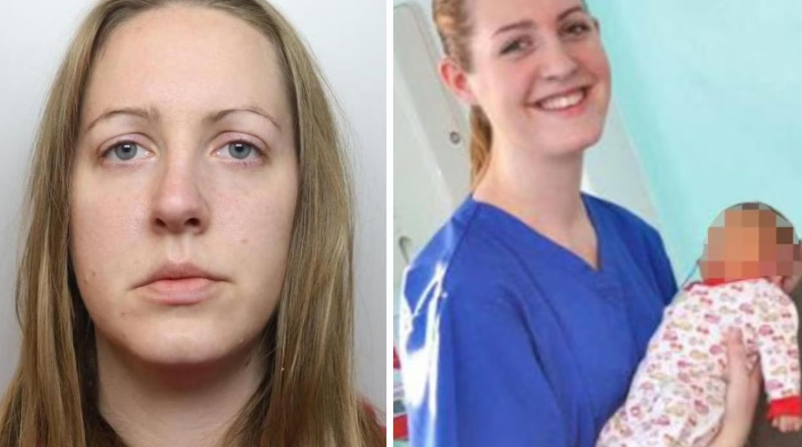
LUCY LETBY CALLED HIM HER “LOVE” AND “BEST FRIEND” — BUT THE MARRIED DOCTOR INSISTED THEIR RELATIONSHIP WAS SOMETHING ELSE
 MORE THAN 1,300 MESSAGES, PRIVATE OUTINGS AND A RELATIONSHIP THAT LATER CAME UNDER INTENSE SCRUTINY
For years, Dr. Mark Deakin was known to the public only as “Doctor A” — the married pediatric consultant whose unusually close relationship with Lucy Letby became a major focus during the trial of Britain’s most notorious former neonatal nurse.
Now, following his death, Deakin can be publicly identified for the first time.
The Court of Appeal lifted the anonymity order that had protected his identity during Letby’s trial, ruling that the justification for keeping his name secret no longer applied after his death.
But the story surrounding Deakin and Letby goes far beyond a simple workplace friendship.
Their relationship involved more than 1,300 Facebook messages, meals together, a trip to London, visits to Letby’s home and conversations about babies on the neonatal unit.
Letby later described Deakin in handwritten notes as someone she “loved” and called her “best friend.”
Yet Deakin consistently rejected the suggestion that they were romantically involved.
Instead, he said he believed he was supporting a colleague who was struggling and later told the Thirlwall Inquiry that he felt he had been “misled and maybe manipulated” by Letby.
 MORE THAN 1,300 MESSAGES
Letby and Deakin worked together at the Countess of Chester Hospital, where Letby was a neonatal nurse and Deakin was a doctor.
Their contact gradually became unusually close.
Evidence presented during Letby’s trial showed that the pair exchanged more than 1,300 Facebook messages over a period of months.
They also spent time together away from the hospital.
They went out for meals, visited the Cheshire Oaks shopping outlet and took a day trip to London.
Letby also spent time at Deakin’s home, while evidence showed that she had searched for his wife’s Facebook profile.
A colleague later described the pair as “unusually close” for workplace colleagues, saying there had been gossip about their relationship on the ward.
LETBY CALLED HIM HER “LOVE”
Perhaps the most revealing evidence came from handwritten notes recovered by police from Letby’s home.
In one note, she described Deakin as her “best friend” and wrote about loving him.
The notes became part of the prosecution’s attempt to explain Letby’s emotional attachment to the doctor.
Prosecutor Nick Johnson KC suggested during the trial that Deakin had become an important emotional focus for Letby and described her as being infatuated with him.
Letby rejected the suggestion that they were a couple.
She maintained that they were simply friends and denied that she had romantic feelings for him.
DEAKIN SAID HE WAS TRYING TO HELP
Deakin presented a very different account of their relationship.
He said he believed Letby was struggling emotionally and that he was trying to provide support.
He did not accept that he had knowingly entered into a romantic relationship with her.
But years later, when questioned by the Thirlwall Inquiry, Deakin acknowledged that some of their conversations had crossed professional boundaries.
The inquiry heard that he had shared information about babies who had suffered serious medical episodes.
In one exchange, Letby asked him about Baby N, one of the infants involved in the criminal case.
Deakin responded reassuringly, telling her that he believed the baby had received the best possible care and that she had done everything she could.
Looking back, Deakin accepted that the exchange had been inappropriate.
He said he had shared information because he believed it would help Letby — but later realized that he had not understood the full situation.
He told the inquiry that he had been “misled and maybe manipulated” and expressed deep regret about what happened.
THE RELATIONSHIP BECAME EVEN MORE SIGNIFICANT AFTER LETBY WAS REMOVED FROM THE NEONATAL UNIT
The relationship came under further scrutiny because of what happened after concerns about Letby had begun to emerge.
In 2016, Letby was removed from clinical duties at the Countess of Chester Hospital and moved into a non-clinical role after senior doctors had raised concerns about the unusual number of infant collapses and deaths.
Deakin later moved to Alder Hey Children’s Hospital.
Despite Letby no longer working clinically, Deakin arranged several observational visits for her at Alder Hey in December 2016.
The visits allowed her to attend meetings, ward rounds and clinics.
She also attended a presentation involving insulin — a substance prosecutors said was used in attacks on babies at the Countess of Chester Hospital.
The hospital’s approval required Letby to be supervised and prohibited direct contact with patients.
However, the investigation later found that the circumstances surrounding the visits had not been fully disclosed.
THE HOSPITAL INVESTIGATION
After Letby was convicted in 2023, Deakin informed Alder Hey about his involvement with her and the visits he had arranged.
An initial assessment concluded that he had not known about the suspicions surrounding Letby and that appropriate procedures had been followed.
That changed after a complaint was made by the mother of one of Letby’s victims.
Alder Hey subsequently launched a formal investigation into Deakin’s conduct.
The investigation lasted about 18 months.
It examined his relationship with Letby, the observational visits and his handling of confidential medical information relating to Baby N.
The investigation concluded that Deakin had been very close to Letby and was likely aware that colleagues had raised concerns about her.
It also found that he had accessed Baby N’s medical records inappropriately.
Deakin accepted that he had breached the child’s confidentiality but disputed the finding that he knew Letby was suspected of harming babies when he arranged the visits.
The disciplinary panel rejected his account.
He was dismissed from Alder Hey for gross misconduct on June 23, 2026.
THEN CAME THE SHOCKING END
The following day, Deakin was found unconscious inside his vehicle at a retail park roughly 20 miles from his home in Cheshire.
He was taken to intensive care but died nine days later.
He was 53.
An inquest into his death is expected to take place.
His death also prompted the legal battle over his identity.
Deakin had been granted anonymity when he gave evidence during Letby’s criminal trial.
But the Court of Appeal ruled that the protection no longer had a continuing justification following his death and allowed his name to be published.
THE RELATIONSHIP WAS NEVER PROVEN TO BE ROMANTIC
Despite the prosecution’s description of Letby as infatuated with Deakin, there was no finding at trial that the two were in a confirmed romantic relationship.
Deakin denied being Letby’s boyfriend.
Letby also denied that they were romantically involved.
What the evidence did establish was that they had an unusually close relationship involving extensive private communication and contact outside work.
The significance of that relationship became even greater because some of their conversations involved confidential information concerning babies who later became central to the criminal investigation.
A RELATIONSHIP THAT LEFT QUESTIONS BEHIND
Letby is currently serving multiple whole-life sentences after being convicted of murdering seven babies and attempting to murder seven others at the Countess of Chester Hospital between 2015 and 2016.
Her case remains under scrutiny, with her legal team seeking further review of her convictions.
For Deakin, however, the story ended before many of the questions surrounding his relationship with Letby could be fully resolved.
He maintained that he had been trying to help a colleague.
The inquiry later heard him acknowledge that he had shared too much, failed to understand the wider circumstances and may have been manipulated.
And Letby’s own words — calling him her “love” and “best friend” — remain among the most revealing pieces of evidence about the complicated bond between the nurse and the married doctor who once stood at the center of her professional and personal world.