LINDSAY CLANCY JURY REPORTEDLY SPLIT 11-1 AS ONE JUROR MAY BE BLOCKING A VERDICT
LINDSAY CLANCY JURY REPORTEDLY SPLIT 11-1 AS ONE JUROR MAY BE BLOCKING A VERDICT
DEFENSE ATTORNEY CLAIMS 11 JURORS APPEAR TO HAVE REACHED A POSITION, BUT THE ACTUAL VOTE HAS NOT BEEN PUBLICLY CONFIRMED
The Lindsay Clancy trial has entered a dramatic new phase as jurors remain unable to reach a unanimous verdict after days of deliberations — and her defense attorney now claims that a single juror may be standing between the panel and a decision.
Clancy, a former Massachusetts labor and delivery nurse, is accused of causing the deaths of her three young children in January 2023. She has admitted responsibility for the acts but has pleaded not guilty by reason of lack of criminal responsibility, arguing that she was experiencing severe postpartum psychosis and was not legally responsible for her actions.
After six days of deliberations, the jury remained deadlocked, raising the possibility of a mistrial if the panel ultimately cannot reach a unanimous decision.
:max_bytes(150000):strip_icc():focal(886x640:888x642):format(webp)/lindsay-clancy-trial3-9326-b486bdcc6dcf409990e5bd6aaab24ded.jpg) DEFENSE CLAIMS AN 11-1 SPLIT
DEFENSE CLAIMS AN 11-1 SPLIT
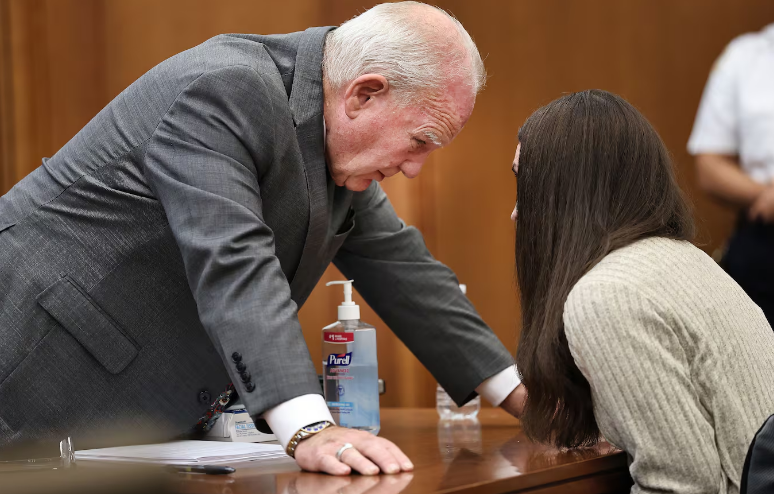
Defense attorney Kevin Reddington told PEOPLE that he believed 11 jurors had apparently reached a position while one juror was refusing to follow the judge’s instructions concerning reasonable doubt.
Reddington has strongly opposed the possibility of a mistrial and expressed confidence in his defense case.
However, the reported 11-1 split has not been officially confirmed through a formal jury vote released by the court. The information comes from the defense attorney’s characterization of the situation inside the jury room.
The conflict emerged after the jury foreperson sent a note to Judge William Sullivan raising concerns about a juror’s willingness to follow the court’s legal instructions.
The judge questioned jurors individually and reminded them of their obligation to follow the law. He ultimately declined the defense request to remove the disputed juror and sent the panel back to continue deliberating.
 A CASE CENTERED ON POSTPARTUM PSYCHOSIS
At the heart of the trial is a difficult question: Was Clancy legally responsible for what she did, or was she experiencing a severe psychiatric episode that prevented her from understanding the nature or wrongfulness of her actions?
The defense has argued that Clancy suffered from postpartum psychosis, hallucinations and the effects of extensive psychiatric treatment. Her attorneys have also argued that medical providers failed to properly recognize and treat the severity of her condition.
Prosecutors have presented a very different picture.
They argue that Clancy was depressed but not psychotic and that her actions were deliberate. The prosecution has pointed to evidence they say demonstrates planning and an awareness of what she was doing.
THREE CHILDREN AT THE CENTER OF THE CASE
The children were Cora, 5, Dawson, 3, and Callan, 8 months.
Following the January 2023 incident, Clancy attempted suicide by jumping from a second-story window. She survived but suffered permanent paralysis.
Her former husband, Patrick Clancy, has testified during the trial and has publicly spoken about the devastating loss of his children. He has also expressed forgiveness toward Lindsay while acknowledging the seriousness of her mental-health struggles.
The trial has included testimony from law-enforcement officers, medical professionals, psychiatric experts and family members as both sides presented competing explanations for Clancy’s mental state.
FIVE POSSIBLE OUTCOMES
The jury has several possible verdicts available.
They could find Clancy guilty of first-degree murder, second-degree murder or manslaughter. They could also find her not guilty by reason of lack of criminal responsibility, or simply not guilty.
A finding that Clancy was not criminally responsible would not necessarily mean she would simply walk out of court. Such a finding could result in psychiatric evaluation and confinement in a secure mental-health facility.
MISTRIAL NOW LOOMS OVER THE CASE
The longer the jury remains divided, the greater the possibility that Judge Sullivan could eventually declare a mistrial.
A mistrial caused by a genuinely deadlocked jury would not automatically end the case. Prosecutors could seek to retry Clancy, although what happens next would depend on the circumstances and decisions made by the court and prosecution.
Legal analyst Neama Rahmani has said a retrial would be highly likely if the case ends without a verdict, given the seriousness of the charges.
For now, however, the jury is being given more time.
As deliberations continue, the central question remains unanswered: Can 12 jurors overcome their differences and reach a unanimous decision in one of Massachusetts’ most closely watched trials?
The answer could determine what happens next for Lindsay Clancy — and whether this extraordinary trial ends with a verdict or returns to the courtroom for another chapter.