MILEY CYRUS AND DOLLY PARTON: THE GOODBYE THAT MUSIC COULD NEVER FULLY EXPRESS
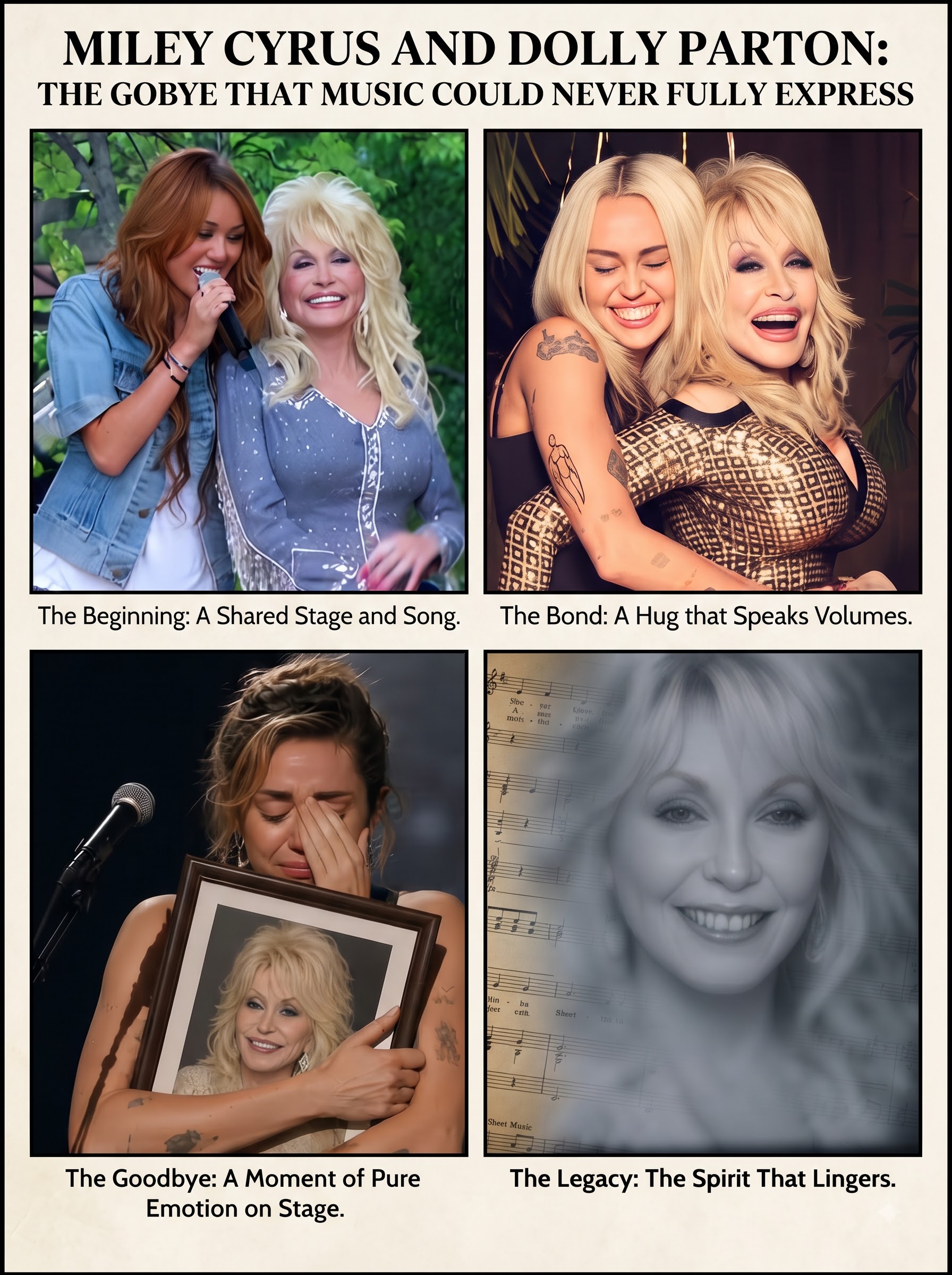
MILEY CYRUS AND DOLLY PARTON: THE GOODBYE THAT MUSIC COULD NEVER FULLY EXPRESS
There are some goodbyes that words simply cannot carry.
And for Miley Cyrus, saying goodbye to Dolly Parton was never going to be an ordinary celebrity farewell.
Dolly was not simply a country music legend to Miley.
She was family.
She was “Aunt Dolly.”
She was a godmother, a mentor, a source of encouragement and one of the people who had been part of Miley’s life long before the world knew her as Hannah Montana.
So when Dolly died at 80, Miley was not mourning an icon from a distance.
She was mourning someone she loved.
And that difference makes her tribute one of the most deeply personal chapters in the aftermath of Dolly’s death.
TO THE WORLD, SHE WAS DOLLY PARTON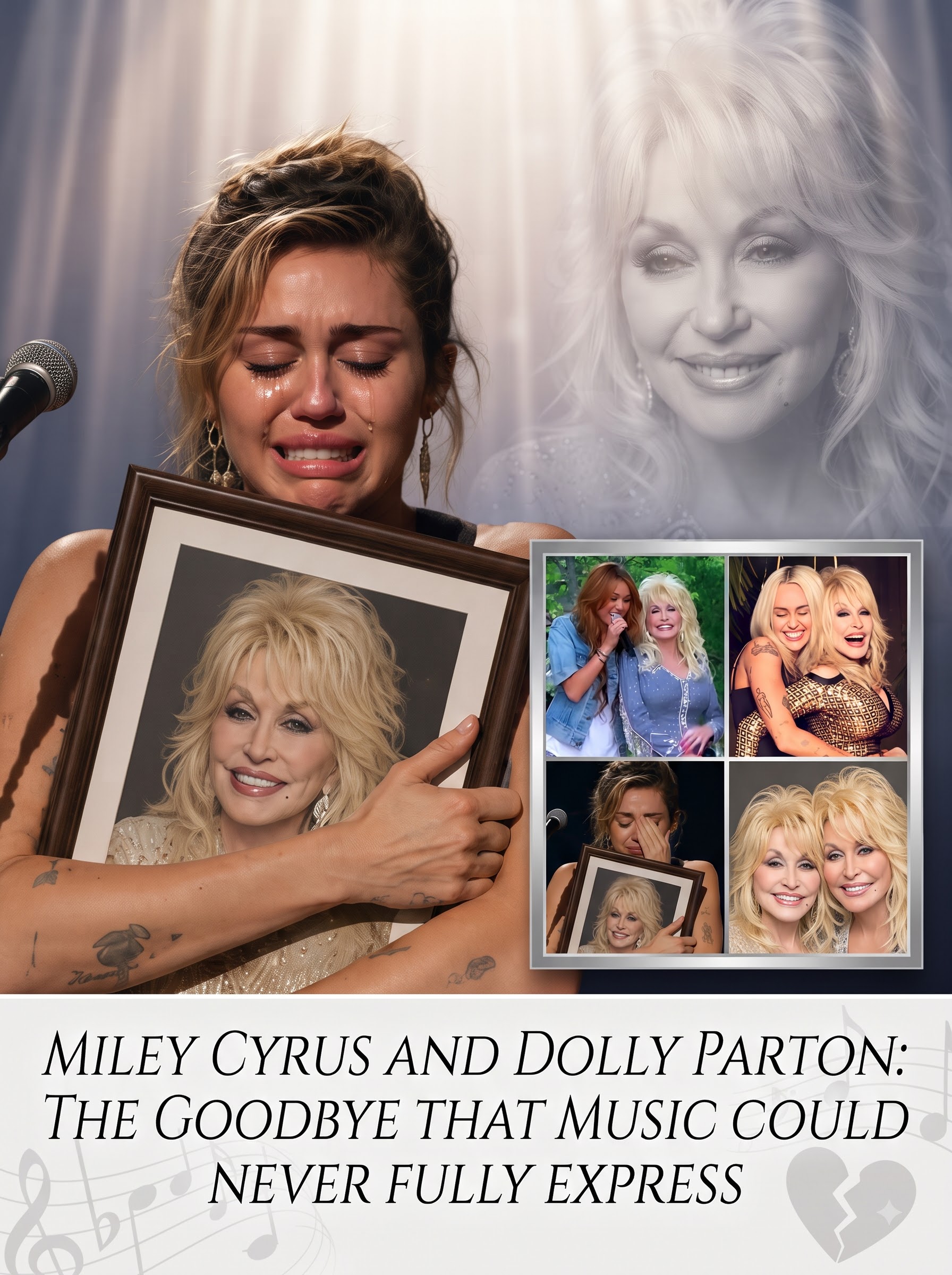
For generations, Dolly Parton represented something almost impossible to duplicate.
She was the voice behind songs that became part of American life.
She was the woman behind “Jolene,” “9 to 5” and “I Will Always Love You.”
She was the entertainer with the enormous hair, sparkling clothes, unmistakable laugh and larger-than-life personality.
But to Miley Cyrus, Dolly was something much simpler.
She was Aunt Dolly.
That private relationship existed long before Miley became a global superstar herself.
Dolly had watched Miley grow.
She appeared on Hannah Montana.
She offered advice.
She encouraged Miley’s career.
And through the years, their relationship remained far more personal than the occasional celebrity collaboration might suggest.
When Dolly was gone, Miley wasn’t simply losing a musical hero.
She was losing someone who had helped shape the person she became.
DOLLY HELPED MILEY FIND HER VOICE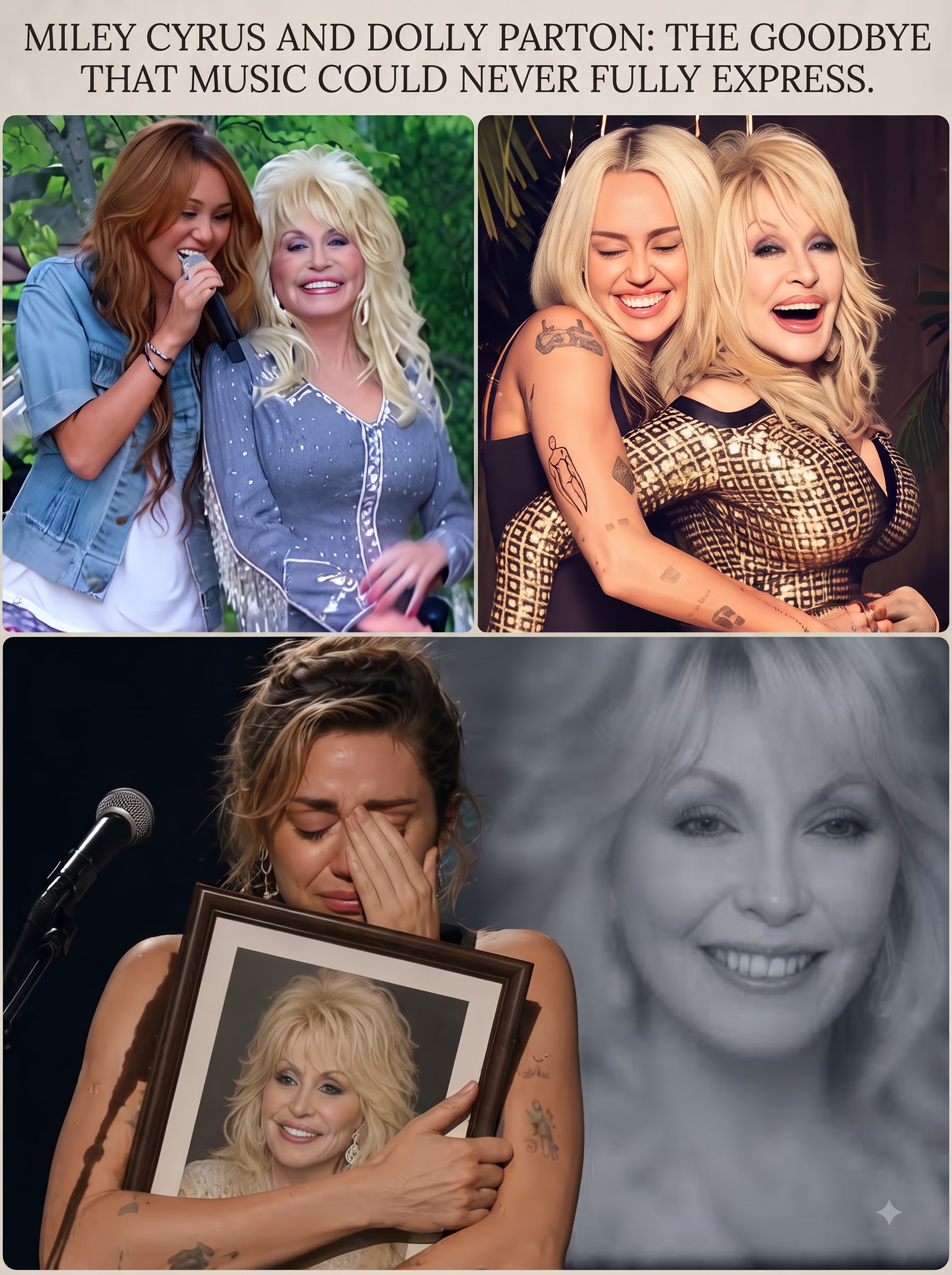
The connection between the two women has always carried a special meaning in Miley’s career.
Dolly’s appearance on Hannah Montana wasn’t just another guest appearance.
It became one of the show’s most memorable moments.
For young Miley, sharing the screen with Dolly meant working alongside someone she had known and admired from childhood.
But Dolly’s influence didn’t stop when the television cameras stopped rolling.
She continued encouraging Miley as the younger singer navigated the difficult transition from child star to adult artist.
That transition was anything but easy.
Miley grew up in front of millions of people.
Every mistake was photographed.
Every change in her appearance became news.
Every musical decision was analyzed.
Yet Dolly consistently seemed to understand something many outsiders didn’t:
Miley needed the freedom to become her own person.
And Dolly had lived through her own transformation.
She understood what it meant to be underestimated.
She understood what it meant to build an identity beyond the expectations placed upon you.
Perhaps that was one reason their bond lasted so long.
THEN CAME THE FINAL CONVERSATION
After Dolly’s death, Miley revealed that one of the memories she would carry with her was a final conversation between them.
The conversation centered on music, life and transformation.
For Miley, those words now had a completely different meaning.
At the time, it was simply another conversation with someone she loved.
Afterward, it became a memory.
That is one of the cruelest parts of losing someone.
You rarely know which ordinary moment will eventually become precious.
A phone call.
A laugh.
A piece of advice.
A hug.
A few sentences exchanged without realizing they may be the last.
Miley’s tribute made clear that Dolly’s influence was still alive in her.
She said she wanted to make Dolly proud.
And perhaps that is the greatest tribute a mentor can receive.
Not simply being remembered.
But continuing to create because of what they taught you.
“I HAVE AN ANGEL BY MY SIDE”
Miley’s words after Dolly’s death quickly resonated with fans.
She described the feeling of having an angel beside her.
It was not the language of someone saying goodbye to a distant celebrity.
It sounded like someone trying to understand how a person could be gone and still somehow remain present.
That contradiction is at the heart of grief.
The person is no longer there.
But their voice remains.
Their advice remains.
Their photographs remain.
Their songs remain.
And the things they taught you become part of who you are.
For Miley, Dolly’s influence cannot simply disappear because Dolly is no longer physically present.
Every time Miley walks onto a stage, writes a song, picks up a microphone or makes a difficult artistic decision, there is a chance that some small piece of Dolly’s wisdom comes with her.
THE IMAGE OF MILEY CRYING ONSTAGE
A fictional story circulating online imagined Miley standing alone beneath a soft spotlight, her hands trembling around a microphone as photographs of Dolly appeared behind her.
It is an incredibly powerful image.
But it is important to distinguish imagination from reality.
That particular performance, the described arena reaction and the supposed eyewitness accounts were presented by the original article as a fictionalized scenario, not as a verified event.
And perhaps that is worth mentioning because the emotional reaction itself tells us something.
People wanted to imagine Miley singing for Dolly because music has always been the language connecting the two women.
The fictional scene resonated because it represented something emotionally true even though the event itself was not confirmed.
It represented the goodbye many fans imagined Miley might someday have to give.
A stage.
A microphone.
A song.
And someone she loved no longer standing beside her.
WHY THEIR RELATIONSHIP MEANT SO MUCH
Celebrity relationships can sometimes look superficial from the outside.
Two famous people take a photograph together.
They appear at an award show.
They collaborate on a song.
Then the cameras disappear.
But Miley and Dolly’s relationship was different.
Their connection stretched across generations.
Dolly belonged to a musical world that existed long before Miley was born.
Miley belonged to a new generation that grew up with Disney, pop music and social media.
Yet somehow, the two worlds met.
Dolly became a bridge.
She showed Miley that changing didn’t mean losing yourself.
She demonstrated that commercial success and authenticity could coexist.
And perhaps most importantly, she showed Miley that fame could be used to help other people rather than simply to elevate yourself.
DOLLY NEVER STOPPED BEING A MENTOR
One of the most touching aspects of their relationship was Dolly’s willingness to encourage Miley without trying to control her.
Dolly understood that a younger artist cannot simply become a copy of an older legend.
Miley had to find her own voice.
Her own style.
Her own mistakes.
Her own path.
And Dolly seemed willing to let her do exactly that.
That may be the greatest form of mentorship.
Not telling someone who to become.
But giving them enough confidence to discover who they already are.
NOW MILEY HAS TO CARRY THE MEMORY FORWARD
Grief changes with time.
The first days can feel impossible.
Eventually, the tears may become less frequent.
But the memories become more integrated into everyday life.
For Miley, Dolly’s influence will likely continue through music.
Through the stories she tells.
Through the lessons she remembers.
Through the choices she makes.
And perhaps through the courage to keep evolving.
Because that is something Dolly did her entire life.
She reinvented herself without abandoning her roots.
She remained unmistakably Dolly while constantly moving forward.
That may be the lesson Miley carries most deeply.
DOLLY’S LEGACY WAS NEVER JUST ABOUT SONGS
If Dolly had only written great songs, she would still have been remembered.
But her legacy is much larger.
She opened doors.
She supported artists.
She invested in children.
She built institutions.
She gave people hope.
She made generosity part of her public identity.
And she showed millions that kindness and ambition did not have to be opposites.
Miley grew up close enough to see the person behind the legend.
That makes her perspective especially meaningful.
She knew the Dolly the public saw.
But she also knew the Dolly who could simply be Aunt Dolly.
And sometimes that private version of a person is the one we miss most.
SOME PEOPLE LEAVE A SONG BEHIND
Others leave an entire generation changed.
Dolly Parton did both.
Her songs will continue to be played long after the people who first heard them are gone.
Her stories will continue to be told.
Children will continue receiving books through the programs she created.
Young musicians will continue discovering her songwriting.
And artists like Miley will continue carrying her influence into a new era.
That is what makes a legacy different from fame.
Fame belongs to the moment.
Legacy belongs to the future.
THE FINAL GOODBYE MAY NEVER REALLY BE FINAL
Miley cannot call Dolly anymore.
She cannot ask for another piece of advice.
She cannot walk into a room and hear that familiar voice.
She cannot create another ordinary memory with her.
But she can still make music.
She can still tell stories.
She can still make Dolly proud.
And perhaps that is the most beautiful way to understand grief.
You don’t stop loving someone because they’re gone.
You simply learn how to love them differently.
For Miley Cyrus, Dolly Parton will no longer be someone she can reach across a room and hug.
She will be a memory.
A lesson.
A voice.
An influence.
An angel by her side.
And somewhere beneath all the fame, all the awards and all the millions of records, the relationship will remain what it was from the beginning:
A young woman who loved her Aunt Dolly.
And a legendary woman who believed in her.
That bond doesn’t disappear when the spotlight goes dark.
It simply becomes part of the light that remains.