NO VERDICT. NO FINAL ANSWER. LINDSAY CLANCY’S TRIAL ENDS IN A MISTRIAL

NO VERDICT. NO FINAL ANSWER. LINDSAY CLANCY’S TRIAL ENDS IN A MISTRIAL
After more than five weeks of testimony, hours of emotional arguments and nearly 40 hours of jury deliberations, the Lindsay Clancy case has ended without a verdict.
On Friday, Sept. 4, Judge William Sullivan formally declared a mistrial after the 12-person jury failed to reach a unanimous decision over whether Clancy was criminally responsible for the deaths of her three young children.
The decision leaves one of the most closely watched criminal cases in Massachusetts unresolved.
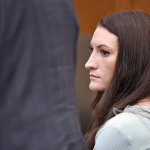
:max_bytes(150000):strip_icc():focal(830x603:832x605):format(webp)/Lindsay-Clancy-looks-on-as-juror-090426-1fd361e5cdef44ce93b4431cb94d21cc.jpg) THREE CHILDREN. ONE DEVASTATING QUESTION.
THREE CHILDREN. ONE DEVASTATING QUESTION.
Clancy, 36, a former labor-and-delivery nurse from Duxbury, Massachusetts, has never denied that she strangled her three children at their home in January 2023.
The children were Cora, 5, Dawson, 3, and Callan, 8 months old.
After the deaths, Clancy jumped from a second-story window in what prosecutors and defense attorneys agreed was an apparent suicide attempt. She survived but was left paralyzed from the waist down.
The central question at trial was not whether Clancy caused the children’s deaths.
It was whether she was legally responsible for her actions at the time.
THE DEFENSE: SHE WAS IN THE GRIP OF POSTPARTUM PSYCHOSIS
Clancy’s defense argued that she was experiencing severe postpartum psychosis and other serious mental-health problems when the killings occurred.
Her attorneys said her psychiatric condition, combined with medications and inadequate medical care, left her unable to understand the nature or wrongfulness of what she was doing.
During closing arguments, defense attorney Kevin Reddington pointed to Clancy’s deteriorating mental state and told jurors that medication and medical treatment played a central role in the tragedy.
More than 80 witnesses testified during the trial, including medical experts, friends, relatives, law-enforcement officers and Clancy’s former husband, Patrick.
The case became about much more than a single criminal allegation.
It became a battle over where mental illness ends and criminal responsibility begins.
 THE PROSECUTION SAW SOMETHING VERY DIFFERENT
Prosecutors did not dispute that Clancy had experienced mental-health struggles.
But they argued that those struggles did not make her legally incapable of understanding right from wrong.
Prosecutor Jennifer Sprague told jurors that the key issue was whether Clancy knew the difference between right and wrong and whether she could control her behavior under the law.
The prosecution portrayed the killings as intentional acts carried out before Clancy attempted to end her own life.
The two sides therefore presented dramatically different explanations for the same devastating sequence of events.
One side described a mother overwhelmed by a psychiatric crisis.
The other argued that she remained capable of making deliberate choices.
THEN THE JURY BECAME DEADLOCKED
The jury deliberated for seven days.
On Thursday, a note to the judge suggested that one juror was refusing to apply the court’s instructions concerning reasonable doubt.
Clancy’s defense asked Judge Sullivan to remove that juror.
He refused.
The judge said the note did not establish that the juror was refusing to follow the law.
On Friday, the jury again reported that it could not reach a unanimous decision.
“With a heavy heart,” the jurors wrote, they were unable to agree.
The judge ultimately declared a mistrial.
THE DEFENSE FOUGHT TO STOP THE MISTRIAL
Even after the judge initially indicated that the case would end without a verdict, Clancy’s defense sought additional time.
Reddington asked the judge to delay the mistrial while pursuing an emergency request before the Massachusetts Supreme Judicial Court.
That request was denied.
The mistrial was then formally declared.
WHAT DOES A MISTRIAL MEAN?
It does not mean Lindsay Clancy was acquitted.
It also does not mean she was found guilty.
There is simply no verdict.
The criminal case remains unresolved, and prosecutors must now decide what comes next.
They could seek a new trial, pursue another legal resolution or potentially negotiate a plea.
A status hearing is scheduled for Sept. 29.
Clancy remains in a psychiatric facility while the case continues.
THE FAMILY IS LEFT WITHOUT AN ANSWER
For the families involved, the mistrial means the legal uncertainty continues.
Three children died.
A mother remains accused of causing their deaths.
And after one of the most emotionally charged trials in recent Massachusetts history, a jury still could not answer the question that brought everyone into the courtroom:
Was Lindsay Clancy criminally responsible for what happened to her children?
There is no final answer yet.
No conviction.
No acquittal.
Just a courtroom emptied of jurors — and a case that may not be over.