A 12-Year-Old Called Police on Her Mom — Then Officers Asked One Simple Question
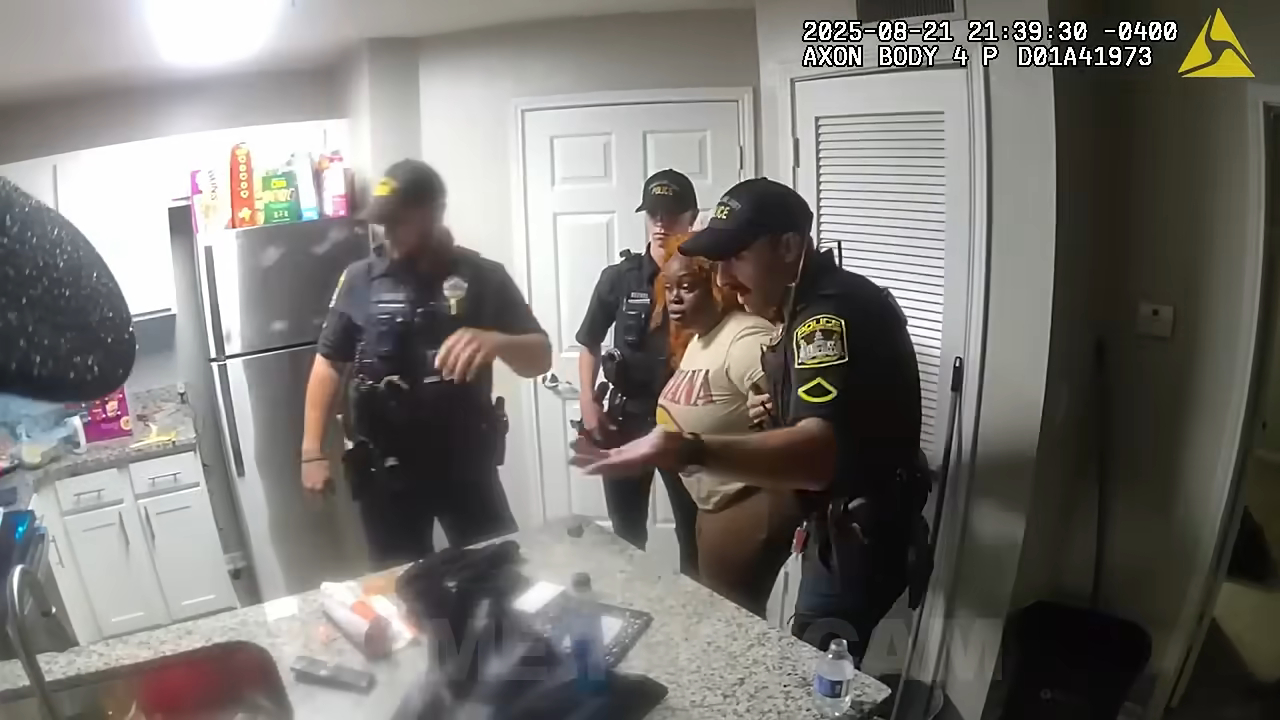
What began as a call involving a 12-year-old girl and a dispute with her mother quickly became something far more complicated.
On March 3, 2026, officers responded to a reported domestic dispute after the girl had been involved in a fight at school and later returned home, where tensions with her mother escalated.
At first, there was little indication of just how dramatically the encounter would change.
The child was frightened. Her mother was defensive. And officers were trying to understand exactly what had happened inside the home.
But within minutes, one seemingly routine question would begin shifting the entire direction of the investigation.
The Girl Steps Outside and Starts Talking
When officers arrived, they initially tried to determine who was inside the residence and asked someone to step outside.
A young girl eventually appeared.
Almost immediately, her emotional state was obvious.
“I’m just scared,” she told the officer.
She then began explaining the events that had led to the police response.
According to the girl, she had gotten into a fight at school several days earlier. She described entering a bathroom where another girl allegedly punched her first, triggering the fight.
By the time she returned home, the school incident had created another confrontation — this time between the 12-year-old and her mother.
The girl said her mother was angry about what had happened at school. She described an increasingly tense argument and alleged that her mother had hit her.
She also described becoming protective of her phone and other belongings as the disagreement escalated.
Whatever had begun at school was no longer just a school disciplinary issue.
For the child standing outside talking to police, it had become something she said made her afraid inside her own home.
And then she revealed something important.
This apparently was not the first time police had become involved.
“Am I in Trouble?”
As the girl continued talking, she told officers she had called police during an earlier incident and said her mother had gone to jail afterward.
She also claimed that, before that, she had once run away because of problems at home.
Then came one of the most striking moments of the exchange.
“I’m scared,” she said.
A moment later, she asked:
“Am I in trouble?”
The officer answered simply:
“No.”
It is a short exchange, but it changes the emotional tone of the scene.
The girl was not only describing an argument with her mother. She appeared concerned that calling police itself might somehow lead to consequences for her.
She then asked whether she would be able to retrieve her belongings.
The officer reassured her that she could.
With the girl’s account established, police turned their attention toward hearing the other side of the story.
That meant speaking directly with her mother.
And almost immediately, the encounter took on a different tone.
Police Ask the Mother What Happened
An officer approached the woman and attempted to speak with her near the doorway.
The officer first asked whether he could come inside, apparently concerned about a baby potentially getting out.
The woman refused.
“No, sir,” she responded, adding that it was not her house.
The officer then asked what had happened between her and her daughter.
Her reaction was defensive.
“What do you mean, what’s going on?” she asked. “What did she say that I did?”
Rather than immediately explaining the allegation, the officer asked the woman to tell him what had happened.
She said the girl had been suspended from school, that she had taken away her phone and that the child was angry about it.
Then the officer asked a more direct question:
Had she been hitting her daughter?
The transcript captures the woman responding, “Yeah,” although the conversation immediately becomes somewhat fragmented.
By this point, police were no longer simply standing outside listening to a frightened child.
They were investigating an allegation involving a mother and her daughter.
And that required identifying everyone involved.
That was when the encounter changed again.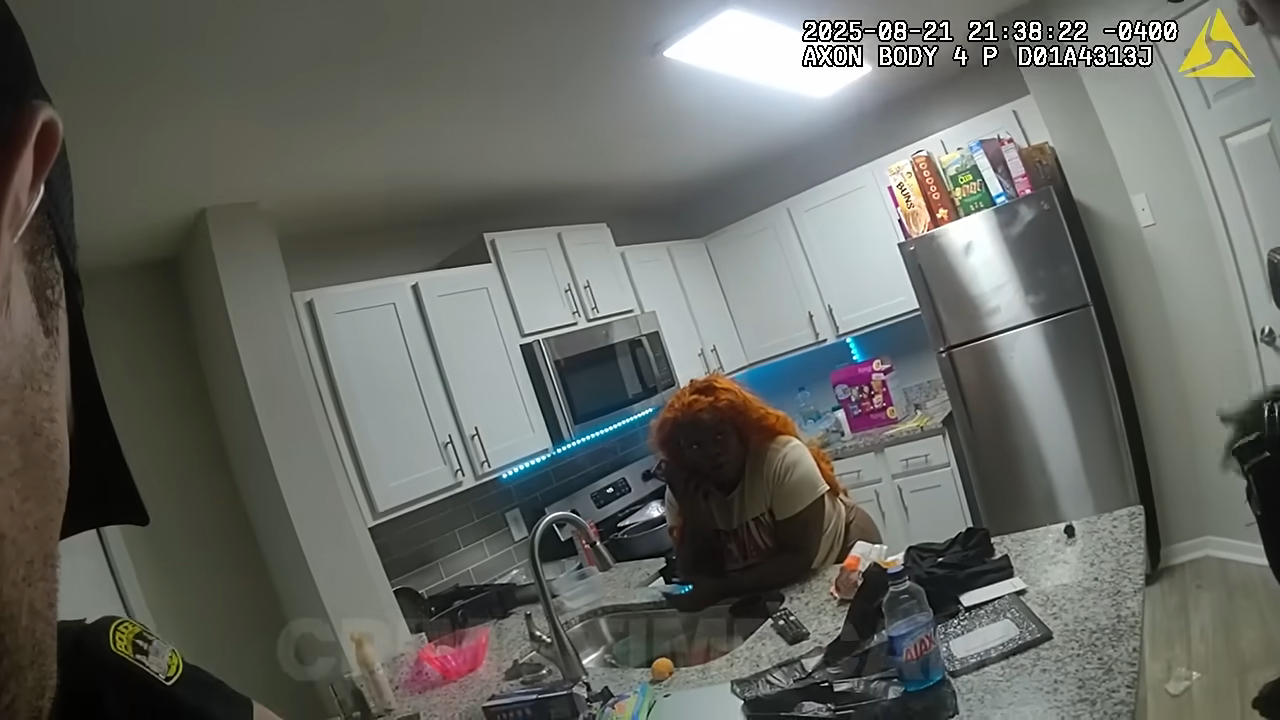
One Question Creates a New Problem
At approximately the three-minute mark, the officer asked the woman what should have been one of the simplest questions of the entire investigation:
“What is your name?”
Instead of answering, she hesitated.
“I don’t want to,” she said.
The officer told her she needed to provide her name.
She disagreed.
The exchange quickly became confrontational.
When the officer warned that refusing could result in her being taken to jail, the woman responded:
“No, you’re not.”
She again emphasized that officers could not come inside because the residence was not hers.
But the officer kept returning to the same issue.
There was an allegation of a crime, he explained, and police were attempting to investigate a reported domestic dispute involving her and her daughter.
To do that, he said, he needed to know who she was.
Still, she resisted.
Instead, the woman said she did not want to continue talking until her lawyer was present.
“And I have that right,” she said.
The officer again asked her to identify herself.
She continued insisting on speaking with an attorney.
What had started minutes earlier with a scared 12-year-old recounting a school fight and an argument at home had now reached an unexpected standoff.
Police had one side of the story.
They had begun questioning the mother.
But they still did not have something as basic as a straightforward identification from the woman standing in front of them.
And the longer that question remained unanswered, the more suspicious the situation appeared.
The Domestic Call Is About to Become Something Else
Up to this point, the encounter appeared centered on one basic question: what happened between a mother and her 12-year-old daughter?
The daughter said she was scared and alleged that her mother had hit her.
The mother characterized the situation differently, describing an angry child who had been suspended from school and had her phone taken away.
Those competing accounts were exactly the kind of details officers had arrived to sort out.
But the refusal to provide a name introduced an entirely new problem.
Why would someone involved in a domestic investigation be so determined not to identify herself?
Was she simply angry about the officers being there?
Was she worried about where the investigation might lead?
Or was there another reason she did not want police to know exactly who they were speaking to?
The answer would soon transform what looked like a relatively contained family dispute into a much larger police encounter.
And officers were only beginning to discover why.