Woman Detained at Car Wash Tries to Call 911 to Verify the Officers Arresting Her
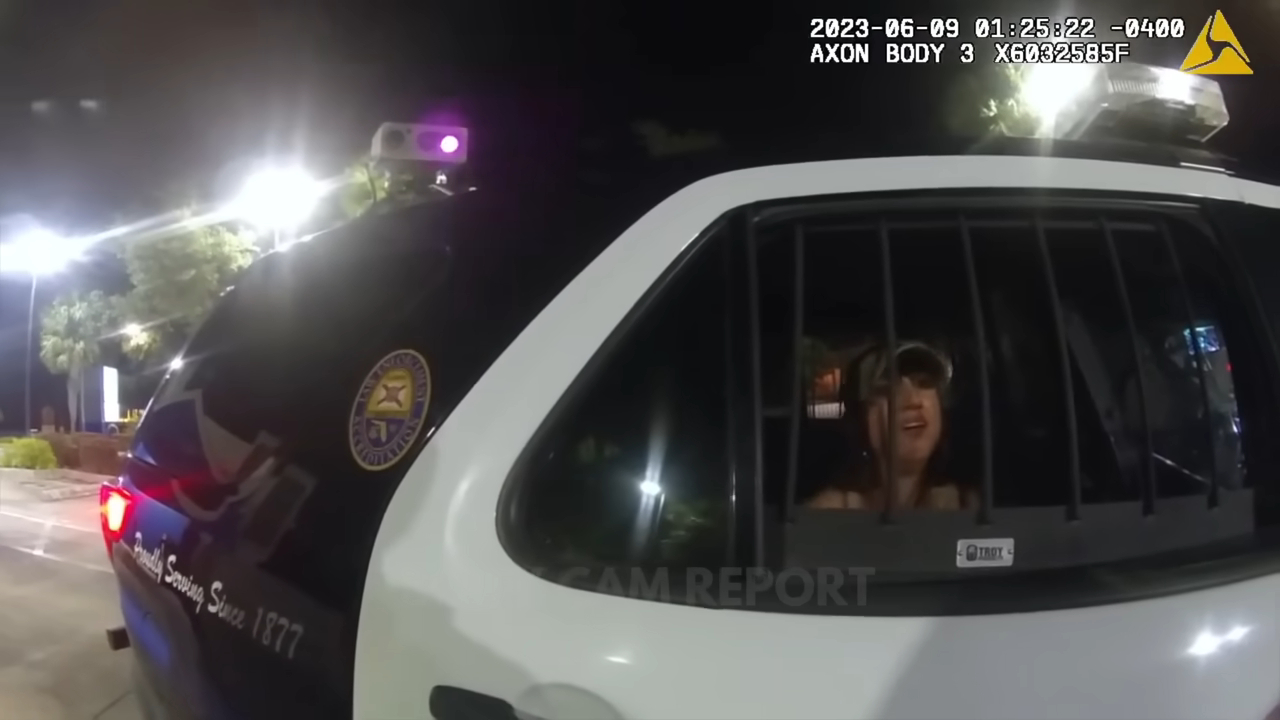
Being placed in handcuffs did not resolve the central question in the woman’s mind.
It made it more urgent.
Moments earlier, she had been arguing with officers at a 24-hour car wash after the business owner asked police to have her leave the property. She had questioned the officer’s uniform, challenged whether the vehicle beside him was enough proof that he was a police officer, and repeatedly demanded identification.
Eventually, officers moved in and restrained her.
But rather than accepting that she was now dealing with law enforcement, the woman became even more insistent that she needed independent confirmation.
Within minutes, she would ask for another officer, demand access to her phone, and attempt to call 911 to verify that the people arresting her were actually police.
“I Want to Talk to Another Officer”
Immediately after officers began restraining her, the tone of the encounter changed.
The woman, who had previously been argumentative and openly frustrated, began repeatedly saying “please.”
She asked to speak with someone else.
“I want to talk to another officer,” she said several times.
Her concern remained the same: she said the officer had not shown her the kind of identification she wanted to see.
Even after being restrained, she continued asking why he would not show her an ID badge.
Eventually, she put her fear into unusually direct terms.
“You can be anybody putting cuffs on me,” she said.
The officers continued pointing to visible signs of police authority, including the marked vehicle and uniforms.
But she remained unconvinced.
To her, a police car by itself did not settle the issue.
“That’s just a car,” she argued.
She again asked for another officer.
The confrontation had now moved far beyond the original question of whether she needed to leave the business. The woman appeared to believe she needed proof independent of the people already detaining her.
That belief led to one of the most unusual moments of the entire encounter.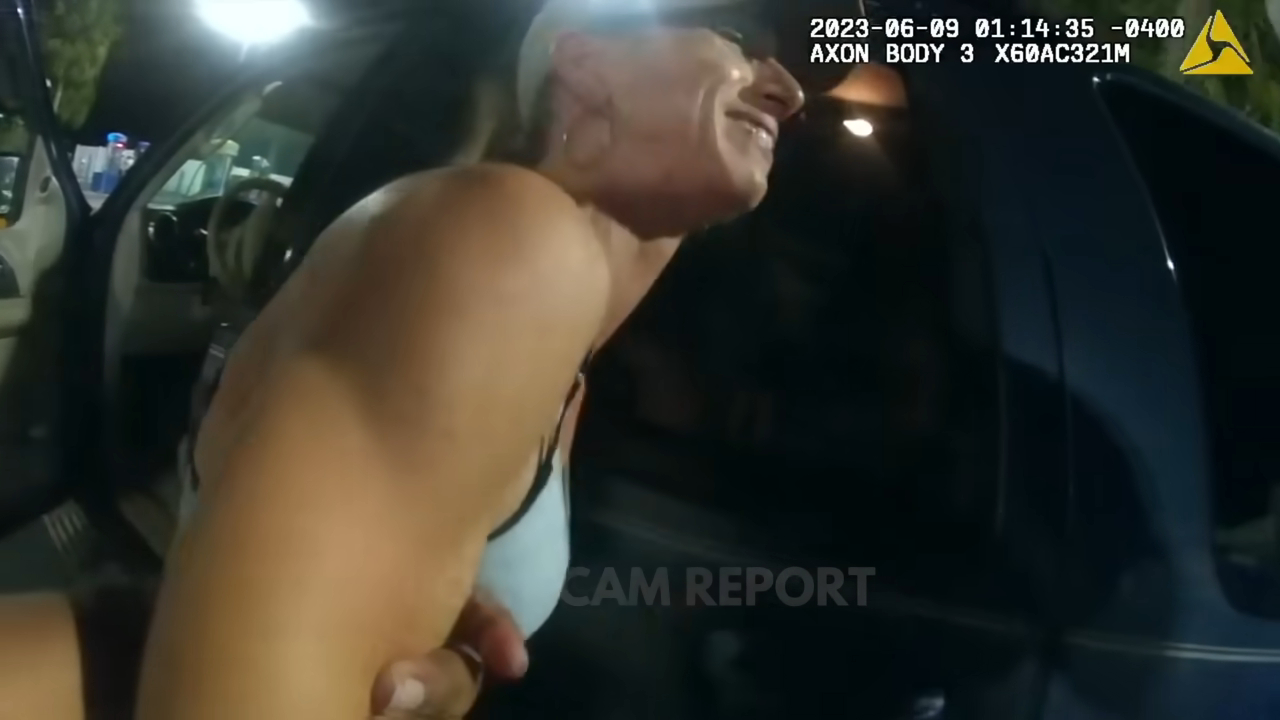
She Wants to Call 911 — While Surrounded by Police
At approximately 12:54, the woman asked to use her phone.
Her reason was not to contact a family member or attorney.
She wanted to call 911.
“Let me call 911 on my own,” she said.
The idea was striking because she was already surrounded by people identifying themselves as law enforcement officers.
Yet she insisted that she did not know who they were and wanted confirmation through an emergency dispatcher.
As the officers continued managing the scene, she repeatedly asked for her phone and said calling 911 was her right.
Then she turned to a friend named Rob, who was apparently connected to her by phone.
“Call the cops for me,” she pleaded.
She told him where she was and asked him to contact police on her behalf — while officers were standing directly beside her.
Throughout the encounter, the woman repeatedly said she was following advice from this friend.
“I’m doing what my friend told me to do,” she said.
That detail mattered because she appeared to be relying on Rob’s guidance when challenging the officers’ identity and asserting what she believed her rights were.
Later, another officer arrived, but her suspicions did not disappear.
She continued saying the officers “could be anybody” and asked for identification containing a photograph and name.
When told that police identification did not work in the way she was demanding, she again turned toward Rob.
Her friend had become a central figure in the confrontation even though he was not physically at the scene.
Eventually, Officer Hamilton decided to speak with him directly.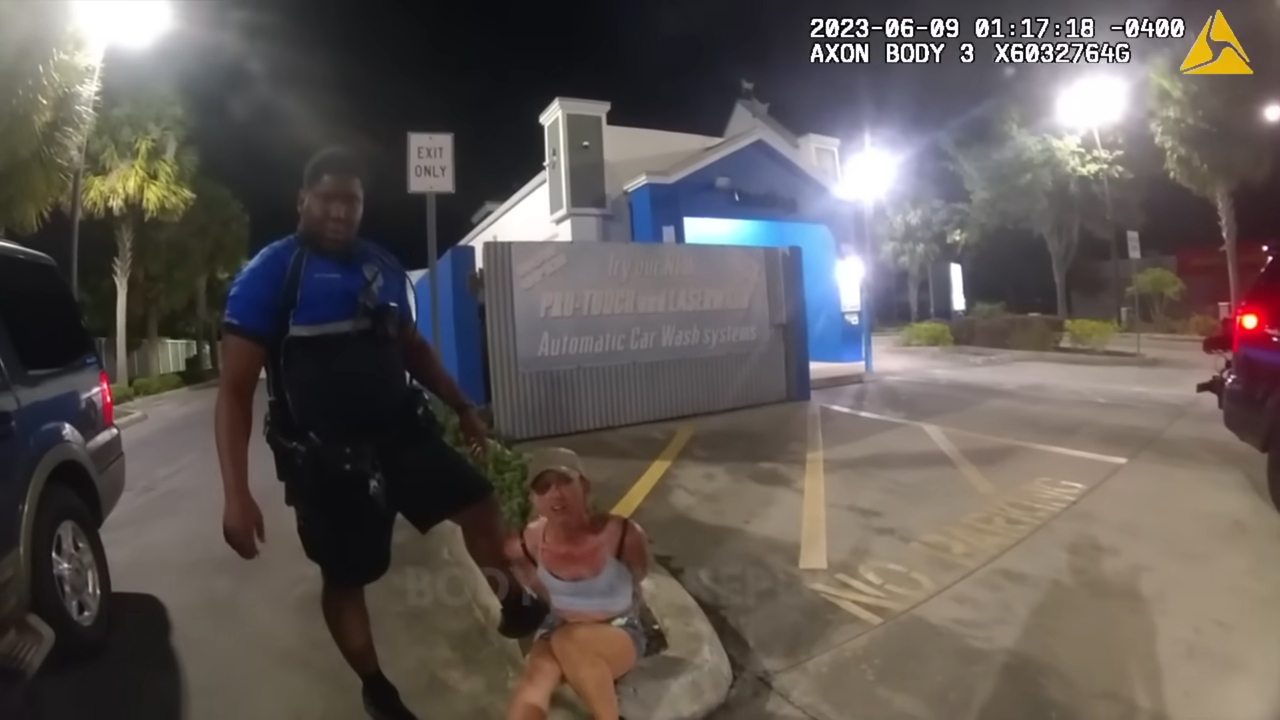
Officer Hamilton Gets on the Phone
At approximately 16:45, the officer finally took the phone.
He introduced himself clearly.
“I’m Officer Hamilton with Sanford Police Department.”
He then began explaining what had happened.
Hamilton told the friend that the business owner wanted the woman to leave and that he had repeatedly instructed her to do so.
He also explained that he had already provided his name and a business card.
According to the conversation, the friend appeared to acknowledge that the woman had not handled the encounter particularly well.
The exchange became more surprising when the friend apparently asked Hamilton to relay a blunt message to her.
The officer declined to tell the woman to “shut up,” though the friend continued trying to communicate that message through him.
The phone call provided an unexpected payoff to something the woman had been repeating for several minutes: that she was acting based on what her friend had told her.
Hamilton used the same conversation to explain his version of events.
The property owner had asked that she leave.
According to the officer, she had been given multiple opportunities to do so.
Instead, he said she continued challenging whether he was an officer, recording the vehicle and remaining at the property.
For the woman, however, the central argument remained unchanged.
She insisted she had been packing her truck and preparing to leave.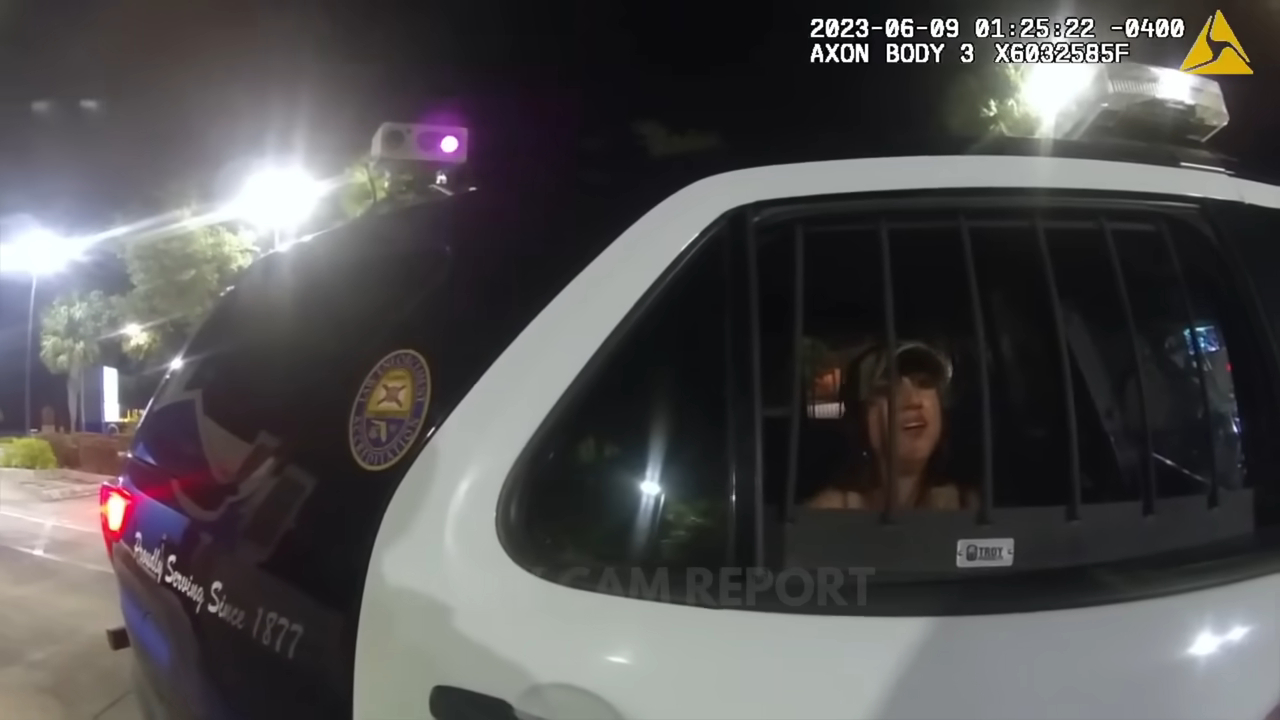
“Why Are You Arresting Me?”
The encounter continued for several more minutes before a sergeant gave one of the clearest explanations of the arrest.
At approximately 25:10, the woman finally asked the question directly.
“Why are you arresting me? For what?”
The answer was concise:
“Trespass after warning.”
The woman immediately returned to the point she had made from the beginning.
“This is not trespassing. It’s a 24-hour car wash.”
But the sergeant explained that the issue was not whether the car wash was open to customers generally.
The business owner had requested that she leave, and officers said she had subsequently been instructed several times to leave the property.
The woman countered that she had been talking while packing her truck and that she had been trying to verify the officers.
She again referenced advice from her friend and argued that she had the right to examine the police vehicle’s license plate.
The sergeant eventually ended the debate.
“You can make your argument in court,” he told her.
That statement effectively closed the roadside argument.
Whatever disagreement remained over the sequence of events, the officers were no longer going to resolve it at the car wash.
From a 24-Hour Car Wash to an Arrest
The final minutes showed just how far the encounter had moved from where it started.
The woman maintained that she had simply been cleaning a recently purchased vehicle at a business that operated around the clock.
Police, however, said the property owner had explicitly asked her to leave and that she had received repeated warnings.
Her distrust of the officers complicated everything that followed.
She questioned their uniforms.
She questioned their vehicle.
She demanded photo identification.
She asked for another officer.
And after being restrained, she tried to call 911 to verify that the people restraining her were actually police officers.
Even when her friend eventually spoke directly with Officer Hamilton, the disagreement did not end.
According to the closing narration in the footage, the woman was ultimately charged with trespassing and resisting an officer without violence and was ordered to pay fines.
The encounter began with a property owner saying he simply wanted someone gone.
It ended with handcuffs, criminal charges and one persistent argument from the woman at the center of it all:
She believed that because the car wash was open 24 hours, she should not have been treated as a trespasser.
The officers saw it differently — and by the end of the night, that disagreement was no longer being decided in the parking lot.