Baby Boy With Fused Skull Receives Pioneering Treatment in World-First Procedure
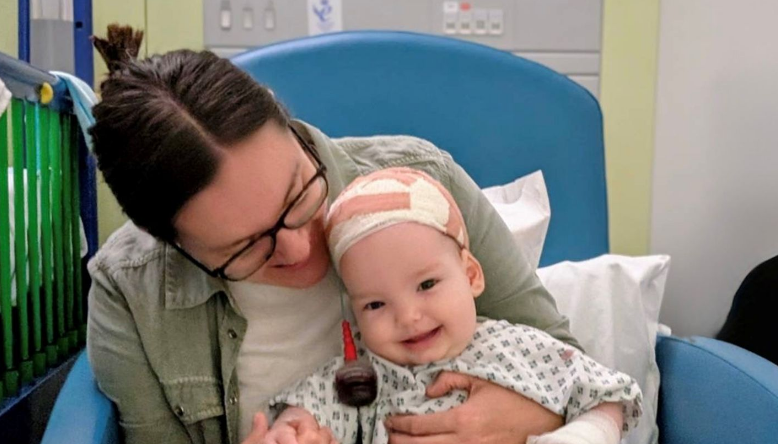
UK Boy Becomes First Child in the World Treated With Novel Nitinol Spring Technique
A young boy from the United Kingdom has made medical history after becoming the first pediatric patient reported to have undergone a pioneering treatment using specially designed “super-elastic” springs to correct a rare skull condition.
Rory Potter was diagnosed with severe sagittal craniosynostosis, a condition in which one of the skull’s sutures fuses too early. Because the skull cannot expand normally as a child’s brain grows, the premature fusion can cause the head to develop an abnormal shape and may require surgical treatment.
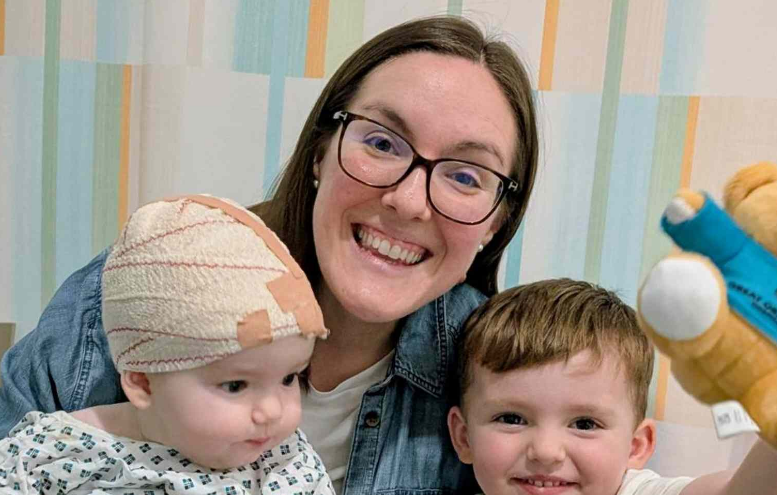
Rory was treated at Great Ormond Street Hospital (GOSH) in London, where doctors used an innovative technique involving custom-designed nitinol springs.
The springs were created specifically for the shape of Rory’s skull. Made from super-elastic nitinol, a nickel-titanium alloy capable of exerting a controlled restoring force, the devices were designed to gradually help reshape the skull after surgery.
The procedure to insert the springs was carried out in September 2025 and reportedly lasted only around 45 minutes.
Rather than remaining in place permanently, the springs were removed approximately nine weeks later, after Rory’s skull had reached the desired shape.
According to reports, Rory was the first pediatric patient in the world to receive treatment using this new nitinol spring technique, marking a significant milestone in the development of less invasive approaches to cranial surgery.
The innovative method is designed to harness the natural properties of nitinol while allowing surgeons to guide the developing skull into a more typical shape. Its use could potentially offer another treatment option for children affected by certain forms of craniosynostosis.
Following the procedures, Rory has reportedly made a good recovery. He is now back at home with his family and is developing normally.
For Rory’s family, the successful treatment has brought enormous relief after facing the challenges associated with his diagnosis. His recovery also represents an encouraging early result for a technique that doctors hope could eventually benefit other children with similar conditions.
While further evaluation will be needed to determine the technique’s broader effectiveness and potential applications, Rory’s case represents an important step forward in pediatric craniofacial surgery.
From a diagnosis that once threatened to affect the normal development of his skull, Rory has now become part of a pioneering medical milestone—while continuing to grow and thrive at home with his family.
Source: People.com