Why Is Celeste Rivas’ Family Suing People Beyond D4vd — And What Do They Say Those People Knew?

For months, the criminal case involving singer D4vd has focused on one central question:
Can prosecutors prove that he killed 14-year-old Celeste Rivas Hernandez?
Now Celeste’s family is asking a different question.
Who else allegedly knew what was happening — and did anyone around D4vd have a responsibility to stop it?
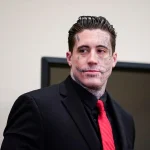
Celeste’s parents have filed a sweeping civil lawsuit against D4vd, whose real name is David Anthony Burke, after prosecutors charged him in connection with the teenager’s death.
But Burke is not the only defendant.
The lawsuit also names members of his family, managers, business entities and a live-in security guard.
That makes the new legal battle significantly broader than the criminal prosecution.
The criminal case is primarily about whether Burke committed specific crimes.
The civil lawsuit asks whether a larger circle of people and companies allegedly helped create, finance or maintain the circumstances that allowed his relationship with Celeste to continue.
And at the heart of that lawsuit is a much bigger question:
What did the people closest to D4vd know?
The Criminal Case Is Already Moving Toward Trial
Burke, 21, has pleaded not guilty.
He faces criminal charges including murder, continuous sexual abuse of a child under 14 and unlawful mutilation of human remains.
Prosecutors allege that Burke maintained an illegal relationship with Celeste and killed her in April 2025 after fearing that exposure of the relationship could destroy his rapidly rising music career.
Her remains were discovered months later, on Sept. 8, 2025, inside the front trunk of a Tesla registered to Burke after the vehicle was impounded in Los Angeles.
After a multi-day preliminary hearing, a judge ruled that prosecutors had presented enough evidence for Burke to stand trial.
Burke continues to deny the charges through his not-guilty plea and is presumed innocent unless convicted.
But Celeste’s parents are no longer waiting for the criminal trial to pursue their own case.
Their civil lawsuit opens a second front.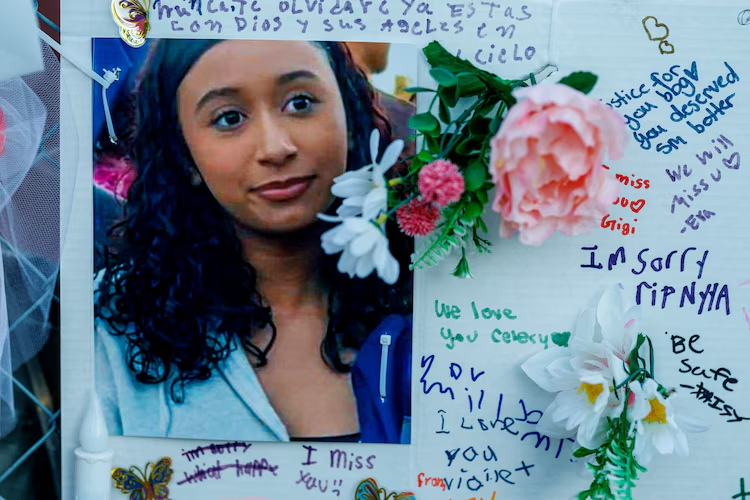
The Lawsuit Goes Far Beyond Wrongful Death
Celeste’s parents, Mercedes Martinez and Jesus Rivas, are seeking damages over their daughter’s death and the abuse they allege occurred before it.
The complaint includes allegations involving wrongful death, sexual battery, childhood sexual assault, false imprisonment, emotional distress and human trafficking, among other claims.
But one of its most important features is the list of defendants.
Along with Burke, the lawsuit names people who allegedly occupied important positions in his personal and professional life.
Among them are his mother, Colleen Burke; managers Josh Marshall and Robert Morgenroth; management company Mogul Vision; live-in security guard Sheldon Jacques; and business entities associated with Burke’s music career.
The family’s theory is not simply that these people happened to know the singer.
The complaint alleges that parts of Burke’s professional and personal infrastructure — housing, money, transportation, security and communications — helped make his access to Celeste possible.
Those allegations have not been proven in court.
What Does the Family Say the Managers Knew?
Perhaps the most consequential part of the lawsuit involves Burke’s management team.
The complaint alleges that people working around Burke knew, or should have known, that he was involved in an inappropriate relationship with a minor.
More seriously, Celeste’s family alleges that at least one or more management defendants had actual knowledge that Burke was sexually abusing her and continued working with him.
That is a major allegation.
The lawsuit argues that management was not operating at a distance from Burke’s private life.
According to the complaint, Mogul Vision leased the Hollywood Hills residence where Burke lived and where prosecutors allege Celeste was later killed.
The lawsuit also alleges that Robert Morgenroth handled Burke’s day-to-day affairs and lived at the residence.
Celeste’s parents argue that the people managing Burke therefore had opportunities to observe aspects of his life that an ordinary business associate might never see.
Whether they actually knew what the lawsuit claims they knew will likely become one of the central disputes in the civil case.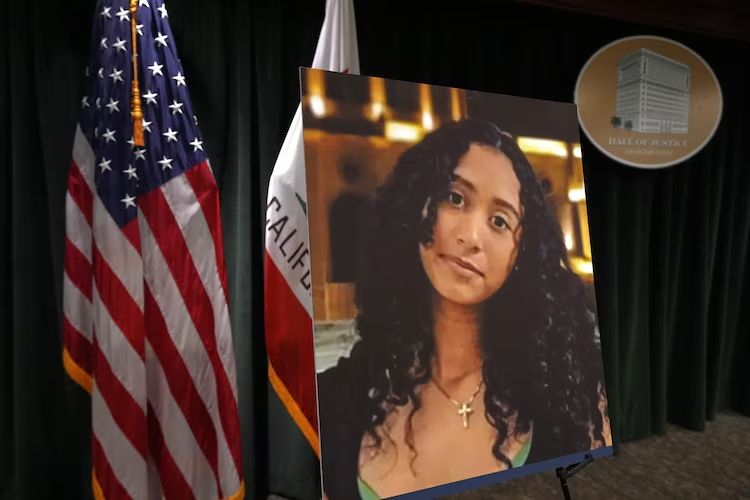
Why Is D4vd’s Mother Named?
Burke’s mother, Colleen Burke, is also a defendant.
According to the lawsuit, she did more than simply have a family relationship with her son.
The complaint describes her as his personal financial manager and alleges that she had authority over accounts, approved expenses and helped control the flow of money connected to his career.
Celeste’s parents claim she also hosted the teenager in her home on one or more occasions.
Their argument is that those circumstances allegedly created a duty to act reasonably to protect a minor.
The lawsuit accuses her of negligence.
An attorney representing Colleen Burke declined to comment publicly when the lawsuit became known.
Again, being named in a civil lawsuit does not establish liability.
The family will have to prove its allegations.
The Security Guard Faces Different Allegations
The allegations involving live-in security guard Sheldon Jacques are more specific.
The lawsuit claims Jacques helped facilitate Burke’s access to Celeste, including allegedly assisting with transportation.
Celeste’s parents accuse him of providing substantial assistance that helped Burke maintain control over and access to the teenager.
He is named not only in negligence allegations but also in an aiding-and-abetting theory connected to some of the alleged abuse.
The lawsuit paints transportation as an important part of the relationship.
Celeste’s parents claim Burke arranged rides and other logistics so that she could travel without their knowledge.
They also allege that Burke provided her with a concealed cellphone so the two could communicate outside her parents’ awareness.
If the case moves into discovery, records involving vehicles, messages, payments, housing and travel could become especially significant.
The Money May Become a Major Part of the Case
The civil lawsuit also raises another question:
Were resources generated by D4vd’s career used to sustain the alleged relationship?
Celeste’s parents argue that business entities connected to Burke helped fund the lifestyle and logistics surrounding him.
The complaint alleges that money, housing, travel, communications and security resources helped isolate Celeste from her family and allowed Burke to spend time alone with her.
It even alleges that gifts, housing, travel and promises involving a future relationship formed part of conduct the parents characterize as human trafficking.
Those are serious legal allegations and will be contested if the civil case proceeds.
But they explain why the lawsuit includes corporate entities rather than focusing only on Burke as an individual.
The family is trying to establish whether a larger system around him played a role.
Two Cases Could Produce Very Different Answers
The criminal case and civil lawsuit may overlap heavily in evidence, but they serve different purposes.
Prosecutors must prove criminal charges beyond a reasonable doubt.
A civil case uses a lower burden of proof and focuses largely on liability and damages.
That means Celeste’s parents could attempt to obtain documents, financial records, communications, depositions and other evidence from defendants who are not charged in the criminal case.
That discovery process could reveal information the public has never seen.
It could also produce evidence favorable to the defendants.
The family has already indicated that the complaint could be amended if additional information emerges.
That makes the new lawsuit especially important.
It is not merely repeating the murder case.
It is asking whether Celeste’s death was the final event in a much wider chain of alleged failures.
The Question Has Changed
For much of the past year, attention has centered almost entirely on D4vd.
Did he kill Celeste?
Can prosecutors prove it?
What evidence will a jury hear?
Those questions remain.
Burke has pleaded not guilty, and his criminal case has not yet been decided.
But Celeste’s parents are now forcing another issue into the courtroom.
They are asking what the people around him saw.
What they were told.
What expenses they approved.
Who arranged transportation.
Who controlled the house.
Who helped manage his daily life.
And whether anyone who allegedly realized a 14-year-old girl was being placed in danger should have intervened.
The lawsuit does not prove that D4vd’s family members, managers, security personnel or companies committed wrongdoing.
That will have to be decided through the civil process.
But it has dramatically expanded the story.
The legal question is no longer only what prosecutors say D4vd did.
It is now also:
Who around him allegedly knew what was happening — and what, if anything, did they do about it?