WADE WILSON’S DEATH ROW FIGHT RETURNS TO THE SPOTLIGHT — THE VIRAL OBSESSION IS BACK, BUT THIS TIME THE STAKES ARE HIS OWN LIFE
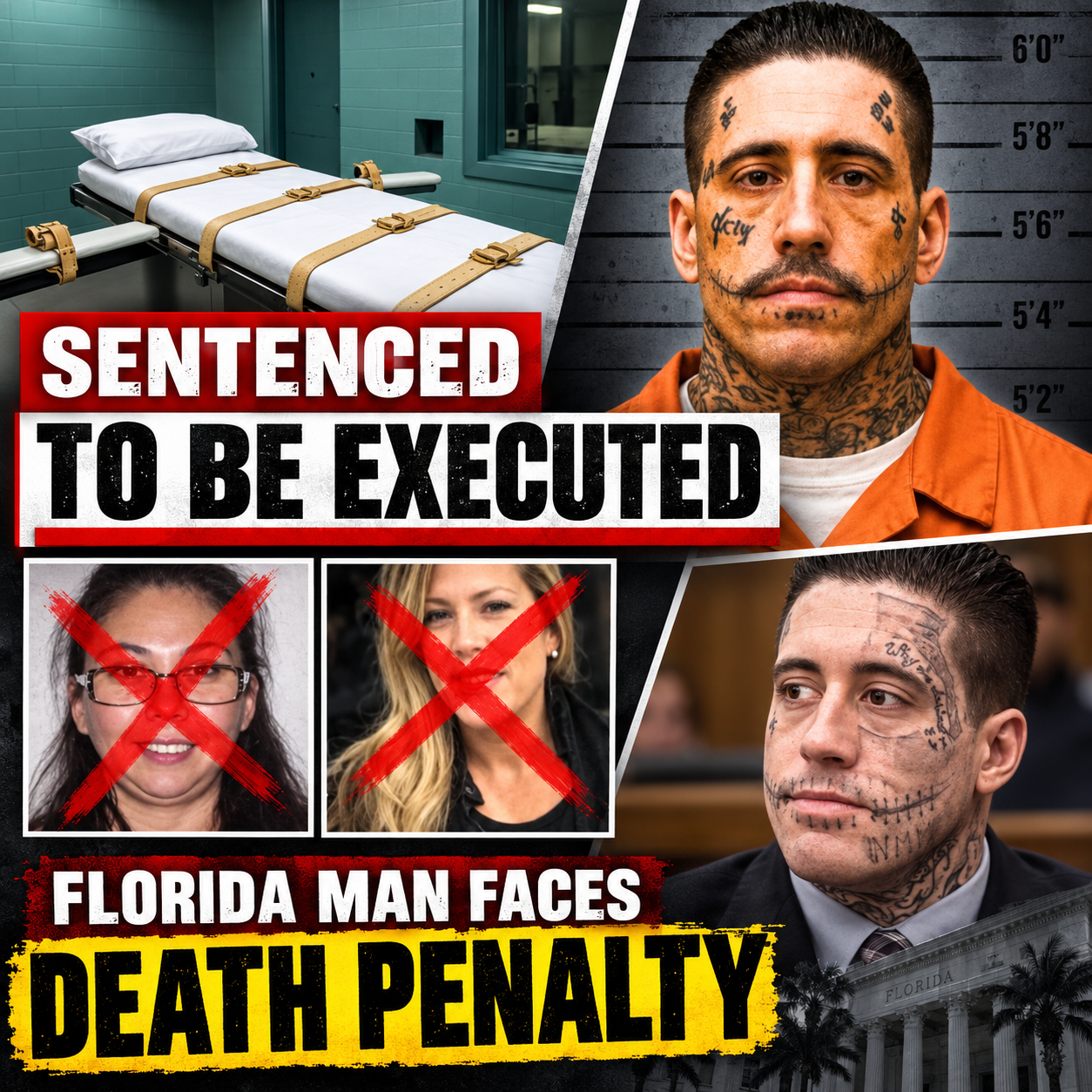
WADE WILSON’S DEATH ROW FIGHT RETURNS TO THE SPOTLIGHT — THE VIRAL OBSESSION IS BACK, BUT THIS TIME THE STAKES ARE HIS OWN LIFE
For months, the internet has been fascinated by Wade Wilson.
His tattoos.
His courtroom appearances.
The photographs that spread across social media.
And the extraordinary attention from people who became fixated on the convicted murderer during and after his 2024 trial.
But behind the viral posts and online fascination is a much more serious story.
Wilson remains on Florida’s death row — and his legal fight over his two death sentences is still unfolding.
The case has now returned to the spotlight for a different reason.
Not because of another viral photograph.
Not because of another social-media trend.
But because his attorneys are challenging the death sentences themselves.
And the legal questions surrounding those sentences are anything but simple.
FROM VIRAL PHOTOS TO A DEATH-ROW APPEAL
Wilson was convicted in June 2024 of murdering Kristine Melton and Diane Ruiz in Lee County, Florida.
The killings occurred on October 7, 2019.
In August 2024, Judge Nicholas Thompson sentenced Wilson to death for both murders.
But the sentencing process contained a detail that would later become one of the most important parts of his appeal.
The jury’s recommendations were not unanimous.
Jurors recommended death by 9–3 for Melton’s murder and 10–2 for Ruiz’s murder.
Under the Florida law applicable at the time, those recommendations could support death sentences because the statutory threshold was at least eight jurors recommending death.
That legal framework is now part of the broader appeal.
THE APPEAL IS NOT A RETRIAL OF THE MURDERS
One important distinction is easy to miss.
Wilson’s current direct appeal is focused on his convictions and, particularly, the legality of the death sentences.
The Florida Supreme Court’s case record identifies the matter as Wade Steven Wilson v. State of Florida, SC2024-1345 and describes the appeal as raising seven issues seeking reversal of the death sentences.
That means the central question now is not whether the internet likes or dislikes Wilson.
It is not about his appearance.
It is not about the thousands of social-media comments surrounding him.
It is a legal question.
Were the convictions and death sentences imposed under a sentencing system that satisfies Florida law and the Constitution?
WHY THE 9–3 AND 10–2 VOTES MATTER
The numbers are impossible to ignore.
For Kristine Melton:
9 jurors voted for death.
3 did not.
For Diane Ruiz:
10 jurors voted for death.
2 did not.
Neither recommendation was unanimous.
Florida’s revised capital-sentencing framework, however, did not require all 12 jurors to recommend death.
That distinction became critical in Wilson’s case.
The defense has argued that applying the newer sentencing framework to Wilson raises constitutional and statutory questions because the murders occurred in 2019, before Florida changed its capital-sentencing rules.
The State has argued that the amended law was procedural and was properly applied at the time of Wilson’s sentencing.
That disagreement is now part of the appellate record.
THE FLORIDA SUPREME COURT HEARD THE CASE
On February 5, 2026, Wilson’s attorneys appeared before the Florida Supreme Court.
The hearing was significant because it placed the death sentences directly before the state’s highest court.
The court’s official video archive identifies the case as SC2024-1345 and describes it as a direct appeal seeking reversal of Wilson’s death sentences.
The legal arguments surrounding the jury-vote requirement were also complicated by decisions the Florida Supreme Court had issued in other death-penalty cases.
That development affected the arguments Wilson’s attorneys had planned to make.
But the broader appeal did not simply disappear.
The case remains part of the judicial process surrounding Wilson’s death sentences.
THEN THERE IS THE OTHER STORY — THE INTERNET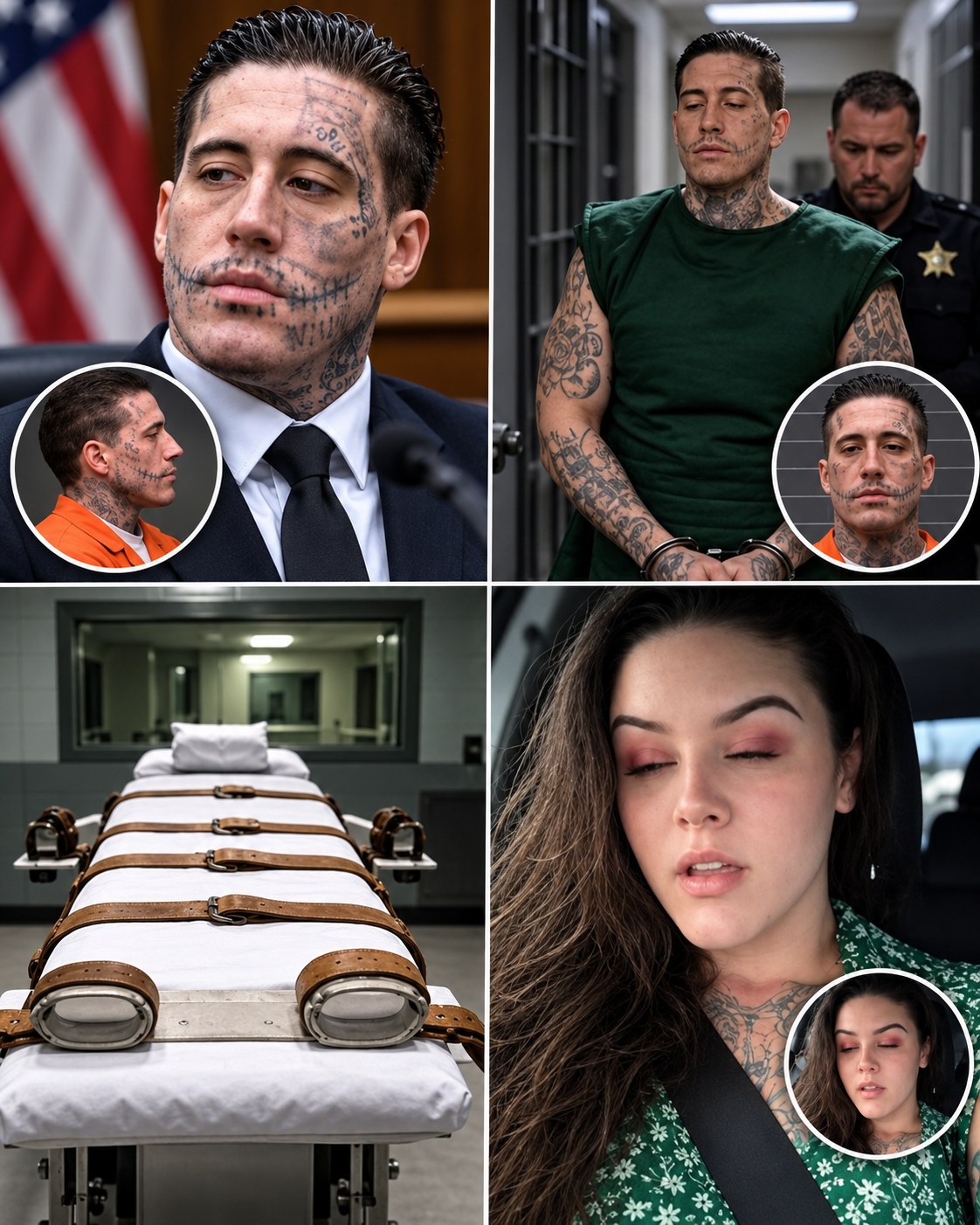
While the legal proceedings moved forward, Wilson’s image became something entirely different online.
During the 2024 trial, photographs of the heavily tattooed defendant spread widely across social media.
Some users focused on his appearance.
Others posted comments expressing fascination with him.
Some sent letters and messages.
The phenomenon became so widespread that it turned into a separate part of the public conversation surrounding the case.
Law&Crime described Wilson as becoming “TikTok and social media famous” during his double-murder trial, noting that some people online focused on his appearance and alleged charm.
That created an unusual contrast.
Inside the courtroom, prosecutors were presenting evidence concerning two women who were killed.
Outside the courtroom, social media was increasingly turning the defendant himself into a viral figure.
BUT THE VICTIMS REMAIN AT THE CENTER OF THE CASE
Kristine Melton was 35.
Diane Ruiz was 43.
Both women were killed in Cape Coral on October 7, 2019.
Wilson was ultimately convicted of both murders.
The State Attorney’s Office described the case as involving two first-degree murder convictions and sought the death penalty during the sentencing phase.
Whatever happens with Wilson’s appeal, the legal proceedings concern the punishment imposed for those convictions.
The social-media fascination does not change the underlying court record.
THE DEATH SENTENCE IS NOT AUTOMATICALLY AN EXECUTION DATE
Another point often lost in viral coverage is the difference between receiving a death sentence and having an execution scheduled.
Wilson remains on Florida’s death row while the appellate process continues.
The existence of an appeal means the case has not reached its final legal endpoint.
The Florida Supreme Court’s case remains open in the public record, and recent docket activity continued into 2026.
So the headline that Wilson is “fighting to save his life” is dramatic, but there is a very real legal process behind it.
His attorneys are challenging the death sentences through the courts.
The state is defending the judgments.
And the courts must decide the legal questions.
WHY THIS CASE CONTINUES TO ATTRACT ATTENTION
Wilson’s case sits at the intersection of several stories that rarely collide in one criminal proceeding.
A double-murder prosecution.
A death sentence.
A major change in Florida’s capital-sentencing law.
A nonunanimous jury recommendation.
A constitutional appeal.
And an extraordinary social-media phenomenon surrounding the defendant.
Each part has attracted attention for a different reason.
But they should not be confused with one another.
The viral fascination is a social-media phenomenon.
The convictions are court findings.
The death sentences are judicial judgments.
And the appeal is a legal proceeding.
Those are separate things.
THE NEXT CHAPTER WILL BE DECIDED IN COURT
For now, Wade Wilson remains convicted of the murders of Kristine Melton and Diane Ruiz and remains under two death sentences.
His attorneys continue to challenge those sentences.
The Florida Supreme Court has already heard oral arguments in the direct appeal.
And the legal questions surrounding Florida’s capital-sentencing system remain significant to the case.
Meanwhile, the internet continues to debate Wilson’s image, his notoriety and the strange phenomenon that developed around him.
But beneath all of that attention is a much more consequential question:
Will the two death sentences ultimately survive the appeals process?
That answer will not be decided by TikTok.
It will not be decided by viral photographs.
And it will not be decided by online fascination.
It will be decided through the courts.
For now, the case remains open — and the next major development could come from the appellate process itself.