DOCTOR WHO FIRST ACCUSED LUCY LETBY SAYS HE IS NO LONGER CERTAIN OF HER GUILT AND CALLS FOR RETRIAL
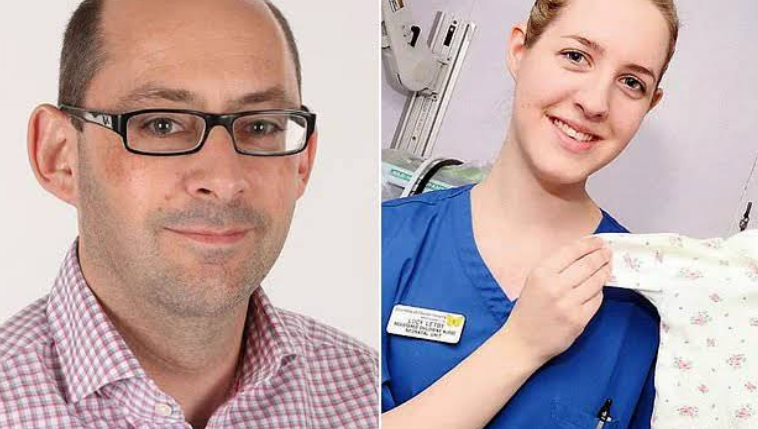
DOCTOR WHO FIRST ACCUSED LUCY LETBY SAYS HE IS NO LONGER CERTAIN OF HER GUILT AND CALLS FOR RETRIAL
A retired paediatrician who was among the doctors whose evidence helped convict Lucy Letby has said he is no longer certain that she was responsible for the deaths and has called for a possible retrial.
Dr John Gibbs, one of three consultants whose evidence was heard during Letby’s trials, told The Sun that he now has concerns about whether crimes were actually committed in some of the cases for which the former neonatal nurse was convicted.
His comments come days after the publication of the long-awaited Thirlwall Inquiry, which examined how Letby was able to harm and kill babies at the Countess of Chester Hospital’s neonatal unit.
Letby, 36, was convicted in 2023 and 2024 of murdering seven babies and attempting to murder seven others. She is serving 15 whole-life terms and continues to maintain her innocence.
 DOCTOR SAYS HE IS NO LONGER CERTAIN
Dr Gibbs told The Sun that he could no longer say with certainty that Letby was responsible for the babies’ deaths.
Asked whether he remained certain that she had killed the babies, he answered: “No.”
He said he believed a retrial could potentially be “the most appropriate thing for everyone” if new evidence raises sufficiently serious questions about the convictions.
“If it is the case that Lucy Letby is behind bars for crimes she had not committed, then that’s clearly appalling,” Gibbs said, according to The Sun.
At the same time, Gibbs acknowledged that he did not agree with every argument being made by people challenging the original convictions.
He said there was a “very small concern” that some of the babies may not have suffered deliberate harm at all.
 QUESTIONS OVER THE ORIGINAL MEDICAL EVIDENCE
The renewed debate has focused heavily on the medical explanations presented during Letby’s trials.
One major issue concerns the prosecution theory that some babies were deliberately injected with air, causing fatal air embolisms.
Vascular surgeon Dr Colin Ferguson has questioned that explanation, arguing that the absence of air detected in the hearts of the babies presents a serious problem for the theory.
Ferguson told The Sun that, in his view, the babies’ deaths did not match the expected findings associated with fatal venous air embolism.
The newspaper’s documentary “Lucy Letby: Scapegoat?”, broadcast on Channel 5, has brought those criticisms back into the public spotlight.
However, the claims remain contested.
Dr Dewi Evans, the prosecution’s medical adviser during the original trials, has defended his interpretation of the evidence. He argued that small amounts of air could potentially be difficult to detect, particularly after vigorous resuscitation, and maintained his medical opinion when questioned by The Sun.
NEW QUESTIONS AFTER THIRLWALL INQUIRY
The latest developments follow publication of the Thirlwall Inquiry report on September 15.
The inquiry found serious failures in the management and safeguarding systems at the Countess of Chester Hospital.
Lady Justice Kathryn Thirlwall concluded that hospital leadership failed to respond adequately to concerns raised by doctors about the rising number of unexpected collapses and deaths on the neonatal unit.
The inquiry found that three babies might have survived and seven others might have been protected from harm if appropriate action had been taken sooner.
The report also described dysfunctional management and governance, a divide between hospital leadership and clinicians, and failures to understand fundamental safeguarding responsibilities.
However, the inquiry was not a retrial of Letby’s criminal convictions and did not overturn the verdicts against her.
DEFENCE EXPERTS HAVE ALSO RAISED QUESTIONS
The debate has intensified because two experts who had previously provided evidence supporting Letby’s defence case withdrew from her legal team shortly before the inquiry report was published.
Chemical engineering expert Helen Shannon and bioengineering professor Geoff Chase said some of the arguments being advanced on Letby’s behalf had “fundamental unresolvable problems.”
They nevertheless maintained their assessment that it was very unlikely two babies had been poisoned with insulin in the way alleged by prosecutors.
Letby’s lawyers have said the withdrawal of the two experts does not undermine her wider case.
Meanwhile, the Criminal Cases Review Commission (CCRC) is examining material submitted on Letby’s behalf as part of a potential challenge to her convictions.
LETBY’S CONVICTIONS REMAIN IN PLACE
Despite the renewed public debate, there has been no court ruling overturning Letby’s convictions.
She was convicted of murdering seven babies and attempting to murder seven others at the Countess of Chester Hospital between 2015 and 2016.
Her first appeal was rejected, and a later attempt to challenge additional convictions was also unsuccessful.
She remains in prison serving 15 whole-life sentences.
The CCRC’s review does not itself mean that a retrial will take place. Any decision to reopen the case would have to follow the applicable legal process.
For now, Dr Gibbs’ comments represent a significant change in position from a doctor whose evidence formed part of the prosecution case.
His call for a retrial is likely to add further attention to the continuing debate over the medical evidence, hospital failures and circumstances surrounding the convictions.
But whether those concerns ultimately lead to a new legal hearing will be decided through the courts and the established criminal justice process—not by the documentary or by public opinion.