LUCY LETBY’S INFAMOUS “CONFESSION” NOTES SHOULD NOT BE READ AS AN ADMISSION OF GUILT, EXPERT SAYS
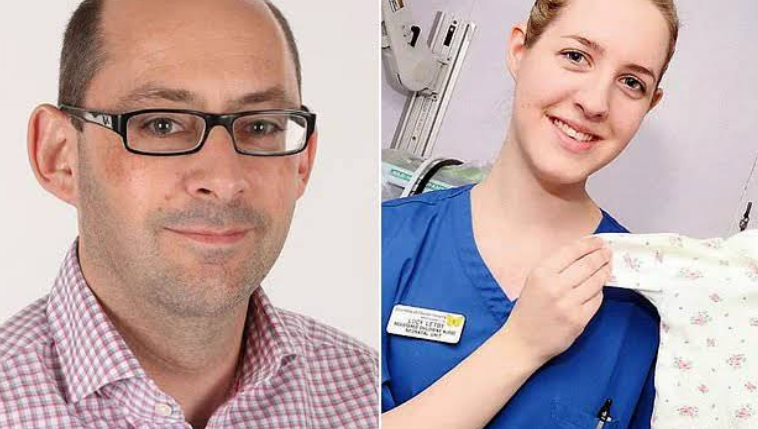
LUCY LETBY’S INFAMOUS “CONFESSION” NOTES SHOULD NOT BE READ AS AN ADMISSION OF GUILT, EXPERT SAYS
MANCHESTER, UK — One of the world’s leading experts on false confessions has challenged the interpretation of handwritten notes that became some of the most striking evidence used against convicted neonatal nurse Lucy Letby.
Professor Gisli Gudjonsson, an internationally recognised forensic psychologist who has spent decades studying false confessions, suggestibility and psychological pressure, says Letby’s handwritten material should not be interpreted as a confession to murder.
His assessment comes as renewed scrutiny surrounds the evidence in the case and Letby’s convictions.
 THE NOTES THAT BECAME KEY EVIDENCE
The handwritten notes were discovered during police searches of Letby’s home.
Among the most frequently cited lines were:
“I am evil I did this”
and:
“I killed them on purpose because I’m not good enough to care for them and I am a horrible evil person.”
Prosecutors relied on the writings during Letby’s trial as evidence when arguing that she had deliberately harmed babies at the Countess of Chester Hospital.
The phrases became some of the most memorable pieces of evidence presented to the jury.
But Professor Gudjonsson argues that the notes should not be examined by isolating a handful of apparently incriminating sentences.
Instead, he says the entire document and the circumstances in which it was written must be considered.
 EXPERT: “YOU CAN’T JUST PICK UP ONE OR TWO WORDS”
According to The Irish Sun, Professor Gudjonsson has examined Letby’s handwritten material and concluded that it should not be treated as an admission that she murdered babies.
He said the notes should be viewed as a whole rather than focusing only on the most disturbing statements.
His assessment is significant because Gudjonsson is widely recognised for his work on false confessions and psychological suggestibility.
He has also developed the Gudjonsson Suggestibility Scales, which are used internationally in research and assessment concerning susceptibility to pressure during questioning.
The professor said that, had he been instructed by Letby’s defence team, he would have advised them to challenge the admissibility of the note.
THE NOTES ALSO CONTAINED CONTRADICTORY STATEMENTS
The apparently incriminating phrases were not the only words written by Letby.
The notes also contained statements including:
“I haven’t done anything wrong”
as well as references to “slander,” “discrimination” and “I can’t do this anymore.”
Other parts of the writings reportedly referred to fear, panic, isolation and despair.
This mixture of apparently contradictory statements is central to Professor Gudjonsson’s interpretation.
Rather than treating individual sentences as straightforward admissions, he argues that the writings should be understood in their entirety and in the context in which they were produced.
QUESTIONS ABOUT THE CIRCUMSTANCES BEHIND THE WRITINGS
The interpretation of Letby’s notes has been debated before.
A 2024 investigation by The Guardian reported that sources close to the case said Letby had been encouraged by professionals to write down her thoughts and feelings while experiencing extreme psychological distress.
According to those sources, the writing was part of a process intended to help her cope.
The Guardian reported that Letby had been removed from neonatal nursing duties after concerns were raised about a cluster of deaths and was experiencing significant stress and isolation during the period when the notes were written.
However, the prosecution presented some of the words in the notes as evidence that Letby had acknowledged responsibility.
The difference between those interpretations has become an important part of the wider debate surrounding the case.
LETBY REMAINS CONVICTED
Despite the renewed scrutiny, Professor Gudjonsson’s assessment does not overturn Letby’s convictions.
Letby was convicted in 2023 of murdering seven babies and attempting to murder six others at the Countess of Chester Hospital.
During a subsequent retrial in 2024, she was convicted of attempting to murder another baby.
She is serving multiple whole-life sentences.
Her convictions remain legally in force.
NEW SCRUTINY OF THE CASE
The debate over the handwritten notes comes amid broader renewed examination of the evidence surrounding Letby.
In September 2026, the findings of the Thirlwall Inquiry into events at the Countess of Chester Hospital were published.
The inquiry examined how hospital management responded to concerns surrounding infant deaths and collapses. It was not a retrial of Letby and did not determine whether she was guilty or innocent.
The inquiry nevertheless examined serious failures in the hospital’s handling of concerns raised by doctors and staff.
Separately, two scientists who had been involved in efforts to challenge aspects of Letby’s convictions withdrew from her defence team after raising concerns about the scientific credibility of some arguments being advanced.
Other experts and campaigners continue to question aspects of the evidence and are seeking further legal scrutiny.
POLICE STAND BY THE INVESTIGATION
Cheshire Constabulary has rejected allegations that the investigation or prosecution was fundamentally flawed.
In response to the latest claims, the force said it remained confident in the integrity of the investigation, the prosecution and the decisions reached by the courts.
Police also said their thoughts remained with the families of the babies involved.
That means the current debate remains sharply divided: Letby’s convictions are legally established, while some experts and campaigners continue to question specific elements of the evidence used to secure them.
WHAT HAPPENS NEXT?
Professor Gudjonsson’s assessment is not itself a court ruling.
Any change to Letby’s legal position would require the appropriate judicial process, such as a successful appeal or another legal mechanism capable of reopening her convictions.
For now, she remains in prison serving her sentences.
But the debate over her handwritten notes has added another layer to an already highly controversial case — raising questions about how apparently incriminating writings should be interpreted when they contain both self-condemning statements and claims of innocence.
As scrutiny of the evidence continues, the significance of those handwritten words is likely to remain a major point of discussion surrounding one of Britain’s most closely followed criminal cases.