LUCY LETBY CASE ROCKED BY FRESH QUESTIONS AS WHISTLEBLOWER AND MEDICAL EVIDENCE PUT HOSPITAL FAILURES UNDER THE SPOTLIGHT
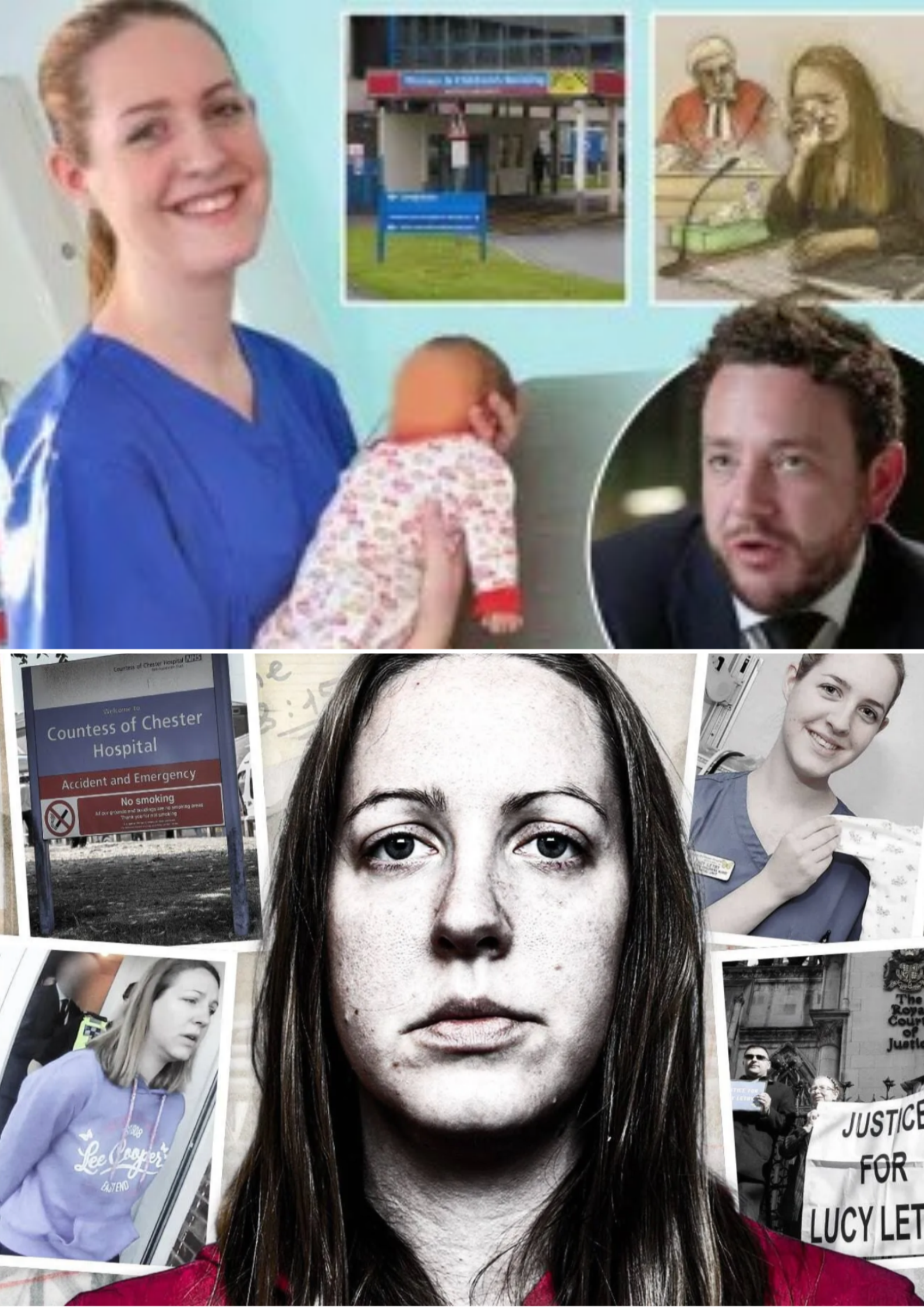
LUCY LETBY CASE ROCKED BY FRESH QUESTIONS AS WHISTLEBLOWER AND MEDICAL EVIDENCE PUT HOSPITAL FAILURES UNDER THE SPOTLIGHT
Fresh questions are being raised over the Lucy Letby case after new scrutiny of serious failures inside the neonatal unit — including staffing shortages, medical concerns, infection risks and repeated sewage problems.
The renewed debate comes after the publication of the long-awaited Thirlwall Inquiry report and a new investigation examining whether failures at the Countess of Chester Hospital may have contributed to the deaths and collapses of vulnerable babies.
Letby remains convicted of murdering seven babies and attempting to murder seven others and is serving whole-life prison terms.
However, her legal team continues to challenge the convictions, while the Criminal Cases Review Commission is examining material submitted on her behalf.
The latest developments have therefore placed both the original medical evidence and the hospital’s wider failures back under intense scrutiny.
 A NEONATAL UNIT STRUGGLING WITH SERIOUS PROBLEMS
Evidence previously reported by The Guardian revealed that the neonatal unit was dealing with significant operational and environmental problems during the period when the babies died or suffered unexplained collapses.
Internal records described the unit as understaffed and underskilled.
There were also concerns about a shortage of senior doctors.
At one point, a junior doctor was reportedly left covering several different areas of the hospital while a more senior doctor was dealing with an emergency elsewhere.
A consultant later described medical staff as “chronically overworked” and warned that they were being stretched increasingly thin.
The physical condition of the unit was another concern.
Reports described repeated problems with contaminated taps and the presence of Pseudomonas aeruginosa, an organism capable of causing serious infection.
There were also reports of sewage repeatedly backing up through sinks and drains.
These problems do not, by themselves, establish an alternative cause for any particular baby’s death. But they form part of the wider evidence about the conditions in which the neonatal unit was operating.
 MEDICAL EXPERTS HAVE RAISED ALTERNATIVE EXPLANATIONS
One of the most significant elements of the continuing debate is whether every collapse or death attributed to deliberate harm was necessarily unexplained.
A leading UK neonatologist who reviewed the cases after the trials told The Guardian that there were plausible alternative medical explanations for each of the deaths she examined.
She pointed to delayed recognition of deterioration, difficulties managing critically ill premature babies and problems with procedures such as intubation.
The expert also described the unit as effectively being required to provide a level of care beyond what its resources and experience were designed to support.
Another important review was carried out by consultant neonatologist Dr Jane Hawdon.
Her assessment of 17 cases concluded that 13 deaths or collapses could be explained medically and “may have been prevented with different care”, according to documents reported by The Guardian.
Four cases remained uncertain and were subsequently reviewed in greater forensic detail.
These assessments have become an important part of the continuing argument over the medical evidence.
BUT THE INQUIRY DID NOT OVERTURN LETBY’S CONVICTIONS
The distinction is crucial.
The Thirlwall Inquiry was established after Letby’s convictions to examine what happened at the Countess of Chester Hospital, including how concerns about the babies were handled and why action was not taken sooner.
Lady Justice Kathryn Thirlwall’s final report, published on September 15, 2026, found serious failures in hospital management, governance and safeguarding.
She said there had been a “complete failure” to protect babies after concerns arose that a member of staff might be deliberately harming them.
The inquiry concluded that earlier action could have prevented some deaths and further harm.
However, Lady Justice Thirlwall also made clear that she did not examine the detailed expert evidence presented at Letby’s criminal trials.
The inquiry therefore did not decide whether Letby was guilty or innocent.
THREE SENIOR FIGURES REMAIN UNDER POLICE INVESTIGATION
The hospital’s failures have also triggered a separate criminal investigation.
Cheshire Police launched Operation Duet to examine whether corporate manslaughter may have occurred at the Countess of Chester Hospital.
The investigation was later expanded to include possible gross negligence manslaughter.
Three former senior members of the hospital leadership team were arrested in June 2025 on suspicion of gross negligence manslaughter.
All three were subsequently released on bail and remain under investigation.
Police have stressed that the investigation is continuing and that there are currently no set timescales for its conclusion.
This investigation is separate from the criminal case against Letby.
FRESH SCRUTINY OF THE SCIENTIFIC EVIDENCE
The latest developments have also exposed disagreement among experts over the scientific arguments being used to challenge Letby’s convictions.
Two scientists who had been involved with Letby’s defence team recently withdrew, citing concerns about the scientific credibility of some arguments being advanced.
The Guardian reported that the experts believed certain claims were inconsistent with available evidence, established physiology and scientific understanding.
At the same time, other experts and commentators have continued to question aspects of the medical evidence used during the trials.
That means the current debate is far from straightforward.
There are experts who believe significant elements of the prosecution evidence remain scientifically sound, while others have argued that alternative medical explanations deserve greater consideration.
THE CCRC HOLDS THE NEXT KEY PIECE OF THE PUZZLE
Letby’s convictions have already survived two legal challenges.
Her case is now being examined by the Criminal Cases Review Commission, which considers whether a conviction may involve a miscarriage of justice and whether there is a real possibility that a conviction would not be upheld if referred back to an appeal court.
The CCRC has not overturned Letby’s convictions.
Nor has it announced that her case will definitely return to the Court of Appeal.
For now, the convictions remain legally valid.
A CASE THAT REMAINS DEEPLY CONTESTED
The latest revelations have nevertheless ensured that the Lucy Letby case remains one of Britain’s most closely watched criminal cases.
On one side is the existing court record and the convictions reached after two criminal trials.
On the other are continuing questions over medical interpretation, the condition of the neonatal unit, staffing and governance failures, and evidence that some babies may have had serious underlying medical problems.
The Thirlwall Inquiry has now established that the hospital failed badly in its response to concerns raised by doctors.
What remains unresolved is whether any of the newly highlighted medical evidence or arguments could ultimately affect Letby’s convictions.
That question belongs to the courts and, currently, the CCRC.
For now, Lucy Letby remains convicted — but the debate over the evidence behind those convictions is far from over.