LUCY LETBY CASE ROCKED BY BOMBSHELL NEW QUESTIONS AS WHISTLEBLOWER CLAIMS HOSPITAL FAILURES MAY HAVE BEEN OVERLOOKED
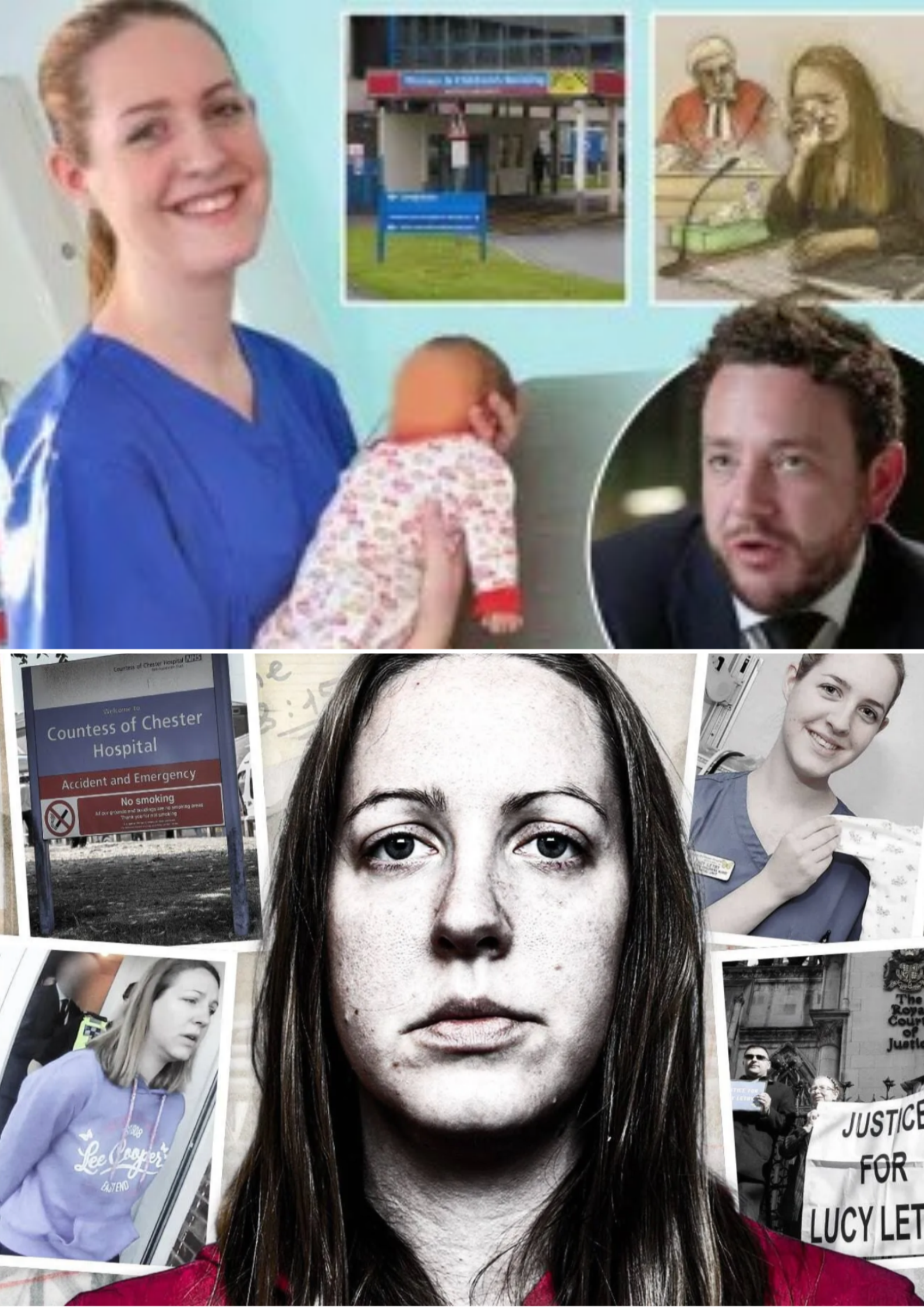
LUCY LETBY CASE ROCKED BY BOMBSHELL NEW QUESTIONS AS WHISTLEBLOWER CLAIMS HOSPITAL FAILURES MAY HAVE BEEN OVERLOOKED
Lucy Letby’s controversial case is facing renewed scrutiny after a senior hospital insider broke cover to raise fresh questions about conditions inside the neonatal unit, while new analysis has challenged parts of the medical evidence used to convict the former nurse.
Letby remains convicted of murdering seven babies and attempting to murder seven others at the Countess of Chester Hospital between 2015 and 2016.
She has consistently denied harming the babies and is continuing efforts to challenge her convictions.
But a series of developments in September 2026 has brought the case back into the spotlight — from the publication of the long-awaited Thirlwall Inquiry report to new claims about medical evidence and the hospital’s wider failures.
A SENIOR INSIDER CLAIMS THE HOSPITAL WAS FAILING
A new documentary has featured an anonymous senior consultant who questioned whether the neonatal unit was properly equipped and staffed to care for some of the vulnerable babies admitted there.
The consultant reportedly raised concerns about staffing levels, medical backup and infection risks, arguing that wider clinical problems may not have received enough attention when investigators examined the babies’ deaths and collapses.
The insider went further by suggesting that Letby may have become the focus of blame while wider institutional problems were overlooked.
Those are the consultant’s claims, however, and they have not been established by a court as the explanation for the babies’ deaths. The Countess of Chester Hospital has said it is cooperating with ongoing investigations.
 NEW QUESTIONS OVER THE “INSULIN” EVIDENCE
One of the most closely watched areas of Letby’s legal challenge concerns two babies whom prosecutors said had been poisoned with insulin.
The prosecution case relied heavily on evidence concerning unusually low blood-sugar levels.
But a new investigation by The Sun has highlighted previously undisclosed or disputed medical information relating to Baby F, including 14 normal glucose readings that, according to the report, were not included in the original police report or presented to the jury.
Experts who have reviewed the material have argued that the wider clinical picture could potentially be consistent with infection rather than deliberate insulin poisoning.
The significance of that evidence remains disputed.
It has not been judicially determined that the omitted readings prove the babies were not poisoned, nor has any court overturned the convictions on that basis.
 ANOTHER EXPERT DISPUTE HAS ERUPTED
The renewed scrutiny comes amid a striking disagreement within Letby’s own defence campaign.
Two experts who had previously produced evidence challenging aspects of the insulin-poisoning allegations withdrew from her defence team earlier this month.
Helen Shannon and Professor Geoff Chase said they continued to stand by their assessment that it was “very unlikely” that two babies had been poisoned, but said they could not support other arguments being advanced by the defence because they considered them inconsistent with available evidence, science and established physiology.
Letby’s barrister has disputed that interpretation and pointed to other experts who continue to question important elements of the prosecution case.
The disagreement demonstrates just how contested the scientific evidence surrounding the case remains.
THE THIRLWALL INQUIRY EXPOSED SERIOUS HOSPITAL FAILURES
Then came one of the biggest developments of the year.
On September 15, 2026, Lady Justice Kathryn Thirlwall published the findings of the three-year public inquiry into events at the Countess of Chester Hospital.
The report described dysfunctional management and governance, a gulf between hospital leadership and clinicians, and a failure to understand fundamental safeguarding responsibilities.
Thirlwall said errors had been made by nurses, doctors and managers.
Most significantly, she concluded that there had been a “complete failure” at all levels to invoke safeguarding procedures when concerns about possible deliberate harm arose.
The inquiry also found that some babies could have been saved and further harm prevented if action had been taken earlier.
But there is an important limitation.
The Thirlwall Inquiry did not re-examine the detailed expert evidence presented during Letby’s criminal trials.
Lady Justice Thirlwall explicitly stated that she had not examined the detailed expert or other evidence called in the Crown Court. The inquiry was instead focused on what hospital staff and organisations knew, how they responded, and what safeguards should have been in place.
WHAT ABOUT THE PLUMBING AND SEWAGE PROBLEMS?
Questions about plumbing, drainage and possible infection risks at the hospital have also resurfaced during the renewed debate.
Supporters of Letby’s case argue that environmental and clinical factors should be examined more closely when assessing why vulnerable babies deteriorated.
But there is an important distinction between evidence that a hospital experienced environmental problems and evidence establishing that those problems caused a particular baby’s death.
At present, publicly available evidence does not establish that sewage or plumbing failures were responsible for the deaths for which Letby was convicted.
That question therefore remains part of the wider debate rather than an established alternative cause of death.
THE POLICE INVESTIGATION IS STILL OPEN
The scrutiny of the hospital does not end with the Thirlwall Inquiry.
Cheshire Police continue to investigate possible corporate manslaughter and gross-negligence manslaughter connected to the Countess of Chester Hospital.
The investigation began as Operation Duet following Letby’s conviction and was later expanded to include gross-negligence manslaughter.
Three former members of the hospital’s senior leadership team were arrested in June 2025 and remain on bail.
Police also arrested another individual in April 2026 on suspicion of perverting the course of justice. That person remains on bail.
Cheshire Police have stressed that the investigation is ongoing and has no fixed timetable.
DOES THIS MEAN LETBY’S CONVICTIONS HAVE COLLAPSED?
No.
That distinction is crucial.
Lucy Letby remains legally convicted of the offences for which she was sentenced.
The new documentary, disputed medical evidence, hospital failures and continuing police investigation have generated questions about the case, but none of those developments has itself overturned her convictions.
Her legal team’s application is being considered by the Criminal Cases Review Commission, which investigates potential miscarriages of justice and can refer a case to the Court of Appeal if it believes the legal threshold is met.
The Thirlwall Inquiry also cannot be treated as an appeal judgment.
Its chair made clear that the inquiry was established after Letby’s convictions and was not tasked with determining whether those convictions were correct.
THE QUESTIONS THAT REFUSE TO GO AWAY
The latest developments have therefore created two separate but overlapping questions.
The first is what happened to the babies and whether Letby was responsible, a matter determined by criminal convictions that remain in force.
The second concerns how the hospital responded to deaths, collapses and warnings, an area in which the Thirlwall Inquiry found profound failures.
Those two questions should not automatically be treated as having the same answer.
What is clear is that the Countess of Chester Hospital experienced serious management and safeguarding failures, while significant disagreement continues over aspects of the medical evidence surrounding Letby’s convictions.
For Letby’s legal team, the challenge now is whether the new material can meet the high legal threshold required to reopen convictions already tested in court.
For the families, meanwhile, the case remains deeply personal.
They have spent years waiting for answers about the deaths and injuries of their babies.
And as new evidence and competing medical interpretations continue to emerge, the Lucy Letby case remains one of the most closely scrutinised criminal cases in modern British history.