LUCY LETBY CASE FACES FRESH QUESTIONS AS WHISTLEBLOWER RAISES CONCERNS OVER HOSPITAL FAILURES
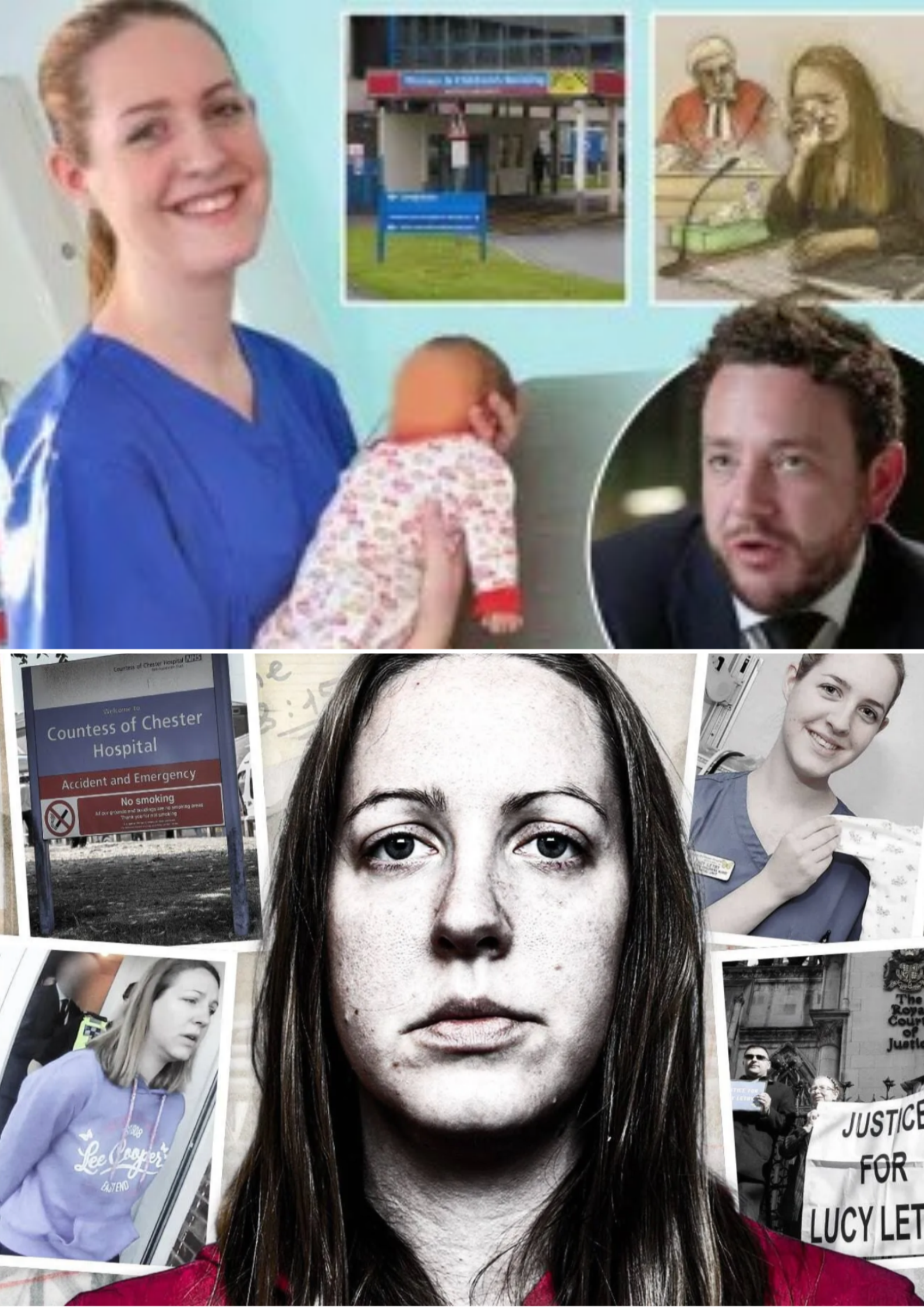
LUCY LETBY CASE FACES FRESH QUESTIONS AS WHISTLEBLOWER RAISES CONCERNS OVER HOSPITAL FAILURES
Fresh questions are being raised over the evidence surrounding convicted neonatal nurse Lucy Letby after a senior hospital consultant publicly questioned whether wider failures at the Countess of Chester Hospital were properly considered when a series of baby deaths and collapses were investigated.
Letby was convicted of murdering seven babies and attempting to murder seven others at the hospital between 2015 and 2016.
She has consistently denied the offences.
Her case is currently under review by the Criminal Cases Review Commission (CCRC), which has stressed that it is examining whether there is a real possibility that her convictions may not be upheld — but has not concluded that she is innocent.
 A SENIOR CONSULTANT QUESTIONS WHETHER LETBY BECAME A SCAPEGOAT
A senior consultant who worked at the hospital has now publicly questioned whether the neonatal unit’s staffing levels, management and medical capacity could have contributed to the crisis.
Speaking to a documentary investigation, the consultant argued that the unit was taking care of highly vulnerable babies despite serious pressures and inadequate resources.
The doctor suggested that, in his view, the possibility that Letby was responsible may have overshadowed other explanations for the deaths and collapses.
The consultant’s claims are allegations and opinions rather than findings by a court.
However, they come at a time when the wider circumstances surrounding the neonatal unit are already facing intense scrutiny.
THE THIRLWALL INQUIRY FOUND SERIOUS SYSTEMIC FAILURES
The final report of the Thirlwall Inquiry, published on September 15, 2026, identified major failures in management, governance and safeguarding at the hospital.
The inquiry found that doctors, nurses and managers made errors and that concerns about possible deliberate harm were not escalated through appropriate safeguarding procedures.
It also found that senior management delayed contacting police after concerns about Letby had emerged.
The inquiry did not, however, overturn Letby’s convictions or establish that the babies’ deaths were caused by the hospital’s wider failures instead.
Its purpose was to examine what happened at the hospital and how organisations and individuals responded to concerns.
 SEWAGE AND INFECTION CONCERNS RETURN TO THE SPOTLIGHT
The debate has also intensified following reports concerning the condition of the neonatal unit and an infant who became seriously ill there months after Letby had been removed from the ward.
Archie McClements was born at the Countess of Chester Hospital in 2016 and later died at a hospital in Manchester after contracting enterovirus.
His mother has questioned whether the infection could have been linked to conditions at the Chester hospital, citing reports of sewage and plumbing problems.
Those claims have not established a connection between the hospital’s plumbing problems and the deaths for which Letby was convicted.
The hospital trust has said it cannot comment on matters connected to ongoing investigations but has acknowledged the importance of patient safety and the findings of the Thirlwall Inquiry.
QUESTIONS OVER THE MEDICAL EVIDENCE
Another major area of controversy concerns the medical evidence presented during Letby’s trial.
A recent documentary investigation has highlighted disputed interpretations of evidence involving babies who were alleged to have been poisoned with insulin.
It has been claimed that some glucose readings were not included in material presented to the court.
Experts featured in the investigation have argued that the wider clinical picture could support alternative explanations, including infection.
Those claims are contested and have not been judicially established as proof that Letby was wrongly convicted.
Similar questions have also been raised over the prosecution’s theory that some babies died from air embolism.
Outside experts interviewed by The Sun have challenged whether the post-mortem findings were consistent with that explanation, while the prosecution’s medical expert has maintained his position and offered explanations for why air may not have been detected.
THE INQUIRY ALSO HEARD SUPPORT FOR LETBY
The Thirlwall Inquiry heard from hospital staff who did not believe Letby was responsible for harming babies.
One nursery nurse described her as an “exemplary nurse” and said some consultants appeared to be trying to make Letby a scapegoat for the increased number of deaths and collapses.
Other staff told the inquiry that Letby was frequently allocated some of the sickest infants because of her experience and qualifications.
At the same time, the inquiry recorded that the neonatal unit had experienced an unusual number of deaths and that the unit was downgraded from Level 2 to Level 1 in July 2016.
Letby was also removed from the neonatal unit around the same time.
WHAT HAPPENS TO LETBY’S CONVICTIONS NOW?
The Criminal Cases Review Commission confirmed in February 2026 that its review of Letby’s convictions was ongoing.
The commission has received defence material and multiple expert reports and submissions.
Importantly, the CCRC stated that it does not decide whether a person is innocent or guilty. Its role is to determine whether there may be grounds for referring a conviction back to an appellate court.
That means the latest allegations and expert criticisms do not, by themselves, overturn Letby’s convictions.
For now, the legal position remains that Letby is convicted of the offences for which she was sentenced.
A CASE THAT REMAINS UNDER INTENSE SCRUTINY
The latest revelations have reopened debate over whether every possible medical and institutional explanation was sufficiently examined during the investigation and trial.
Questions surrounding staffing, infection control, management failures, medical evidence and the interpretation of the babies’ clinical records are now being discussed alongside the continuing CCRC review.
But the distinction between new questions and established findings remains crucial.
The Thirlwall Inquiry has documented serious institutional failures at the Countess of Chester Hospital.
The CCRC is examining Letby’s convictions.
And outside experts have challenged parts of the medical evidence.
None of those developments, at this stage, amounts to a court finding that Lucy Letby was wrongly convicted.
The next major development will come from the continuing legal review — and whether the new material is ultimately considered sufficient to justify returning her case to the Court of Appeal.