LUCY LETBY CASE ROCKED BY NEW MEDICAL CHALLENGES AS EXPERTS QUESTION EVIDENCE USED TO CONVICT HER
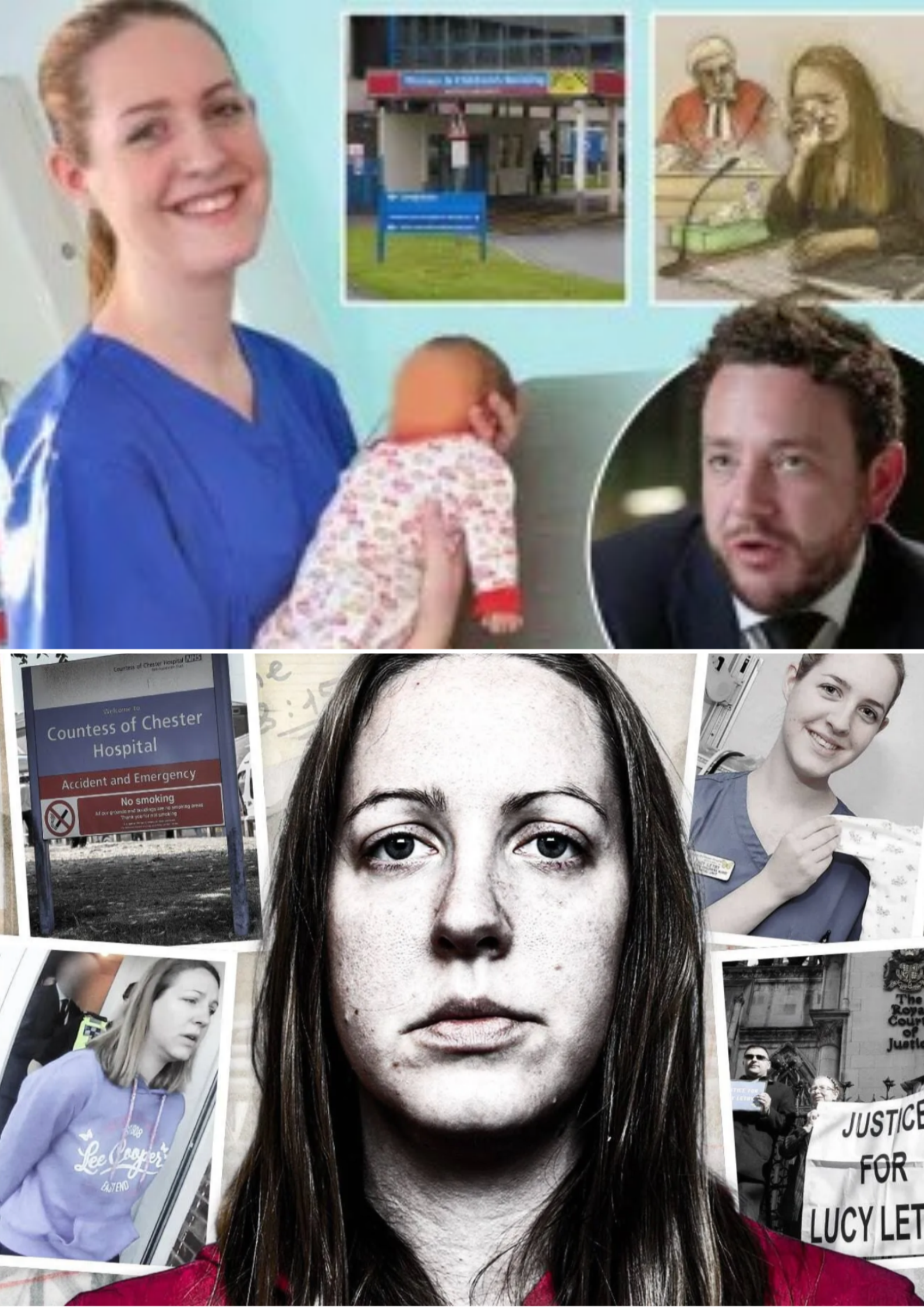
LUCY LETBY CASE ROCKED BY NEW MEDICAL CHALLENGES AS EXPERTS QUESTION EVIDENCE USED TO CONVICT HER
The legal battle surrounding convicted former neonatal nurse Lucy Letby has entered a new and increasingly contentious phase, with fresh medical arguments challenging parts of the evidence used to convict her — while the UK’s miscarriage-of-justice watchdog continues to examine her case.
Letby, 36, is serving 15 whole-life prison terms after being convicted of murdering seven babies and attempting to murder seven others at the Countess of Chester Hospital between June 2015 and June 2016.
She continues to maintain her innocence.
Her lawyers are seeking to persuade the Criminal Cases Review Commission (CCRC) that new evidence and arguments could justify sending the case back to the Court of Appeal.
 NEW MEDICAL EVIDENCE HAS PUT PARTS OF THE CASE UNDER THE MICROSCOPE
One of the most significant developments concerns a group of international medical experts who have challenged aspects of the medical evidence presented during Letby’s trials.
The panel, led by Canadian neonatologist Professor Shoo Lee, has argued that some of the babies’ deaths and collapses could have had alternative medical explanations, including natural disease processes and problems with their treatment.
In 2025, the panel said it found no medical evidence supporting deliberate harm in the cases it examined and highlighted issues including delayed treatment, misdiagnosis and other problems with neonatal care.
Among the issues raised were the convictions involving two babies whom prosecutors said had been deliberately poisoned with insulin.
Experts working with Letby’s defence have argued that the laboratory evidence used to support those convictions should be reconsidered.
The defence has described the material as potentially significant new evidence that was not available to the original jury.
But those arguments remain disputed.
 TWO EXPERTS HAVE NOW LEFT LETBY’S DEFENCE TEAM
The controversy intensified in September 2026 when two scientists involved in examining the insulin evidence withdrew from Letby’s defence team.
Professor Geoff Chase and chemical engineering expert Helen Shannon said they continued to stand by their assessment that it was very unlikely that two of the babies had been poisoned with insulin.
However, they said they could not support some of the other arguments subsequently being advanced by the defence because they considered them inconsistent with available evidence, science and established physiology.
Their decision illustrates the disagreement among experts examining the case.
Letby’s barrister, Mark McDonald, has nevertheless argued that the defence has evidence from multiple international specialists in insulin, endocrinology and laboratory medicine that fundamentally challenges the scientific evidence relied upon at trial.
The competing positions mean that the scientific debate surrounding the convictions remains unresolved.
WHAT ABOUT THE HOSPITAL’S PLUMBING PROBLEMS?
Claims about plumbing and sewage problems at the Countess of Chester Hospital have also resurfaced amid the renewed examination of the case.
Problems with the hospital’s plumbing were raised during the original trial, and medical experts challenging the convictions have pointed to wider problems with the neonatal unit’s environment and standard of care.
Professor Shoo Lee previously described the neonatal unit as having plumbing problems and criticised staffing and clinical care.
However, the existence of plumbing or sewage problems does not by itself establish that they caused any of the deaths or injuries for which Letby was convicted.
That distinction is crucial because the legal question remains whether the evidence is sufficient to overturn convictions that were reached by juries after lengthy criminal trials.
THE THIRLWALL INQUIRY FOUND SERIOUS FAILURES — BUT DID NOT OVERTURN LETBY’S CONVICTIONS
Another major development came on September 15, 2026, when Lady Justice Kathryn Thirlwall published the findings of the independent Thirlwall Inquiry.
The inquiry identified profound failures in management, governance and safeguarding at the Countess of Chester Hospital.
It found that senior staff failed to respond appropriately when doctors raised concerns about babies collapsing and dying and that safeguarding procedures were not properly invoked.
The inquiry also found a prolonged delay before police were contacted.
But the report contains an important limitation.
Lady Justice Thirlwall explicitly said that the inquiry was not an investigation into Letby’s criminal convictions or guilt.
She also said she had not examined the detailed expert evidence presented during the criminal trials.
The CCRC’s review therefore remains separate from the public inquiry.
THE CCRC IS STILL EXAMINING LETBY’S CASE
The Criminal Cases Review Commission confirmed in February 2026 that its review of Letby’s convictions was underway.
The commission received a preliminary application in February 2025, followed by expert reports, legal submissions and further evidence throughout 2025 and into January 2026.
The CCRC stressed that it does not decide whether a person is innocent or guilty.
Its role is to determine whether there is a real possibility that a conviction may not be upheld and, if appropriate, refer a case back to an appellate court.
That means the current review is potentially important, but no decision has yet been announced overturning Letby’s convictions.
FURTHER CHARGES WERE ALSO RULED OUT
The wider investigation into other baby deaths and collapses has also produced a significant development.
In January 2026, the Crown Prosecution Service decided not to bring additional charges against Letby in relation to other deaths and non-fatal collapses investigated at the Countess of Chester Hospital and Liverpool Women’s Hospital.
After requests for review from families, the CPS reconsidered six alleged attempted murders but upheld its original decision not to bring further charges.
The CPS said that decision was final under the Victims’ Right to Review process.
THE LEGAL EARTHQUAKE IS STILL UNRESOLVED
The Letby case is therefore now surrounded by several competing strands of evidence.
Her defence has presented medical experts who argue that some of the original conclusions should be reconsidered.
Other experts have challenged portions of the defence’s newer scientific arguments.
The Thirlwall Inquiry has documented serious institutional failures at the hospital, but specifically did not determine whether Letby was guilty or innocent.
And the CCRC is still assessing whether the new evidence reaches the threshold required for a possible referral to the Court of Appeal.
For now, Lucy Letby’s convictions remain in force.
Whether the newly submitted medical evidence will ultimately lead to another appeal — or have no effect on the convictions — remains to be determined through the formal legal process.
What is clear is that the scientific and legal debate surrounding one of Britain’s most closely watched criminal cases is far from over.