SERIAL KI//ER OR POSSIBLE MISCARRIAGE OF JUSTICE? THE LUCY LETBY DEBATE CONTINUES
SERIAL KILLER OR POSSIBLE MISCARRIAGE OF JUSTICE? THE LUCY LETBY DEBATE CONTINUES
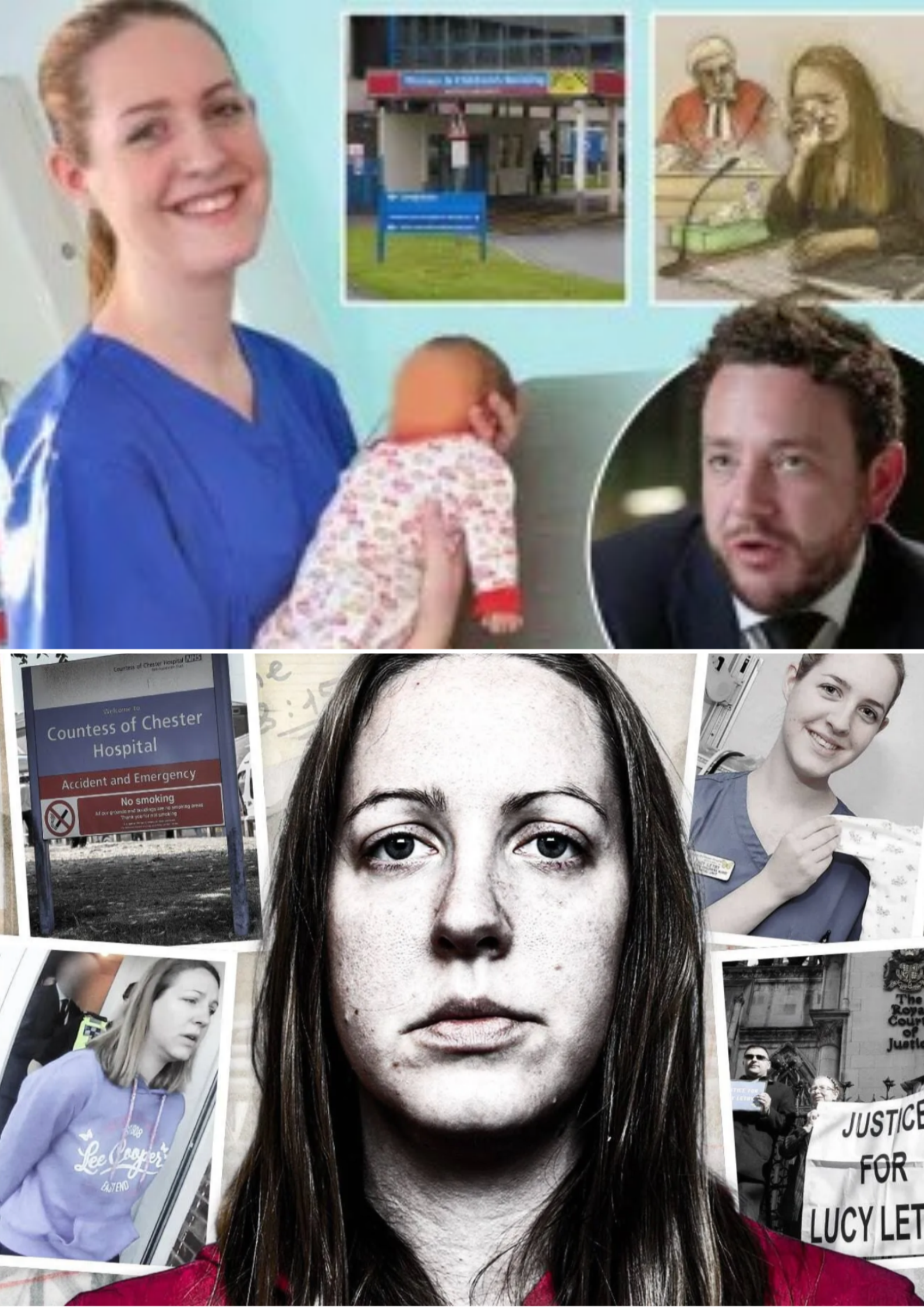
Lucy Letby remains one of the most fiercely debated criminal cases in modern Britain — but the legal position is clear: she remains convicted of murdering seven babies and attempting to murder seven others.
The former neonatal nurse was convicted at Manchester Crown Court in 2023 of murdering seven babies and attempting to murder six others at the Countess of Chester Hospital between June 2015 and June 2016.
She was later convicted at a retrial of attempting to murder another baby, bringing the total number of attempted-murder convictions to seven.
Letby received 15 whole-life orders and has consistently maintained that she is innocent. Two attempts to obtain permission to appeal her convictions were unsuccessful.
Yet the case has not disappeared from public scrutiny.
Instead, a growing group of medical and scientific experts has challenged aspects of the evidence used at trial, while the Criminal Cases Review Commission (CCRC) is examining material submitted on Letby’s behalf.
At the same time, the long-awaited Thirlwall Inquiry has uncovered serious failures inside the hospital — although its findings do not overturn or reconsider Letby’s criminal convictions.
That distinction is at the heart of the continuing debate.
 THE EVIDENCE THAT HAS COME UNDER SCRUTINY
One of the most significant challenges concerns the medical evidence surrounding several babies who became critically ill or died.
In 2025, Canadian neonatologist Dr Shoo Lee presented the conclusions of an international group of experts who had reviewed aspects of the evidence.
Lee said the panel believed the deaths and collapses could be explained by natural causes or inadequate medical care rather than deliberate poisoning or murder. His conclusions have been cited by Letby’s defence team as potential new evidence.
The controversy has particularly focused on the prosecution’s case that two babies were deliberately poisoned with insulin.
Experts supporting Letby’s challenge have questioned whether the medical and laboratory evidence necessarily demonstrated deliberate insulin administration.
Those arguments, however, remain arguments advanced in support of Letby’s appeal, rather than findings that have been accepted by an appellate court.
 NOT ALL EXPERTS AGREE
The scientific debate has also become more complicated.
In September 2026, two experts who had previously produced evidence for Letby’s defence — chemical engineer Helen Shannon and bioengineering professor Geoff Chase — withdrew from her defence team.
They said they continued to stand by their assessment that it was “very unlikely” that two babies had been poisoned with insulin.
But they said they could no longer support some of the other arguments being advanced by the defence, describing those arguments as inconsistent with available evidence, science and established physiology.
Letby’s barrister Mark McDonald, however, said other international experts continued to challenge the prosecution evidence and argued that the case did not depend on any single expert.
The disagreement illustrates why the scientific debate remains unresolved.
There are experts who believe aspects of the prosecution case deserve substantial reconsideration, while other scientists have rejected some of the arguments now being advanced by the defence.
THE HOSPITAL’S FAILURES
Another major development came on September 15, 2026, when Lady Justice Kathryn Thirlwall published the findings of her public inquiry into events at the Countess of Chester Hospital.
The inquiry found dysfunctional management and governance, a serious divide between hospital leadership and clinicians, and a failure to understand fundamental safeguarding procedures.
Thirlwall said there had been a “complete failure” at all levels to invoke safeguarding procedures when concerns about possible deliberate harm emerged.
The inquiry concluded that some babies could potentially have been protected or survived had hospital leaders acted sooner.
It also found that doctors had raised concerns about Letby’s connection to the unusual number of deaths and serious incidents, but those concerns were not acted upon quickly enough.
Those findings have intensified questions about what happened inside the neonatal unit.
But there is an important legal distinction.
THE INQUIRY DID NOT REASSESS LETBY’S CONVICTIONS
The Thirlwall Inquiry was not an appeal hearing.
Its terms of reference concerned what happened at the hospital, how concerns were handled, and what lessons should be learned.
The inquiry proceeded on the basis that Letby had been convicted of the offences.
It did not decide whether she was guilty or innocent.
That means the inquiry’s findings about hospital management cannot, by themselves, overturn a criminal conviction.
THE CCRC IS NOW EXAMINING THE CASE
The organisation with a potential route toward another appeal is the Criminal Cases Review Commission.
The CCRC received a preliminary application on Letby’s behalf in February 2025.
Further expert reports and submissions were subsequently provided throughout 2025 and into January 2026.
The commission confirmed in February 2026 that its review was underway.
The CCRC has stressed that it does not decide whether someone is guilty or innocent.
Its role is to investigate possible miscarriages of justice and, where the legal threshold is met, refer a conviction back to an appellate court.
The commission says a referral can be made where new evidence or argument creates a real possibility that a conviction would not be upheld.
So far, there has been no CCRC decision overturning Letby’s convictions.
THE CASE HAS ALSO PRODUCED NEW QUESTIONS ABOUT MEDICAL CARE
The debate is not limited to the question of whether insulin was administered deliberately.
Experts supporting Letby’s case have questioned whether some of the babies’ collapses could have resulted from natural medical complications associated with extremely premature or seriously ill newborns.
The defence has also pointed to staffing levels and the condition of babies in the neonatal unit.
Those arguments have been strongly disputed by people involved in the prosecution case and by representatives of some victims’ families.
The disagreement is therefore not simply about one piece of evidence.
It concerns how doctors interpreted clinical events, how statistical patterns were understood, and how competing explanations for the babies’ deteriorations were evaluated.
ANOTHER INVESTIGATION CONTINUES
There is also a separate criminal investigation into the hospital itself.
Cheshire Police’s Operation Duet is examining potential corporate manslaughter and gross negligence manslaughter at the Countess of Chester Hospital.
That investigation is separate from Letby’s convictions.
In August 2026, the Crown Prosecution Service also confirmed that an independent review had upheld its earlier decision not to bring six additional attempted-murder charges relating to other babies.
The CPS said it had reconsidered substantial evidence but concluded that the original decisions should stand.
That decision does not affect the convictions for which Letby is already serving her sentences.
SO WHERE DOES THE CASE STAND?
For now, several facts exist alongside each other.
Lucy Letby remains legally convicted of seven murders and seven attempted murders.
Her appeals have so far failed.
The CCRC is reviewing new evidence and arguments.
Medical experts continue to disagree over aspects of the evidence.
The Thirlwall Inquiry found serious failures in hospital management and safeguarding.
And separate investigations into other potential offences at the hospital continue.
None of those developments, on their own, establishes that Letby’s convictions were wrongful.
But they explain why the case continues to attract intense scrutiny.
The CCRC has yet to determine whether the material submitted on Letby’s behalf creates the legal basis for referring any of her convictions back to the Court of Appeal.
Until that process reaches a conclusion, the central question remains unresolved in the public debate:
Were the convictions supported by evidence that withstands the new scientific challenges — or will newly examined evidence eventually lead an appellate court to reconsider them?
For now, the courts’ existing verdicts remain in force.
And the debate over how the evidence was interpreted continues.