SERIAL KI//ER OR POSSIBLE MISCARRIAGE OF JUSTICE? THE LUCY LETBY DEBATE CONTINUES
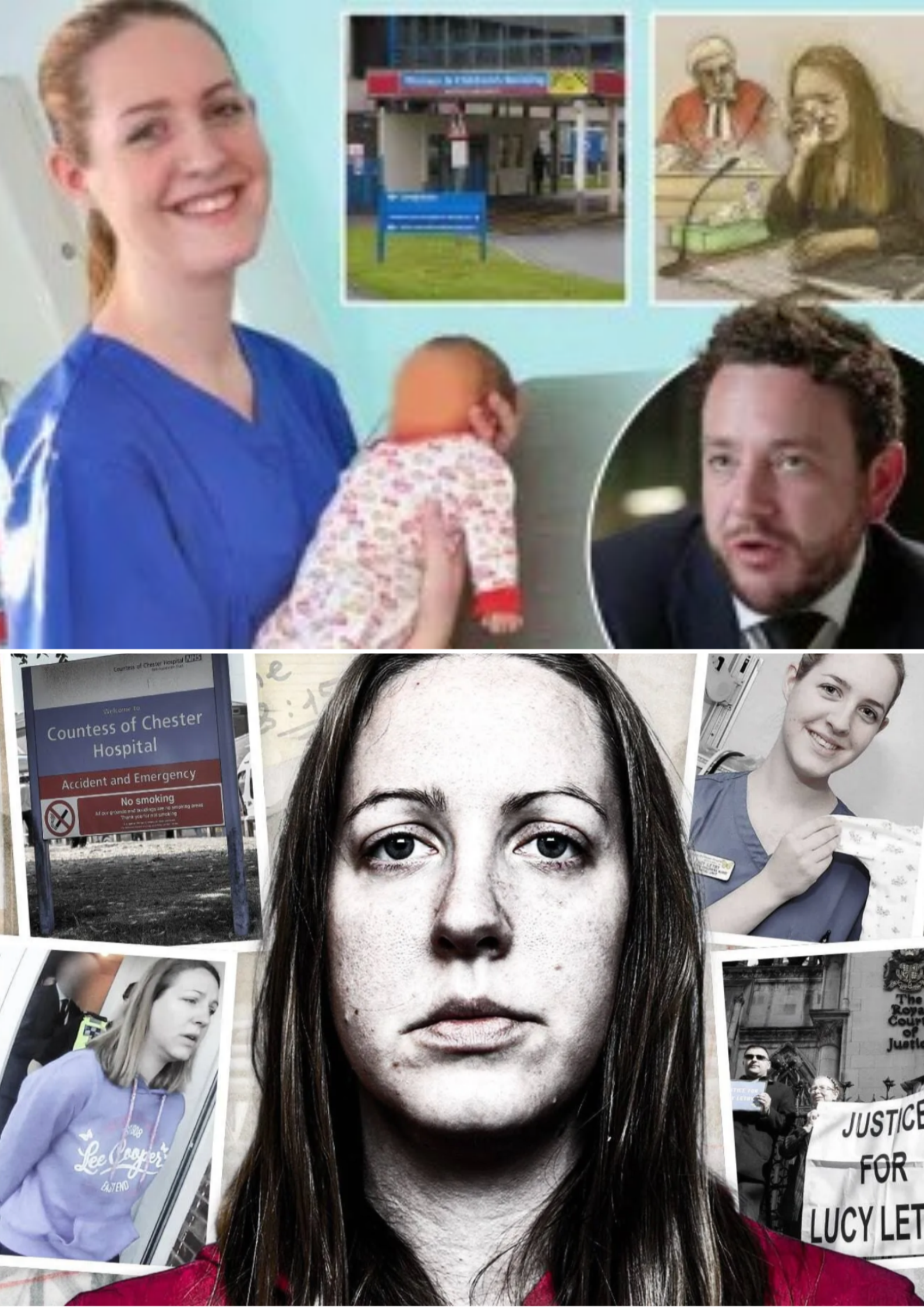
SERIAL KILLER OR POSSIBLE MISCARRIAGE OF JUSTICE? THE LUCY LETBY DEBATE CONTINUES
Lucy Letby remains behind bars after being convicted of murdering seven babies and attempting to murder seven others. But new scientific arguments, a continuing review by the UK’s miscarriage-of-justice watchdog, and serious findings about the hospital where she worked have kept the case under intense scrutiny.
Lucy Letby was convicted in 2023 after one of the most closely watched criminal trials in modern Britain.
The former neonatal nurse was found guilty of murdering seven babies and attempting to murder six others at the Countess of Chester Hospital between June 2015 and June 2016.
A subsequent retrial in 2024 resulted in another conviction for attempted murder, bringing the total number of attempted-murder convictions to seven.
Letby received 15 whole-life orders and continues to maintain her innocence.
But the legal case did not end with the verdicts.
Since the trials, a number of medical and scientific experts have challenged aspects of the evidence presented to the original juries.
Those challenges have become part of an ongoing application to the Criminal Cases Review Commission (CCRC), the independent body responsible for investigating potential miscarriages of justice in England, Wales and Northern Ireland.
The CCRC says its review of Letby’s convictions is currently underway. It has stressed that it does not decide whether someone is innocent or guilty. Its role is to determine whether there is a real possibility that a conviction may not be upheld by an appeal court and, where appropriate, refer a case back to the courts.
 QUESTIONS OVER THE MEDICAL EVIDENCE
One of the most disputed aspects of the case concerns the medical evidence used to establish how some of the babies became critically ill.
Among the most controversial allegations involved insulin poisoning.
Letby was convicted of attempting to murder two premature babies by administering insulin.
However, experts supporting her defence have argued that the medical and laboratory evidence does not necessarily establish deliberate poisoning.
Dr Shoo Lee, a Canadian neonatologist who has reviewed aspects of the case with other specialists, has publicly questioned some of the medical conclusions presented during Letby’s trials.
Other experts have also examined the evidence and raised questions about whether alternative medical explanations were sufficiently considered.
The defence has argued that the new material demonstrates significant weaknesses in parts of the prosecution’s scientific case.
But those arguments remain disputed.
The original convictions have not been overturned.
 TWO EXPERTS WITHDRAW FROM LETBY’S DEFENCE TEAM
The debate intensified in September 2026 when two experts who had previously provided evidence supporting aspects of Letby’s case withdrew from her defence team.
Helen Shannon, a chemical engineering expert, and Geoff Chase, a professor of bioengineering, had produced a report challenging the prosecution’s interpretation of the insulin evidence.
They said they continued to stand by their assessment that it was very unlikely that two of the babies had been poisoned with insulin.
However, they said they could not support some other arguments being advanced by Letby’s defence because they considered them inconsistent with available evidence, established science and physiology.
Their withdrawal does not resolve the wider scientific dispute.
Letby’s barrister, Mark McDonald, said the defence had evidence from several international specialists in insulin, endocrinology and laboratory medicine that he argued undermined the scientific evidence relied upon at trial.
He said the case did not depend on any single expert.
The CCRC has not publicly determined whether any of these arguments justify referring Letby’s convictions back to the Court of Appeal.
THE THIRLWALL INQUIRY ADDS ANOTHER LAYER
At almost exactly the same time, another major development arrived.
On September 15, 2026, Lady Justice Kathryn Thirlwall published the final report of the public inquiry into events at the Countess of Chester Hospital.
The inquiry examined how concerns about babies dying or collapsing on the neonatal unit were handled and how hospital management responded to concerns about Letby.
Its findings were highly critical of hospital leadership.
Lady Justice Thirlwall described dysfunctional management and governance, a divide between hospital leaders and clinicians, and a failure to understand basic safeguarding principles.
The report concluded that there had been a complete failure to protect babies on the neonatal unit.
The inquiry also found that some collapses and deaths could have been prevented if safeguarding procedures had been followed.
In particular, it concluded that Letby should have been removed from the neonatal unit once concerns about deliberate harm had reached a sufficient level, rather than waiting for certainty about whether she was responsible.
BUT THE INQUIRY DID NOT REASSESS HER CONVICTIONS
This distinction is crucial.
The Thirlwall Inquiry was not a retrial of Lucy Letby.
Lady Justice Thirlwall explicitly said the inquiry was not tasked with deciding whether Letby was guilty or innocent.
The inquiry accepted the criminal convictions as its starting point and focused on the failures of the hospital, safeguarding systems and management.
It therefore did not overturn, weaken or replace the jury verdicts.
The separate CCRC review remains the mechanism through which new evidence and arguments concerning potential miscarriages of justice can be examined.
HOSPITAL FAILURES AND THE GUILT QUESTION ARE NOT THE SAME THING
The findings have nevertheless become an important part of the wider public debate.
The inquiry identified serious failures in how concerns raised by doctors and other staff were handled.
Senior managers delayed involving police, and concerns about the deaths and collapses were subjected to internal reviews rather than immediately being treated as potential safeguarding issues.
The inquiry found that some babies could have been saved if appropriate safeguarding action had been taken earlier.
But that finding does not by itself establish that Letby was wrongly convicted.
Nor does the existence of management failures prove that the prosecution evidence was correct.
The two questions are separate:
What went wrong inside the hospital?
And:
Were the criminal convictions supported by sufficient and reliable evidence?
The first question has now been examined extensively by the Thirlwall Inquiry.
The second remains a matter for the courts and the CCRC process.
THE CCRC REVIEW
Letby’s application to the CCRC began with a preliminary submission in February 2025.
Further expert reports and submissions were provided throughout 2025 and into 2026.
According to the CCRC, additional material was received as recently as January 21, 2026.
The commission said it was actively reviewing the convictions.
Importantly, the CCRC does not simply decide whether it believes a convicted person is innocent.
Its statutory role is to investigate whether there is a real possibility that a conviction would not be upheld if referred to an appeal court.
If it reaches that threshold, it can refer the case to the Court of Appeal.
Until that happens, Letby’s convictions remain in force.
WHY THE CASE REMAINS SO DIVISIVE
Few elements of the Letby case have remained outside the public argument.
For those who accept the jury verdicts, the convictions represent the outcome of two criminal trials in which extensive evidence was presented and tested.
For Letby’s supporters and some experts, the subsequent examination of the medical evidence has raised questions about whether the original interpretation of events was sufficiently robust.
Those competing positions continue to coexist.
The disagreement is particularly intense because the case involves premature and medically vulnerable babies, complex neonatal medicine and evidence that can be difficult for non-specialists to interpret.
The public debate has therefore extended far beyond the courtroom.
WHAT HAPPENS NEXT?
Several processes remain ongoing.
The CCRC continues to review Letby’s convictions.
The defence continues to rely on expert evidence challenging aspects of the prosecution’s scientific case.
At the same time, the findings of the Thirlwall Inquiry are expected to lead to changes in neonatal safeguarding and hospital governance.
Among its recommendations are measures including increased monitoring in neonatal units and improved systems for identifying potential safeguarding concerns.
None of those developments, however, currently changes Letby’s legal status.
She remains convicted and imprisoned under 15 whole-life orders.
The question of whether those convictions should remain intact ultimately belongs to the appellate courts, informed by whatever conclusions the CCRC reaches.
A CASE STILL WITHOUT A FINAL CHAPTER
Lucy Letby’s case now exists on two parallel tracks.
One concerns the institutional failures at the Countess of Chester Hospital — failures that the Thirlwall Inquiry has examined in extraordinary detail.
The other concerns the safety of Letby’s criminal convictions — a question still being examined through the CCRC and potential future appeals.
New experts have questioned parts of the medical evidence.
Other experts have defended aspects of the prosecution case or rejected arguments advanced on Letby’s behalf.
Two scientists recently withdrew from her defence team while maintaining their own concerns about particular insulin evidence.
And the public inquiry has found serious failures in the hospital’s management and safeguarding systems.
But none of these developments, on their own, amounts to a court finding that Lucy Letby was wrongly convicted.
For now, the legal position remains unchanged:
Lucy Letby remains convicted of murdering seven babies and attempting to murder seven others.
At the same time, the CCRC’s review remains active.
Until that process is complete — and, if necessary, considered by the courts — the debate over the evidence will continue.
The verdicts remain in place. The questions remain open.