AILEEN WUORNOS: THE FINAL MINUTES OF A WOMAN WHO CHOSE TO STOP FIGHTING HER EXECUTION
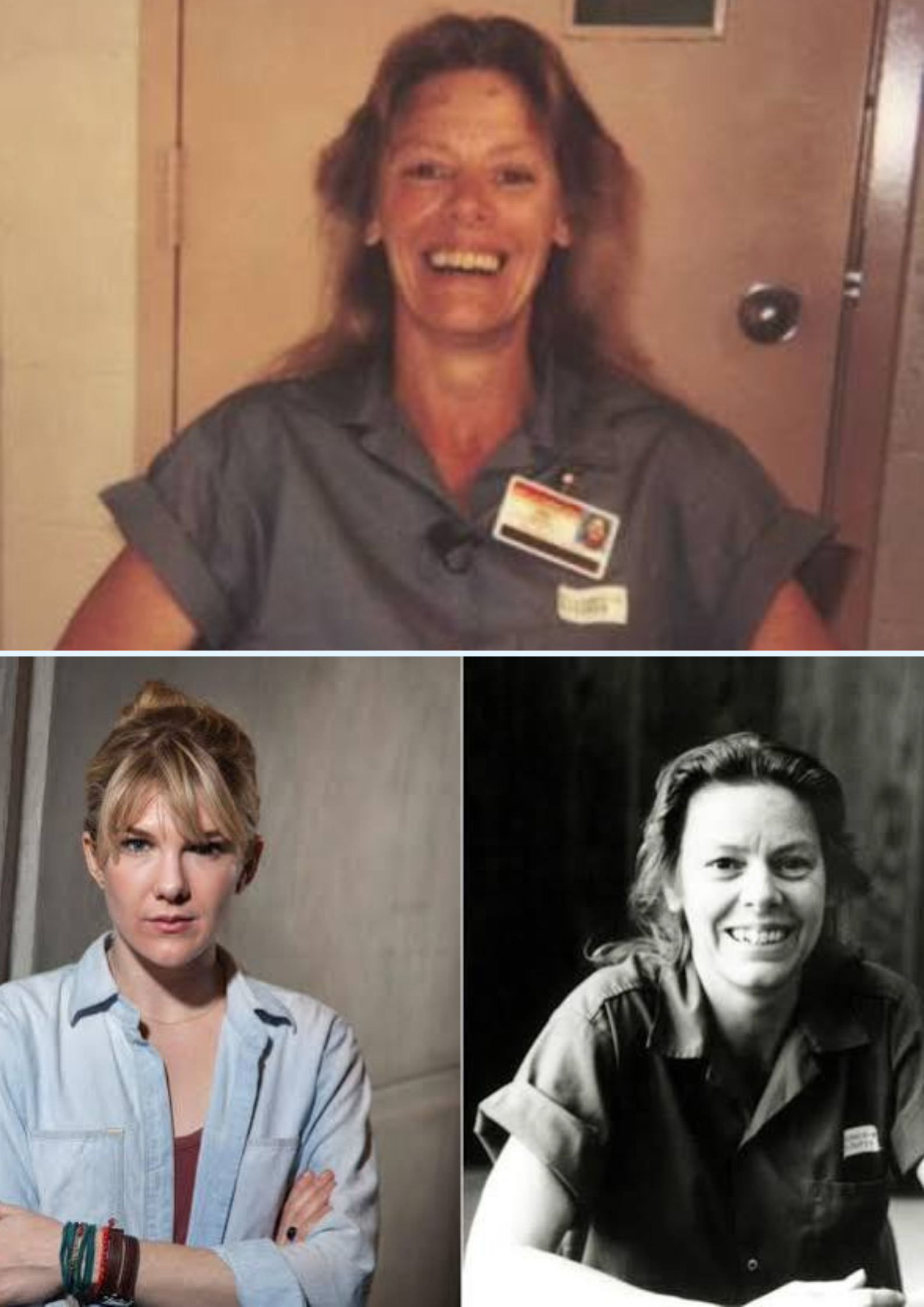
AILEEN WUORNOS: THE FINAL MINUTES OF A WOMAN WHO CHOSE TO STOP FIGHTING HER EXECUTION
THE MORNING AILEEN WUORNOS WALKED INTO FLORIDA’S DEATH CHAMBER
At around 9:30 on the morning of October 9, 2002, Aileen Wuornos entered the execution chamber at Florida State Prison in Starke.
She was 46 years old.
For more than a decade, Wuornos had been one of the most notorious names on Florida’s death row. She had been convicted of killing six men along Florida’s highways in 1989 and 1990 and had received six death sentences.
Now, there would be no further appeals.
Wuornos had dismissed her lawyers and chosen to stop fighting the execution. Florida officials had determined that she was competent to be executed, and Governor Jeb Bush had signed her death warrant on September 5, 2002.
Outside the prison, reporters waited for confirmation.
Inside, witnesses prepared to watch the final moments of a case that had generated years of controversy over crime, punishment, mental illness and the death penalty.
 THE WOMAN BEHIND THE CASE
Wuornos’ story had already become larger than the crimes themselves.
She had worked as a prostitute and hitchhiker in central Florida when she encountered men along Interstate 75.
Prosecutors said she killed the men and took their money and possessions.
Wuornos initially claimed that the shootings were acts of self-defense. She said the men had attacked or attempted to sexually assault her.
But in the years that followed, her account changed.
By the time of her final legal proceedings, Wuornos had acknowledged responsibility for the killings and said she believed she deserved to die.
At one hearing, she reportedly told the court that she had killed the men after they picked her up and that she would kill again if she were ever released.
Her decision to abandon her appeals made the final stage of the case unusual.
Wuornos was no longer asking the courts to save her life.
She was asking them to let the execution proceed.
QUESTIONS ABOUT HER MENTAL STATE
Even as Wuornos accepted her fate, questions about her mental condition continued.
Her defense had presented evidence raising concerns about serious mental illness.
The issue became important because a person cannot lawfully be executed in the United States if they are legally incompetent to understand the punishment they are about to receive.
Florida authorities arranged evaluations.
Ultimately, three psychiatrists appointed by the state concluded that Wuornos was competent to face execution. The Florida Supreme Court also approved the trial court’s conclusion that she was competent to proceed and dismissed her remaining appeals.
Her execution therefore moved forward.
THE WITNESSES
The death chamber was prepared for the witnesses.
Contemporary CNN reporting before the execution said 24 witnesses were expected, including media representatives, relatives of victims and state officials.
A later Washington Post report said 29 witnesses ultimately observed the execution.
Among them were people connected to the men Wuornos had been convicted of killing.
For some, the execution represented the end of more than a decade of grief.
For others, it was a moment surrounded by difficult questions about whether a death sentence could ever provide closure.
Terry Griffiths, the daughter of victim Richard “Dick” Humphreys, witnessed the execution.
Afterward, she said she felt the death had been too easy.
But she also said she was glad it was over.
HER LAST HOURS
Wuornos spent her final hours inside the prison.
Early reports said she had not made any unusual requests and had been visited by a family friend.
Accounts of her final preparations also noted that she read the Bible.
However, she did not accept a visit from clergy.
The woman who had spent years fighting the courts was now remarkably close to the end.
And when the time came, she did not deliver the kind of final statement many people might have expected.
There was no conventional plea for mercy.
There was no apology to the victims’ families.
Instead, Wuornos spoke about Jesus and a future return.
‘I’LL BE BACK’
When the curtain opened, Wuornos looked toward the witnesses behind the glass.
According to the Washington Post, she lifted her head and looked at the 29 witnesses with what was described as a surprised expression.
She was then asked whether she had anything to say.
Her answer became one of the most remembered parts of her execution.
She said:
“I’m sailing with the Rock and I’ll be back like ‘Independence Day’ with Jesus…”
The statement continued with references to a “big mothership” and ended with her saying she would be back.
“The Rock” was understood as a reference to Jesus.
The strange final message immediately became part of the public record surrounding Wuornos’ death.
THE INJECTION
At approximately 9:30 a.m., the lethal injection was administered.
Wuornos had been strapped to a gurney inside the execution chamber.
A media witness later described seeing only her face and part of her right forearm from the witness area.
She looked toward the witnesses briefly before staring upward.
There is no reliable contemporary evidence establishing the dramatic six-minute sequence sometimes repeated in later retellings.
What is documented is much more precise:
The injection began at approximately 9:30 a.m.
At 9:47 a.m. Eastern Time, Aileen Wuornos was pronounced dead.
She was 46.
THE VICTIMS’ FAMILIES WATCHED
For the relatives of Wuornos’ victims, the execution was not simply the ending of a famous criminal case.
It was tied directly to the men whose deaths had changed their lives.
Griffiths, whose father was among Wuornos’ victims, said afterward that her father had remained with her emotionally throughout the 12 years since his death.
She said she felt his presence while she watched Wuornos die.
Her reaction also revealed the complicated emotions surrounding capital punishment.
She believed justice had been carried out, yet she felt the execution itself had been too easy.
The state had taken Wuornos’ life.
But for the families, the deaths that brought them into the execution chamber could never be undone.
A WOMAN WHO BECAME A CULTURE-CLASHING FIGURE
Wuornos’ execution marked the end of one of the most heavily scrutinized criminal cases of its era.
Her story had already inspired books, films and other works of art.
She became a symbol used in competing arguments.
To some, she was a convicted murderer responsible for multiple deaths who ultimately accepted her punishment.
To others, her case raised questions about childhood trauma, exploitation, mental illness, prostitution, gender and the treatment of vulnerable defendants within the criminal justice system.
Those debates did not disappear when the execution ended.
In fact, they continued long after her death.
THE OFFICIAL RECORD
Florida’s historical capital-case records confirm that Wuornos was executed on October 9, 2002.
The same record shows that she had six individual convictions and death sentences and that Governor Jeb Bush signed her death warrant on September 5, scheduling the execution for October 9.
Her execution made her the 10th woman executed in the United States since the reinstatement of capital punishment in 1977, according to the Washington Post’s contemporary report.
She was also among the relatively small number of women executed in the United States during the modern death-penalty era.
THE FINAL IMAGE
There is no need to invent a dramatic final twist to understand why Wuornos’ execution remains so memorable.
The documented ending is already striking.
A woman who had spent years on death row stopped fighting.
She entered the Florida death chamber.
She faced the witnesses.
She spoke about Jesus and a return on a “big mothership.”
Then the lethal injection began.
Seventeen minutes later, the prison announced that she was dead.
Aileen Wuornos’ life had ended inside a Florida execution chamber.
But the questions surrounding her life — her crimes, her claims of self-defense, her mental state and the morality of capital punishment — did not end with her final breath.
They became part of the lasting legacy of one of America’s most controversial death-row cases.