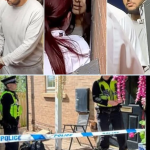
DNA EVIDENCE FINALLY LINKED DAVID BOYD TO THE 1992 M2RDER OF NIKKI ALLAN

DNA EVIDENCE FINALLY LINKED DAVID BOYD TO THE 1992 MURDER OF NIKKI ALLAN
SUNDERLAND, England — More than three decades after 7-year-old Nikki Allan was murdered, advances in forensic science helped investigators link David Boyd to the crime.
Boyd was convicted of Nikki’s murder in May 2023 and sentenced to life in prison, bringing an end to one of the UK’s longest-running murder investigations.
His later application for permission to appeal his conviction and sentence was refused in October 2024, leaving the conviction and life sentence in place.
NIKKI DISAPPEARED AFTER LEAVING HOME
Nikki Allan was just seven years old when she disappeared from the Wear Garth flats in Sunderland on October 7, 1992.
She was known to Boyd, who was a neighbor and the boyfriend of her babysitter.
Prosecutors told the court that Boyd led Nikki toward the abandoned Old Exchange building after she left home that evening.
Her body was later discovered in the basement of the building.
The murder shocked the local community, but the investigation initially focused on another man.
 ANOTHER MAN WAS ORIGINALLY ACCUSED
George Heron was arrested and prosecuted in connection with Nikki’s death.
He was acquitted of murder in 1993.
With the case unresolved, Nikki’s family spent decades waiting for answers as investigators continued to examine evidence from the original investigation.
The case would eventually be reopened on a much larger scale as developments in forensic science created new opportunities to examine evidence that had been collected more than 30 years earlier.
 DNA PROVIDED THE BREAKTHROUGH
A major breakthrough came when forensic testing identified DNA on Nikki’s clothing that was linked to Boyd.
The discovery prompted a massive reinvestigation.
Investigators examined hundreds of DNA samples, reviewed more than 1,000 witness statements and worked through thousands of documents as they reconstructed what had happened to Nikki.
The new investigation eventually placed Boyd at the center of the case.
The DNA evidence formed an important part of the prosecution case when Boyd stood trial decades after Nikki’s death.
BOYD CONVICTED AFTER MORE THAN 30 YEARS
On May 12, 2023, a jury convicted Boyd of Nikki’s murder.
He was subsequently sentenced to life imprisonment with a minimum term of 29 years, subject to credit for time already spent in custody.
The conviction finally brought a legal conclusion to a case that had remained unresolved since 1992.
But Boyd continued to challenge the conviction.
In October 2024, his application for permission to appeal was refused, leaving his conviction and sentence in place.
A FAMILY’S 30-YEAR WAIT
For Nikki’s family, the conviction came after more than 30 years of uncertainty.
Nikki was only seven when her life was cut short.
Her family had spent decades living without knowing who was responsible for her death, while the original investigation and later reinvestigation continued to generate questions about what had happened that night.
The eventual breakthrough demonstrated how advances in forensic technology can allow investigators to revisit evidence from historic cases long after the original investigation has ended.
A CASE THAT SPANNED THREE DECADES
Nikki Allan’s murder began as a case that appeared destined to remain unresolved.
The initial prosecution ended with George Heron’s acquittal. More than three decades later, a renewed investigation and advances in DNA analysis led detectives back to evidence connected to the original crime scene.
Boyd’s conviction in 2023 and the rejection of his appeal bid in 2024 brought the latest legal chapter to a close.
For Nikki’s loved ones, however, the story began with a little girl who left home one October evening in 1992 and never returned.
More than 30 years later, the forensic evidence that had once been impossible to fully analyze became central to identifying the man convicted of her murder.