NEW MEDICAL EVIDENCE RAISES FRESH QUESTIONS ABOUT LUCY LETBY CONVICTIONS AS FORMER PROSECUTION WITNESS VOICES DOUBT
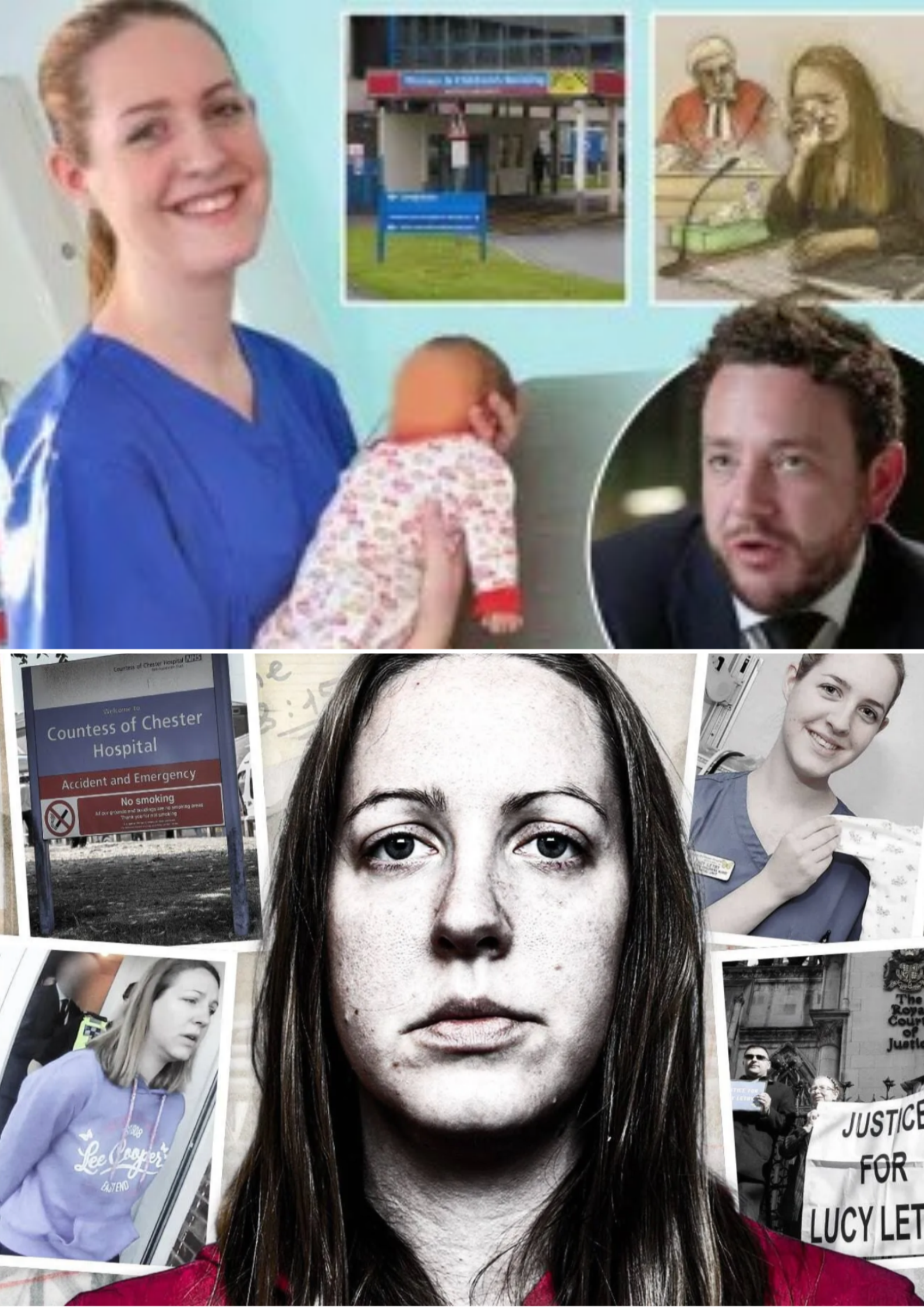
NEW MEDICAL EVIDENCE RAISES FRESH QUESTIONS ABOUT LUCY LETBY CONVICTIONS AS FORMER PROSECUTION WITNESS VOICES DOUBT
Fresh medical evidence and a remarkable change of view from one of the doctors whose evidence helped convict Lucy Letby have reopened debate over the former neonatal nurse’s convictions.
Letby, 36, is serving 15 whole-life orders after being convicted across two trials of murdering seven babies and attempting to murder seven others at the Countess of Chester Hospital between 2015 and 2016.
Her convictions remain in force.
But in recent weeks, a growing body of medical and legal discussion has focused on whether some of the evidence presented at her trials should be reassessed.
 A PANEL OF 14 INTERNATIONAL EXPERTS CHALLENGES PARTS OF THE MEDICAL CASE
One of the most significant developments came from Canadian neonatologist Dr Shoo Lee, whose earlier academic work on air embolism was cited during Letby’s prosecution.
Lee assembled a panel of 14 medical experts from six countries to examine material relating to the cases.
According to reporting by The Independent, the group included neonatologists, a paediatric surgeon, a paediatric infectious-disease specialist, a neonatal intensive-care nurse and other specialists.
The experts reviewed a large body of medical material and raised questions about whether some of the babies’ collapses and deaths could have been explained by natural medical conditions or problems in their treatment rather than deliberate harm.
The panel particularly challenged the prosecution’s interpretation of evidence relating to air embolism, the theory used to explain several of the cases.
Dr Lee has said he believes his 1989 research was interpreted differently in court from what his original work actually demonstrated.
He has also argued that some of the babies had serious underlying medical problems that could have contributed to their deterioration.
CLAIMS OF “NEW EVIDENCE” HAVE NOT OVERTURNED THE CONVICTIONS
The new medical arguments are now being considered as part of material submitted on Letby’s behalf to the Criminal Cases Review Commission, or CCRC.
The CCRC is the independent body responsible for investigating potential miscarriages of justice in England and Wales.
If the commission finds sufficient grounds, it can refer a conviction back to the Court of Appeal.
However, there has been no decision overturning Letby’s convictions.
Her previous appeals have also failed.
The current process therefore represents an attempt to have the evidence examined again rather than a legal declaration that she was wrongly convicted.
 TWO EXPERTS WITHDREW FROM LETBY’S DEFENCE TEAM
The renewed debate has also exposed disagreement among experts supporting the defence.
In September, chemical-engineering expert Helen Shannon and bioengineering professor Geoff Chase withdrew from Letby’s defence team.
The pair said they continued to stand by their assessment that it was highly unlikely that two babies had been deliberately poisoned with insulin.
However, they said they could not support other arguments being advanced by the defence because they considered some of them inconsistent with available evidence, science and established physiology.
Their withdrawal illustrates how complicated the scientific debate surrounding the case has become.
There is disagreement not simply between the prosecution and defence, but also among experts who have examined different parts of the evidence.
A DOCTOR WHO HELPED CONVICT LETBY NOW HAS DOUBTS
Another extraordinary development came from Dr John Gibbs, a retired paediatrician who was one of three consultants whose evidence helped prosecutors build their case.
Gibbs has now told The Sun that he is “no longer certain” that Letby committed the crimes.
He said he has a “very small concern” that there may not have been deliberate harm in some or all of the cases.
He has also suggested that a retrial could be the most appropriate course if significant questions about the evidence remain.
The change is particularly notable because Gibbs’ earlier evidence formed part of the medical picture presented to the jury.
His comments do not amount to a judicial finding that Letby is innocent.
They are instead a public expression of doubt from a doctor who previously gave evidence in the prosecution case.
THIRLWALL INQUIRY FOUND SERIOUS HOSPITAL FAILURES
The renewed debate comes shortly after publication of the Thirlwall Inquiry report on September 15, 2026.
The independent public inquiry examined events at the Countess of Chester Hospital between 2015 and 2018, including how hospital management responded to concerns about unexpected deaths and collapses in the neonatal unit.
The inquiry identified significant failures in leadership, governance and the response to concerns raised by doctors.
Its report is separate from Letby’s criminal convictions and was not a retrial.
It did not determine that Letby was innocent.
Instead, its purpose was to establish what happened within the hospital and what lessons should be learned.
POLICE ARE STILL INVESTIGATING HOSPITAL MANAGEMENT
The consequences of the inquiry have extended beyond the public debate.
Cheshire Constabulary confirmed that its investigation into potential corporate manslaughter and gross negligence manslaughter at the hospital is continuing.
Three members of the hospital’s senior leadership team were arrested in June 2025 on suspicion of gross negligence manslaughter and remain on bail.
Police also arrested another individual in April 2026 on suspicion of perverting the course of justice in connection with the investigation.
Cheshire Police stressed that the investigation remains ongoing and that there is no set timetable for completion.
These investigations concern the hospital’s management and decision-making. They should not be interpreted as proof that Letby’s convictions were wrong.
THE “BURIED DOCUMENT” CLAIM
One of the most dramatic claims circulating online is that a secret hospital document supposedly proves that a statistical error was deliberately hidden from the jury.
There is currently no reliable evidence establishing that claim.
There have certainly been disputes over the interpretation of medical and statistical evidence in the Letby case, and the Thirlwall Inquiry uncovered serious failures within the hospital.
But those facts are different from proving that a document containing a decisive statistical error was deliberately concealed from the jury.
No credible source located in the current reporting establishes that the Crown Prosecution Service is secretly withholding such a document.
That distinction is important because the case is already surrounded by intense public speculation.
THE CPS HAS ALSO REVIEWED OTHER BABY CASES
In August 2026, the Crown Prosecution Service announced that it had completed an independent review of decisions not to bring additional charges against Letby relating to six infants.
The CPS said the review involved a prosecutor who had not participated in the original decisions.
After reconsidering substantial evidence, the prosecutor upheld the decision not to bring further charges.
The CPS said the review was final under the Victims’ Right to Review process and that the affected families had been contacted.
WHY THE CASE HAS RETURNED TO THE SPOTLIGHT
Several developments have therefore converged at the same time.
A panel of international experts has challenged parts of the medical interpretation used in the prosecution case.
Two experts have withdrawn from Letby’s defence team over concerns about other scientific arguments.
A major public inquiry has documented serious failures in hospital management.
And one of the doctors whose evidence helped convict Letby has publicly acknowledged that he is no longer certain she committed the crimes.
Together, these developments have generated renewed scrutiny of the evidence.
But they do not currently amount to a court ruling that Letby was wrongly convicted.
LETBY’S LEGAL FIGHT CONTINUES
Letby’s legal team has submitted material to the CCRC seeking further review of her convictions.
The commission will determine whether the new material provides grounds for referring the case back to the Court of Appeal.
Until that happens, the existing convictions remain legally valid.
The case therefore sits at an unusual point: the criminal convictions remain intact, while new experts, lawyers and even a former prosecution witness are publicly questioning aspects of the evidence behind them.
For the families of the babies involved, the continuing debate is deeply significant.
For Letby, the CCRC process represents another possible route through which her convictions could eventually receive further judicial scrutiny.
And for the wider public, the latest developments have transformed a case once viewed as largely settled into one where important questions about medical evidence, hospital failures and the interpretation of the original evidence are once again being examined.