CHRISTA PIKE WAS STILL ALIVE AFTER TWO LETHAL INJECTIONS — WHAT HAPPENED INSIDE TENNESSEE’S DEATH CHAMBER
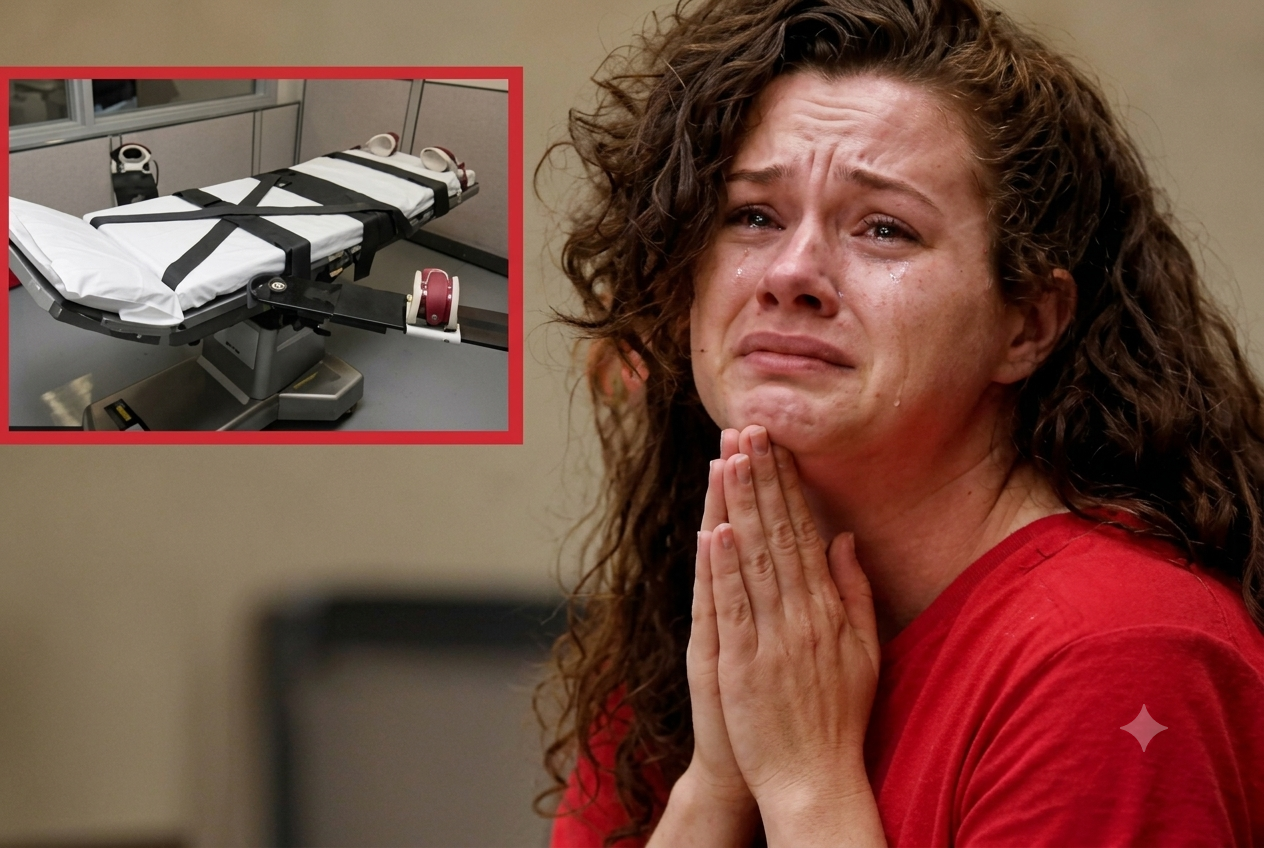
CHRISTA PIKE WAS STILL ALIVE AFTER TWO LETHAL INJECTIONS — WHAT HAPPENED INSIDE TENNESSEE’S DEATH CHAMBER
Christa Pike was still alive after Tennessee administered two doses of pentobarbital during an attempted execution that ended with the death-row prisoner being taken to hospital.
Pike, 50, had been scheduled to become the first woman executed by Tennessee in more than 200 years. Instead, witnesses reported that she remained alive long after the lethal injection was administered.
Her lawyers later said she was in critical condition and receiving lifesaving medical treatment.
 PIKE REMAINED AWAKE AFTER THE FIRST DOSE
The execution began Wednesday evening at Riverbend Maximum Security Institution in Nashville.
Pike was strapped to a gurney with an intravenous line in place.
According to witnesses, she initially appeared calm and was allowed to make what she believed would be her final statement.
She said she was leaving the world “with love” before the procedure began.
But after the first injection, Pike did not die.
Witnesses saw her raise her head and heard her complain that her arm was hurting.
The execution protocol allows officials to administer a second dose of pentobarbital if an inmate has not died after the first.
THE SECOND DOSE ALSO FAILED
The second dose was administered later in the evening.
But witnesses continued to hear sounds coming from the execution chamber.
Pike appeared to breathe and make noises described by witnesses as snoring, loud exhales and gasps.
According to AP, the sounds continued for roughly 40 minutes after the second dose.
Her head was also seen moving, and witnesses reported that she moved her feet enough to knock away the sheets covering her.
The execution was ultimately halted.
Pike was taken from the prison by ambulance to an off-site hospital.
Her attorneys said Thursday that she remained alive and was receiving lifesaving care. They said they did not yet know her prognosis.
 LAWYERS RAISE QUESTIONS ABOUT WHAT WENT WRONG
Pike’s legal team has argued that problems with the execution had been foreseeable.
In a statement, her lawyers alleged difficulties obtaining intravenous access, possible problems with the IV lines and concerns about the condition of the execution drug.
Those are claims made by Pike’s attorneys and have not been established by an independent investigation.
The Tennessee Department of Correction has defended its handling of the execution.
The department said officials followed the state’s established execution protocol and that the chemical used had consistently been effective.
The state has not publicly provided a definitive explanation for why Pike survived the two injections.
GOVERNOR HALTS OTHER EXECUTIONS
The extraordinary failure prompted Tennessee Gov. Bill Lee to order an independent review.
Lee also announced that the state’s remaining scheduled execution for 2026 would not take place this year.
He described carrying out a lawful sentence as one of the state’s most serious responsibilities and said he wanted a comprehensive third-party review to determine exactly what happened.
The incident is particularly significant because Tennessee had already experienced another execution-related problem earlier this year, when officials were unable to establish an intravenous line for another condemned prisoner and the procedure was called off.
PIKE’S CONVICTION DATES BACK TO 1995
Pike was sentenced to death for the killing of 19-year-old Colleen Slemmer at a Job Corps training facility in Knoxville in 1995.
Pike was 18 at the time.
She was convicted of first-degree murder and has spent nearly three decades on death row.
Her lawyers have never argued that she was innocent of Slemmer’s killing.
Instead, they have asked Tennessee to consider replacing her death sentence with life imprisonment, pointing to her age at the time of the crime, severe childhood abuse and later-diagnosed mental-health conditions.
Those issues were also at the centre of Pike’s final legal challenge before the attempted execution.
THE SUPREME COURT HAD CLEARED THE WAY
The failed execution came only hours after the U.S. Supreme Court overturned a temporary stay issued by the Sixth Circuit Court of Appeals.
The appeals court had paused the execution so it could consider Pike’s claims concerning whether evidence of her childhood sexual abuse had been adequately presented during sentencing.
The Supreme Court’s decision allowed Tennessee to proceed.
Justices Sonia Sotomayor, Elena Kagan and Ketanji Brown Jackson dissented.
Sotomayor argued that the lower court should have been allowed to consider Pike’s claims before the execution went ahead.
WHAT HAPPENS TO PIKE NOW?
The immediate question is no longer whether the September 30 execution was completed.
It was not.
Pike survived the two injections and was transferred to hospital.
Her lawyers have filed emergency legal motions seeking to prevent further execution proceedings while her medical condition and the circumstances surrounding the failed procedure are examined.
Because the scheduled execution was not completed, any future attempt would require further legal and procedural action.
For now, Pike remains alive and under medical care.
A case that was supposed to end inside Tennessee’s death chamber instead ended with an ambulance carrying the condemned prisoner away from the prison.
And the state is now facing a much larger question:
How did an execution involving two doses of a lethal drug end with the prisoner still alive — and what happens next?