LUCY LETBY CASE — NEW EXPERT QUESTIONS PUT INSULIN EVIDENCE UNDER FRESH SCRUTINY
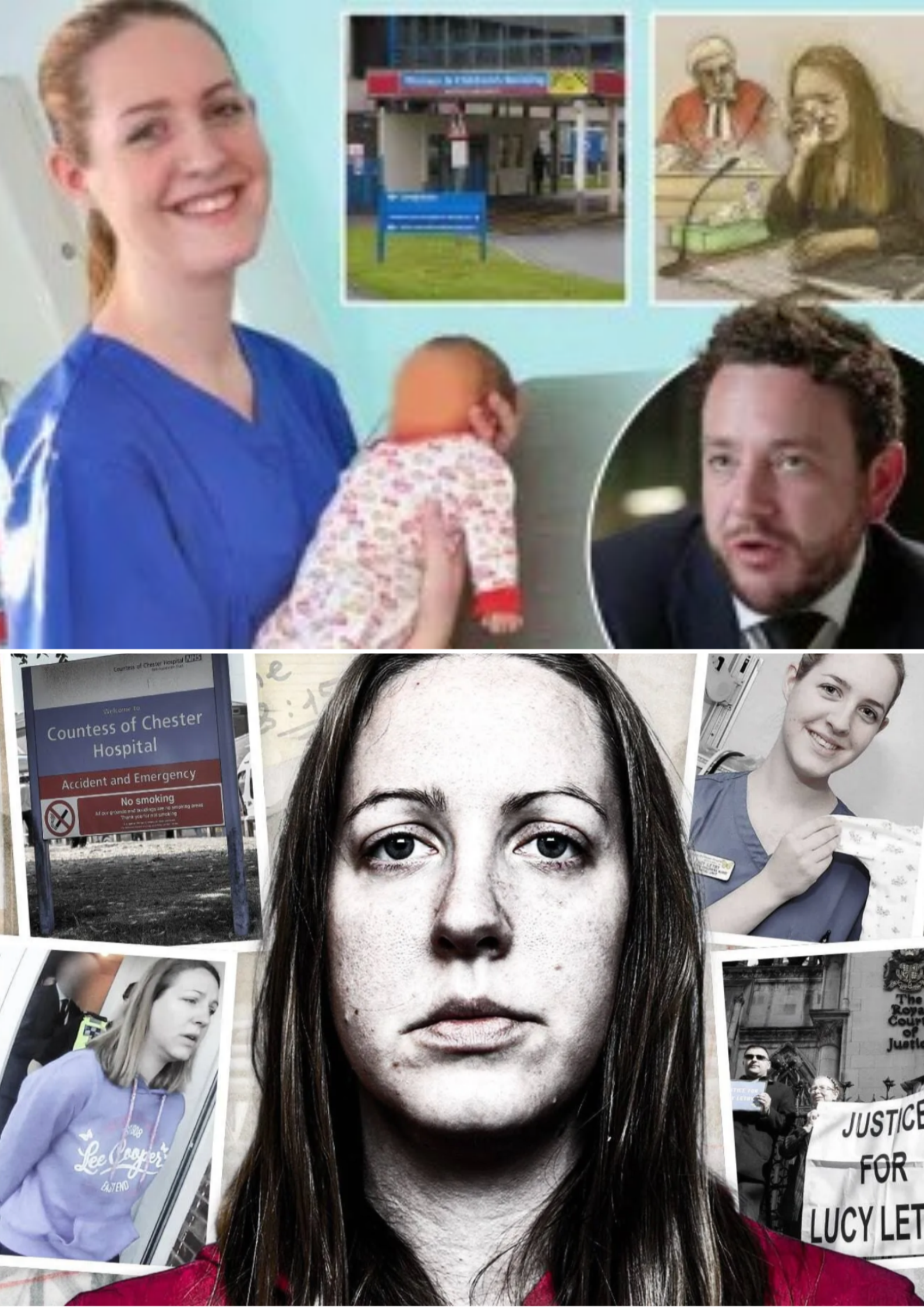
LUCY LETBY CASE — NEW EXPERT QUESTIONS PUT INSULIN EVIDENCE UNDER FRESH SCRUTINY
Fresh medical and scientific arguments are putting parts of the evidence used against Lucy Letby under renewed scrutiny, while the UK’s miscarriage-of-justice watchdog continues reviewing her convictions.
The case of former neonatal nurse Lucy Letby has entered another closely watched stage as new expert material continues to be examined by the Criminal Cases Review Commission (CCRC).
Letby remains convicted of murdering seven babies and attempting to murder seven others at the Countess of Chester Hospital.
She is serving 15 whole-life orders.
But her legal team has been challenging aspects of the medical evidence presented at trial, particularly evidence relating to two babies whom prosecutors said were deliberately poisoned with insulin.
The latest developments do not overturn Letby’s convictions.
Instead, they add another layer to an increasingly complex dispute over the scientific evidence behind some of the charges.
 WHY INSULIN EVIDENCE MATTERS
Two of Letby’s convictions involved allegations that insulin was deliberately administered to two newborn boys, identified in court as Baby F and Baby L.
The prosecution argued that abnormal insulin and blood-sugar results were evidence that the babies had been deliberately poisoned.
That evidence became an important part of the prosecution case.
Letby’s defence has since sought new expert opinions challenging whether the medical findings necessarily proved deliberate insulin administration.
A number of experts have examined the evidence as part of the material submitted to the CCRC.
 EXPERTS RAISE QUESTIONS — BUT ALSO DISAGREE WITH OTHER DEFENCE ARGUMENTS
One of the most recent developments involves Helen Shannon, a chemical engineering expert, and Geoff Chase, a professor of bioengineering.
The pair previously produced a detailed report questioning aspects of the insulin evidence in the cases involving Baby F and Baby L.
They continue to stand by their assessment that it was very unlikely that two of the babies were poisoned in the manner alleged, according to reporting on their position.
However, in September 2026, the two experts withdrew from Letby’s defence team after raising concerns about other scientific arguments being advanced on her behalf.
They said they could not support certain arguments that, in their view, were inconsistent with available evidence, established science and physiology.
That distinction is important.
Their withdrawal does not mean they have abandoned their concerns about the insulin convictions.
Instead, they have separated those concerns from other arguments they believe cannot be scientifically supported.
LETBY’S LAWYERS SAY NEW EVIDENCE IS SIGNIFICANT
Letby’s barrister, Mark McDonald, has argued that the defence now has evidence from multiple international experts in insulin, endocrinology and laboratory medicine.
He has said the evidence raises fundamental questions about the scientific basis used by the prosecution to conclude that Baby F and Baby L were deliberately poisoned.
The defence position is that the significance of the new material does not depend on a single expert.
Instead, the legal team argues that experts from different scientific disciplines have identified problems that should be considered together.
Those claims are being presented to the CCRC as part of the wider application seeking a possible referral of Letby’s convictions back to the Court of Appeal.
THE CCRC IS STILL REVIEWING THE CASE
The Criminal Cases Review Commission received a preliminary application on behalf of Letby in February 2025.
Since then, additional expert reports and submissions have continued to arrive.
According to the CCRC, further expert reports and submissions were received as late as January 21, 2026.
The commission has stressed that its role is not to decide whether Letby is guilty or innocent.
Instead, it investigates potential miscarriages of justice and can refer a conviction to an appellate court if it considers that new evidence or argument creates a real possibility that the conviction would not be upheld.
That means the current review is not itself an appeal.
And no decision has yet been announced that would overturn Letby’s convictions.
OTHER MEDICAL EXPERTS HAVE ALSO CHALLENGED THE PROSECUTION CASE
The insulin evidence is only one part of the broader scientific debate.
A panel of international medical experts led by Canadian neonatologist Dr Shoo Lee has also challenged aspects of the medical evidence used during Letby’s trials.
The panel has argued that there was no medical evidence proving deliberate harm in the cases it reviewed and suggested that natural causes or problems with medical care could explain a number of the babies’ collapses and deaths.
The panel’s conclusions have been strongly disputed, and they remain part of an ongoing legal and scientific debate rather than a judicial finding that Letby was wrongly convicted.
QUESTIONS ABOUT A KEY PROSECUTION EXPERT
Another development has added further scrutiny to the insulin cases.
Professor Peter Hindmarsh, a prosecution expert who gave evidence concerning the insulin allegations, was under professional investigation during the period surrounding Letby’s trial.
The Guardian reported that an investigation into his professional conduct had been opened by the General Medical Council after concerns were raised about his work.
Cheshire Police and the Crown Prosecution Service have said they were not informed of the investigation before he initially gave evidence.
The defence has argued that these circumstances should now be considered as part of its application to the CCRC.
The allegations and professional concerns surrounding Hindmarsh did not result in a court finding that his evidence at Letby’s trial was false.
They are, however, among the matters the defence says deserve further examination.
TWO PREVIOUS CHALLENGES HAVE FAILED
The new CCRC application comes after Letby’s earlier attempts to challenge her convictions were unsuccessful.
She was convicted in 2023 of murdering seven babies and attempting to murder six others.
A second trial in 2024 resulted in another attempted-murder conviction involving a seventh baby.
The convictions resulted in 15 whole-life orders.
Letby has consistently maintained her innocence.
The current CCRC process therefore represents another possible route through which new evidence could eventually reach the Court of Appeal — but that would require the commission to decide that the legal threshold for a referral has been met.
THE HOSPITAL INQUIRY IS A SEPARATE MATTER
The case has also been surrounded by findings from the Thirlwall Inquiry, which examined the events and management failures at the Countess of Chester Hospital.
The inquiry raised serious concerns about how warning signs were handled and whether opportunities existed to intervene earlier.
However, the inquiry was not an appeal against Letby’s convictions.
Its findings do not themselves determine whether Letby was guilty or innocent.
That distinction remains crucial as different investigations, expert reviews and legal proceedings continue to examine different aspects of the wider story.
SO, COULD THE NEW EVIDENCE CHANGE THE CASE?
That remains unknown.
The CCRC has not announced whether it will refer Letby’s convictions back to the Court of Appeal.
For now, her convictions remain legally intact.
But the continued arrival of expert reports means the scientific evidence behind some parts of the case is receiving renewed attention.
The insulin allegations involving Baby F and Baby L are particularly significant because they were based on complex medical evidence that has since become the subject of competing expert interpretations.
At the same time, the disagreement among experts demonstrates how complicated the scientific debate has become.
Some specialists argue that the evidence supports serious doubt about the insulin convictions.
Others have rejected particular defence arguments as scientifically unsound.
The courts — rather than individual experts or commentators — will ultimately determine what legal significance any new evidence has.
A CASE THAT IS STILL FAR FROM OVER
Lucy Letby’s convictions have not been overturned.
She remains in prison serving 15 whole-life orders.
But the CCRC review means the legal examination of her case is continuing.
Whether the new medical evidence will lead to a referral, a fresh appeal or no further action remains to be seen.
For the families of the babies involved, the continuing debate is deeply significant.
For Letby’s legal team, it represents an attempt to challenge evidence they believe was misunderstood or overstated.
And for the CCRC, the task is narrower: to determine whether the new evidence and arguments meet the legal threshold required for a potential miscarriage-of-justice referral.
For now, one question remains at the centre of the case:
Will the latest scientific evidence be enough to bring Lucy Letby’s convictions back before the Court of Appeal?
That answer has not yet been given.