CHRISTA PIKE WAS DECLARED BRAIN DE@D — THEN SHE SUDDENLY WOKE UP AND STARTED TALKING
CHRISTA PIKE WAS DECLARED BRAIN DEAD — THEN SHE SUDDENLY WOKE UP AND STARTED TALKING
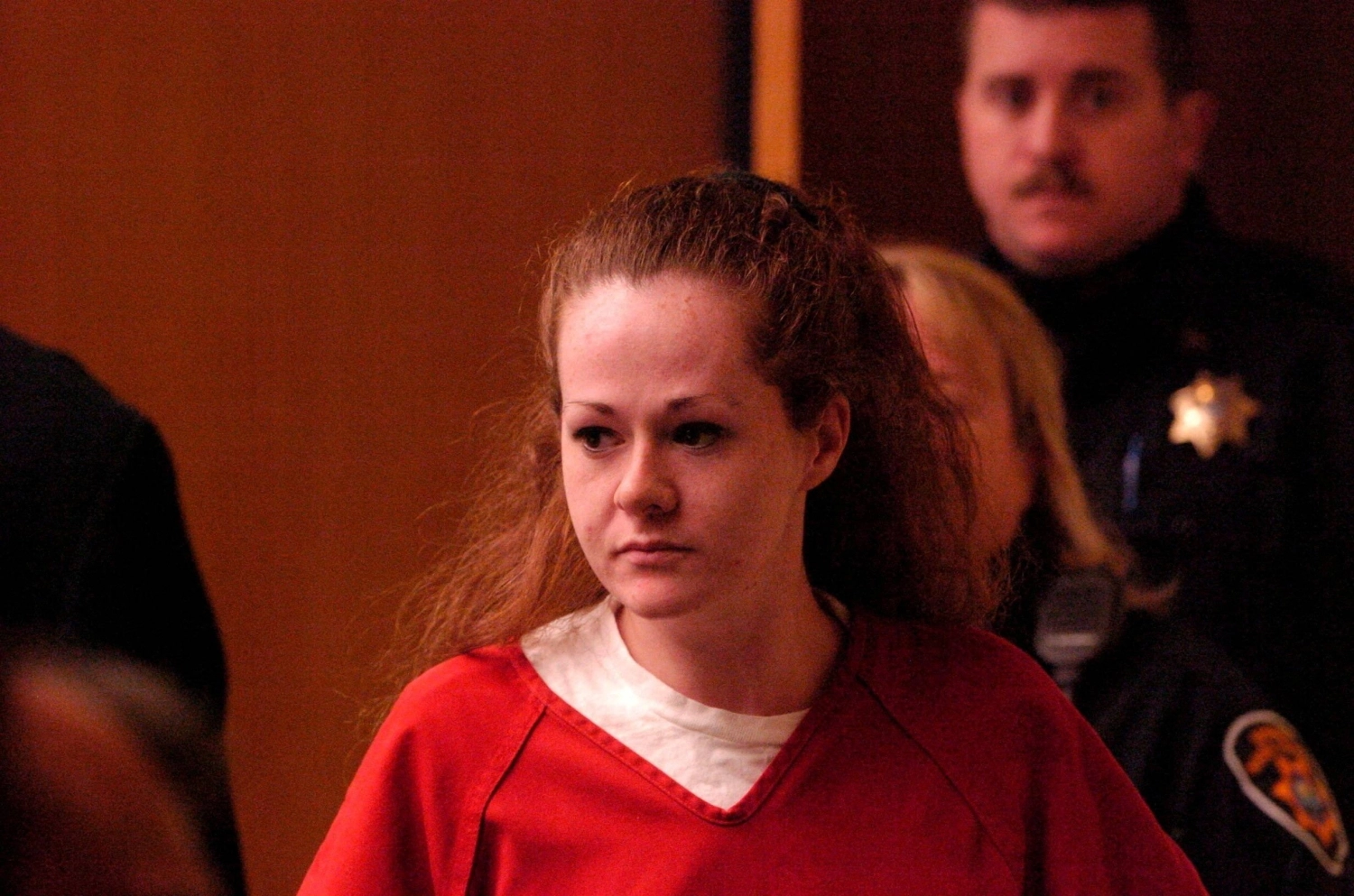
Days after surviving a failed execution in Tennessee, death-row inmate Christa Pike was believed to be brain dead and facing the removal of life support. Then, in a stunning turn of events, she opened her eyes and began speaking.
NASHVILLE, TENNESSEE — Christa Pike was not expected to survive.
Just days earlier, the 50-year-old Tennessee death-row inmate had survived a failed lethal-injection execution after receiving two doses of pentobarbital.
She was left critically ill in a Nashville hospital, unconscious and on a ventilator.
Then came another devastating update.
On Monday, October 5, Pike’s attorney Randy Spivey was told that his client was believed to be brain dead and that life support would be removed the following day.
But Tuesday brought an extraordinary development.
Pike woke up.
And she began talking.
:max_bytes(150000):strip_icc():focal(749x0:751x2):format(webp)/Randy-Spivey-Nashville-2026-Christa-Pike-mugshot-100726-f1737966dfa0464d8219df29ce9f82d4.jpg) “WHERE AM I?”
“WHERE AM I?”
According to her attorney, Pike’s first words after regaining consciousness were reportedly, “Where am I, and who are you?”
Spivey said the moment shocked everyone involved, including Pike’s legal team and medical personnel.
She remains seriously ill and is experiencing periods of confusion, but she is now able to communicate with people around her.
Her attorneys say Pike is aware that the state attempted to execute her.
She has also reportedly asked about members of her legal team and about the family of the woman whose death led to her death sentence.
 A FAILED EXECUTION
Pike was scheduled to be executed at Riverbend Maximum Security Institution in Nashville on September 30.
She was convicted for her role in the 1995 torture and killing of 19-year-old Colleen Slemmer, a fellow student.
Pike was 18 years old at the time of the crime.
She was scheduled to become the first woman executed in Tennessee in more than two centuries.
Instead, the execution became a medical and legal crisis.
Two doses of pentobarbital were administered, but Pike did not die.
Witnesses reported that she remained conscious and complained of severe pain in her arm during the procedure. She was eventually taken from the prison to a hospital rather than being transported away from the facility in a hearse.
SEVERE INJURIES
Pike’s survival has come with serious physical consequences.
Her attorneys say she is suffering from pneumonia and has a blood clot in one arm.
She is also unable to swallow and has been unable to eat for days.
Both of her arms and hands became severely swollen and injured after the pentobarbital was apparently delivered improperly.
Her attorneys have described her arms as burned, blistered and tremendously swollen.
They also said it remains unclear how much movement or function she will eventually regain in her arms.
Despite her condition, Pike has continued to communicate intermittently.
Her lawyers describe her as confused and angry about what happened, but aware that she survived an attempt by the state to end her life.
LEGAL BATTLE BEGINS
Pike’s unexpected recovery has now opened another chapter in the legal battle surrounding her execution.
Her attorneys have filed legal action against Tennessee and are seeking to preserve evidence from the failed execution.
On October 7, a judge ordered the Tennessee Department of Correction to preserve physical and electronic evidence connected to the procedure.
That includes syringes, IV lines, medical equipment, surveillance footage, notes, photographs, emails and other communications relating to the execution.
Her lawyers argue that the events surrounding the failed execution require further investigation.
The state has disputed some of the allegations made by Pike’s legal team.
It remains unclear whether Tennessee will ever attempt to execute Pike again.
A CASE THAT HAS SHOCKED THE COUNTRY
Pike’s case has drawn national attention because of the extraordinary circumstances surrounding her survival.
She is believed by her attorneys to be the first person in the United States to survive a completed lethal-injection execution attempt.
The incident has also intensified scrutiny of Tennessee’s execution procedures.
Governor Bill Lee has halted executions in the state while an independent review examines what went wrong. The head of Tennessee’s prison system, Commissioner Frank Strada, has also announced plans to resign.
For Pike, however, the focus is now much more immediate.
She faces a long and uncertain recovery.
She remains hospitalized, seriously ill and under medical care.
And after everyone around her had been preparing for the possibility that she would not survive, she has now done something no one expected.
She woke up.
She spoke.
And she asked the simplest question imaginable:
“Where am I?”
The answer to that question may mark the beginning of an entirely new chapter in one of the most extraordinary death-penalty cases in recent U.S. history.