LINDSAY CLANCY HOLDOUT JUROR UNDER INTENSE SCRUTINY — PAST DOMESTIC VIOLENCE CASE AND RESTRAINING ORDER RAISE NEW QUESTIONS
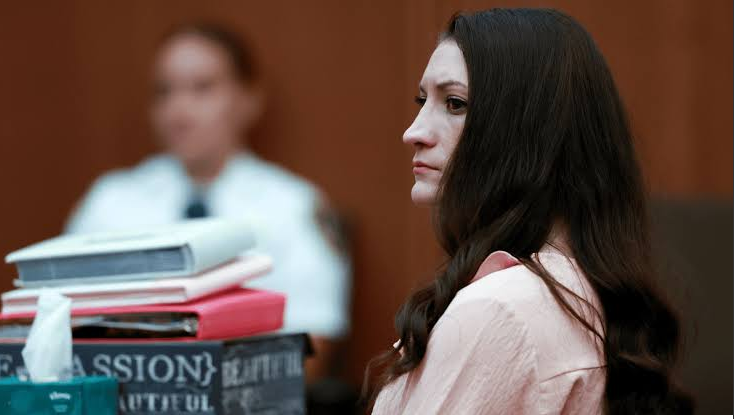
LINDSAY CLANCY HOLDOUT JUROR UNDER INTENSE SCRUTINY — PAST DOMESTIC VIOLENCE CASE AND RESTRAINING ORDER RAISE NEW QUESTIONS
NEW REPORTING HAS PUT THE LONE HOLDOUT JUROR AT THE CENTER OF A GROWING CONTROVERSY FOLLOWING THE MISTRIAL
New reporting has raised questions about the background of the lone holdout juror whose position contributed to the deadlock in Lindsay Clancy’s high-profile Massachusetts murder trial.
The revelations come days after the trial ended in a mistrial, following seven days of jury deliberations without a unanimous verdict.
According to NBC Boston and court records, the juror had previously faced a domestic-violence-related criminal charge that was later dismissed. He was also subject to a restraining order involving a teenage family member while he was serving on the Clancy jury.
A 2021 CHARGE WAS LATER DISMISSED
Court records show that in September 2021, the juror was arrested after police responded to an incident involving his then-wife.
According to a police report, a teenage relative alleged that the juror grabbed the woman by the throat and threw her into a dresser.
The juror pleaded not guilty, and the criminal charge was later dismissed.
The allegations were never proven in a criminal conviction.
 THE RESTRAINING ORDER WAS ACTIVE DURING THE TRIAL
The more recent legal issue involved the juror’s teenage nephew.
A Massachusetts court issued a restraining order in August 2025 after allegations that the juror had pushed and struck the teenager during a dispute.
According to court records reported by the Boston Globe, the order remained active until August 11, 2026, meaning it overlapped with the period when the Clancy trial was underway.
That discovery has prompted questions about the jury-selection process and what information was available to the court before the juror was seated.
DID HE DISCLOSE THE INFORMATION?
That remains one of the biggest unanswered questions.
Massachusetts juror questionnaires ask prospective jurors about arrests, criminal charges and court orders.
However, the questionnaires are confidential, and authorities have not publicly confirmed how the holdout juror answered those questions.
NBC Boston reported that it therefore could not determine whether he disclosed his legal history accurately.
A retired Massachusetts judge, Carol Erskine, said the question of whether the juror answered truthfully is central to the controversy — but cautioned that the discovery does not automatically mean the mistrial should be overturned or that Clancy should receive a particular legal outcome.
WHAT COULD THIS MEAN FOR CLANCY?
Clancy’s defense has already filed a motion seeking a not-guilty ruling after the mistrial, arguing that the prosecution’s evidence was legally insufficient.
The judge is scheduled to hear that motion on September 29.
Whether the juror’s history becomes part of that legal fight remains uncertain. Any challenge based on jury selection would require further examination of the questionnaire, the selection process and the applicable legal standards.
JURY PRIVACY HAS BECOME ANOTHER MAJOR ISSUE
The controversy has also raised concerns about juror privacy.
The holdout juror has not publicly discussed his role in the trial, while information believed to identify him has circulated online.
NBC 10 reported that the court has taken steps to protect juror identities, amid concerns about harassment and the consequences of publicly identifying people who served on the jury.
For now, one question remains at the center of the controversy:
Did the holdout juror properly disclose his history during jury selection — and, if not, could that ultimately affect what happens next in the Lindsay Clancy case?
That answer has not yet been established.