Exhausted Barn Owl Lands on Racing Boat 70 Miles From Shore in Remarkable Sea Rescue
Far from the farmland and open countryside where a barn owl would normally feel at home, one exhausted bird found itself fighting for survival over the open sea.
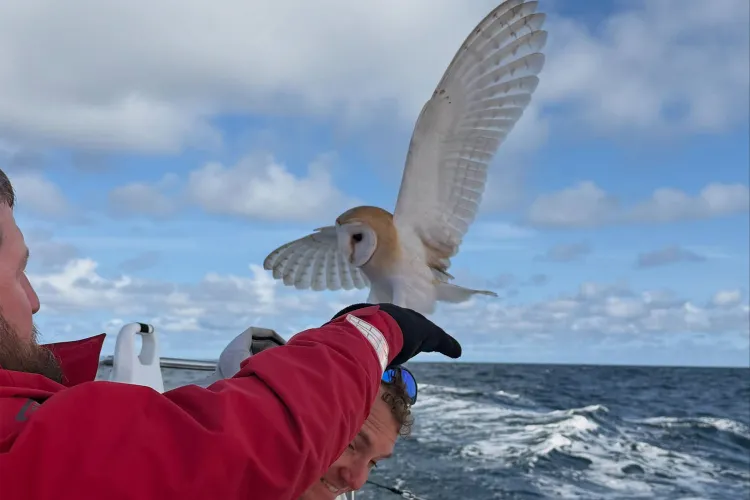
The owl was roughly 70 miles from shore when members of a British Army sailing team noticed it struggling near their boat. They watched the bird repeatedly fall into the water before it finally managed to reach their vessel and collapse aboard.
For the sailors, who were in the middle of a major race around Britain and Ireland, the unexpected passenger quickly became more important than the competition.
They gave the owl a place to recover, kept watch over it for the next day and eventually helped arrange a journey back to land — a sequence of events that one wildlife expert later described as extraordinarily fortunate.
The sailors even gave their weakened visitor a name: Little Reg.
An Owl in a Place It Was Never Meant to Be
Barn owls are associated with landscapes such as grasslands, deserts and agricultural areas, not stretches of open ocean.
How Little Reg ended up so far offshore was initially a mystery.
The bird appeared severely exhausted when it encountered the Army Offshore Racing Team, whose members were participating in the 50th Anniversary RORC Round Britain and Ireland Race.
Before the owl reached the boat, the crew saw just how much difficulty it was having.
The bird repeatedly dropped into the sea, suggesting it was rapidly running out of strength.
Eventually, it managed to get aboard.
There, after what had apparently been an exhausting ordeal, Little Reg collapsed.
The sailors suddenly found themselves responsible for a fragile wild animal in the middle of a demanding offshore race.
The Crew Became an Improvised Rescue Team
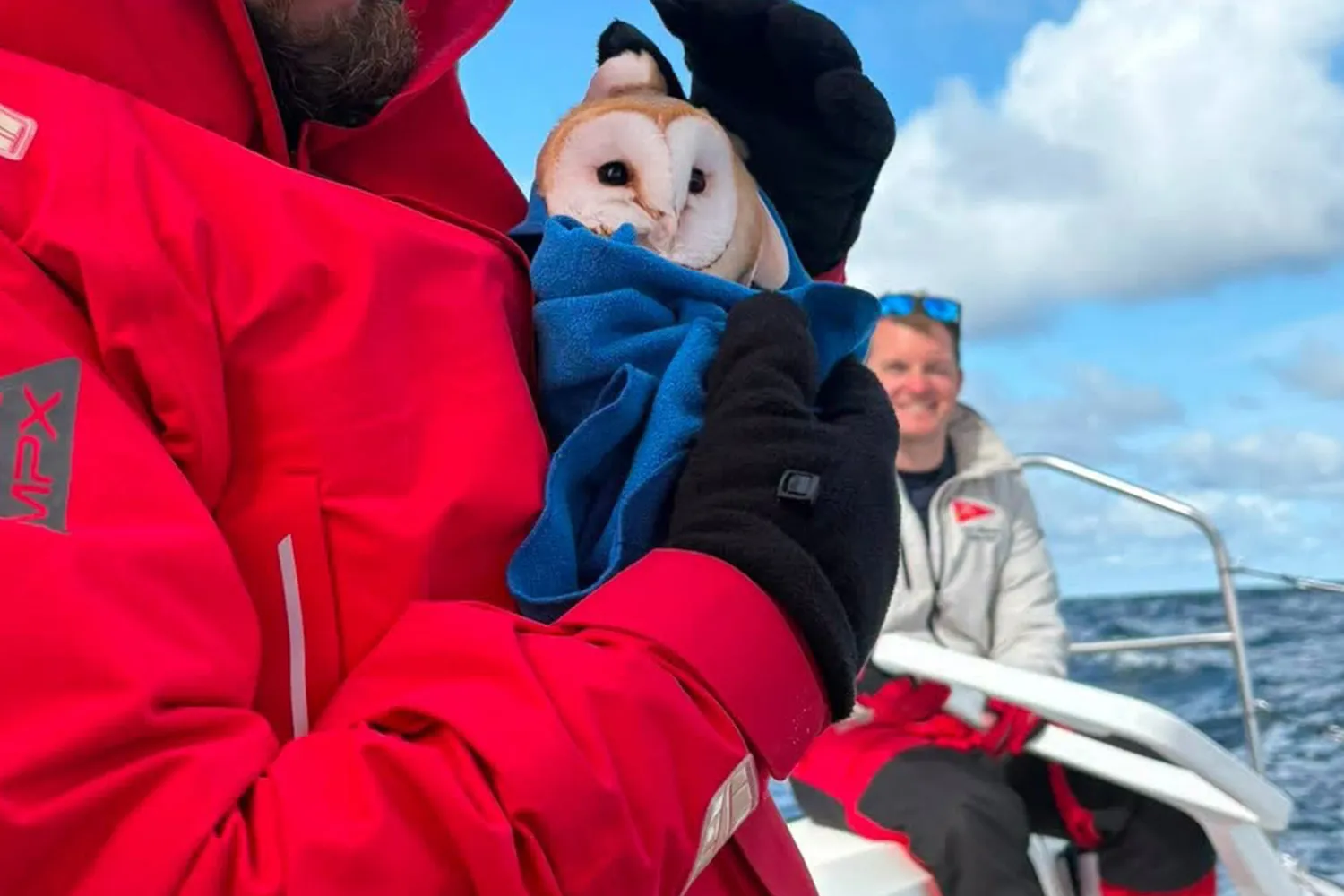
For approximately 24 hours, the Army team cared for the owl aboard the racing vessel as they continued their journey around Ireland and Great Britain.
A racing yacht was hardly an ideal wildlife rehabilitation facility.
There was little suitable food available for a barn owl, and the conditions aboard a competitive sailing vessel were challenging enough even for the humans.
Still, the crew did what it could to keep its unexpected passenger safe.
Mark Petherbridge, a member of the Army Offshore Racing Team, acknowledged that the experience had been difficult for the animal.
“It’s been a tough 24 hours for him,” he said, while expressing hope that the owl would soon receive the specialized assistance it needed.
By then, the sailors had already become attached to the bird.
They called him Little Reg and praised what they viewed as his remarkable determination to survive.
But keeping him aboard indefinitely was not an option.
The owl needed professional veterinary care, nourishment and a way back to dry land.
Getting Little Reg Back to Shore
The rescue effort expanded when James Stannard, a conservation officer with the Barn Owl Trust, became involved after receiving a call about the stranded bird.
Stannard helped coordinate the resources necessary to bring the owl ashore.
Eventually, a lifeboat met the racing crew and took Little Reg from the yacht, beginning the next stage of his unusual journey.
The transfer was critical.
There was not enough appropriate food aboard the racing boat to sustain the bird for long, and Stannard believed Little Reg might not have survived without being taken back to land.
After spending what may have been a prolonged period without proper nourishment, the owl was already in poor physical condition.
His unlikely landing on the Army vessel had given him a temporary refuge.
The lifeboat gave him a route to survival.
Experts Have a Theory About How He Reached the Sea
Stannard later offered a possible explanation for how a barn owl could have found itself stranded dozens of miles offshore.
He believes the owl may have unknowingly settled onto a fishing vessel while it was docked.
Barn owls often seek sheltered places to rest, and the bird may not have realized what was happening when the boat eventually departed.
If the vessel then traveled out to sea, the owl could have suddenly found itself surrounded by water with nowhere familiar to go.
At some point, Little Reg apparently left that vessel or became separated from it.
That would explain how the bird ended up attempting to fly over an environment completely unsuited to it.
By the time the Army racing team encountered him, his strength was failing.
Stannard described the fact that the owl managed to locate another boat in such a vast stretch of water as “nothing short of a miracle.”
The phrase captured the improbability of the encounter.
Little Reg did not merely need a boat.
He needed to find one while he still had enough strength to reach it — and it needed to contain people willing to interrupt their own plans to help.
Little Reg Arrived on Land in Poor Condition
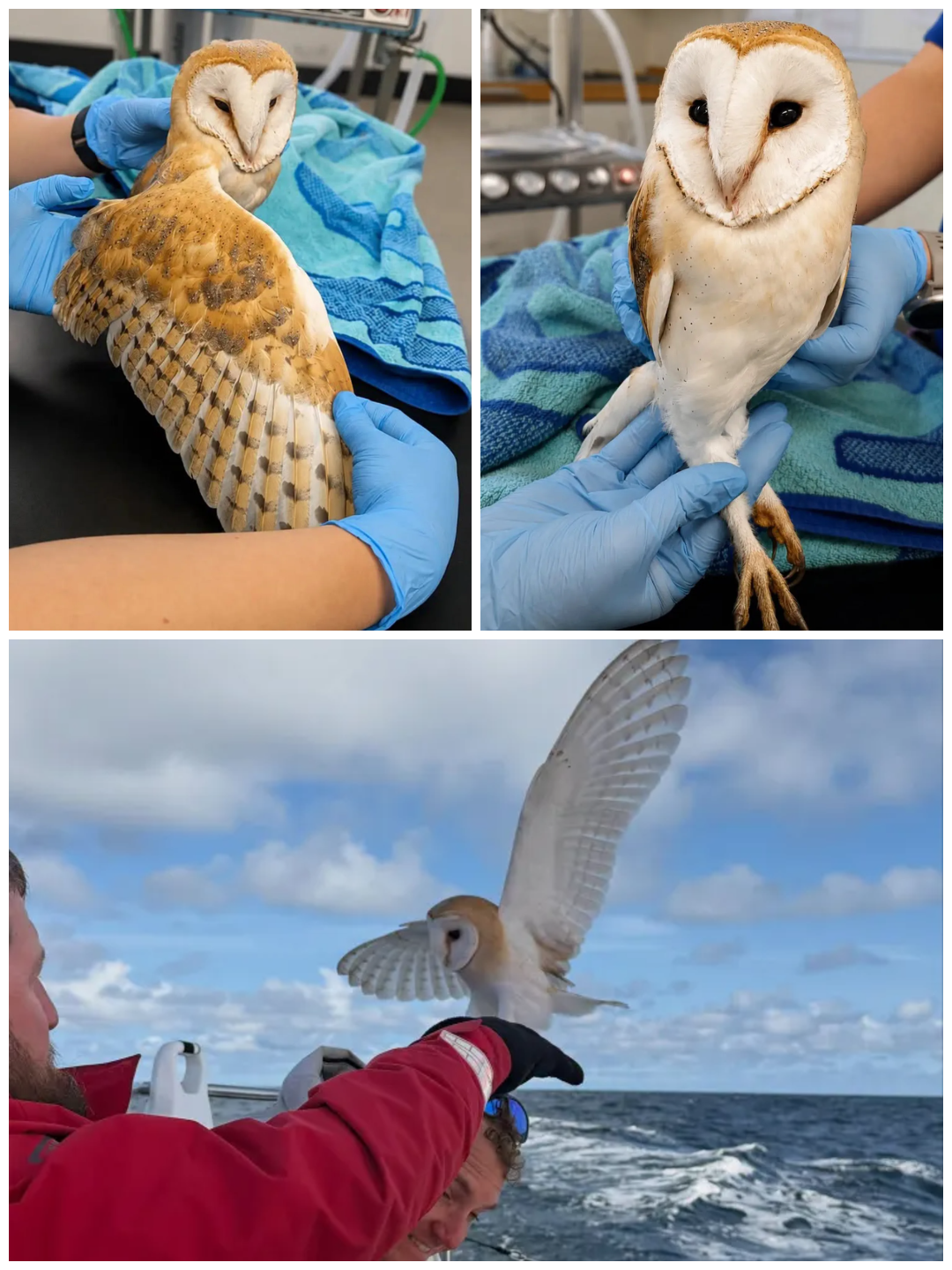
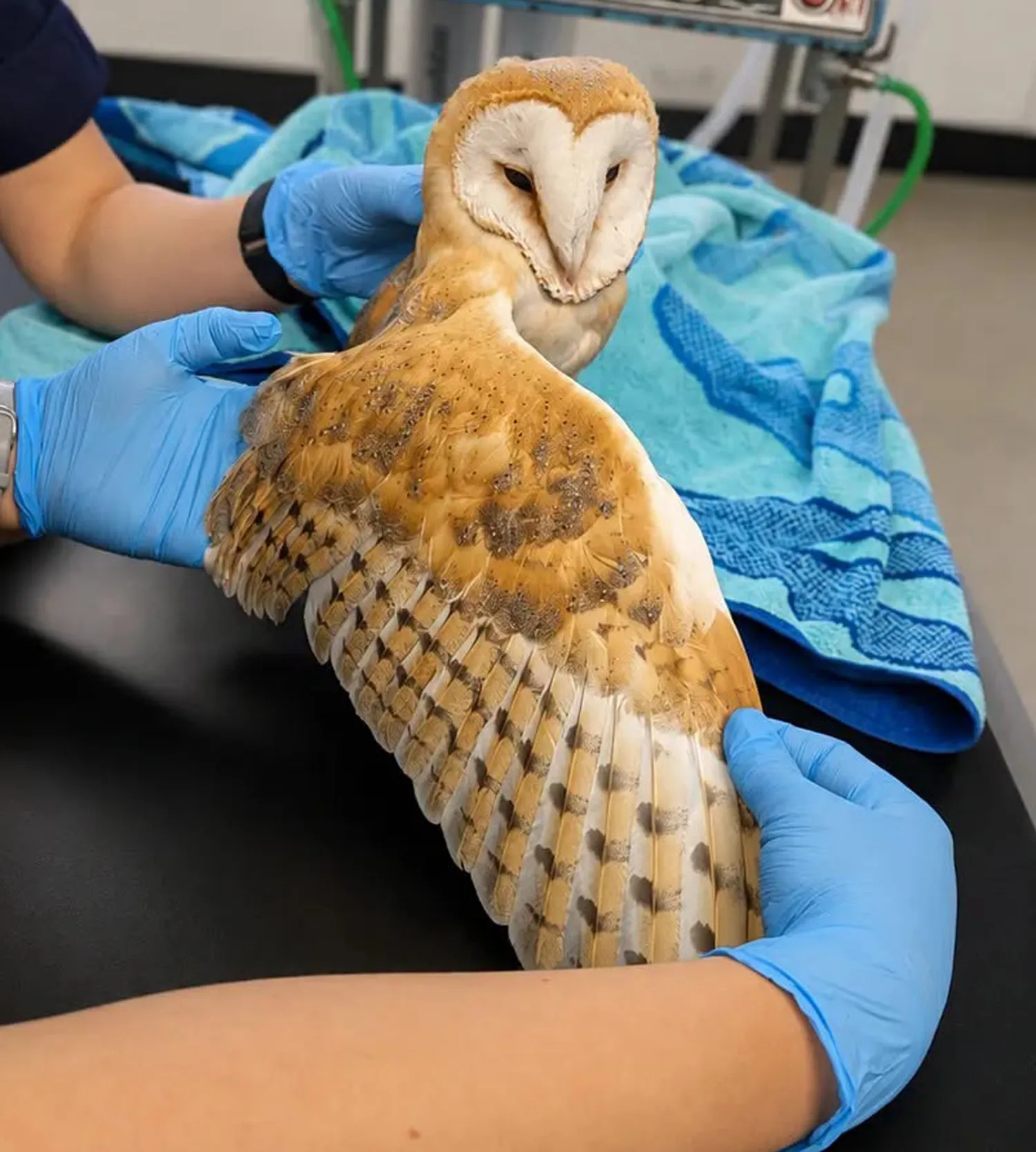
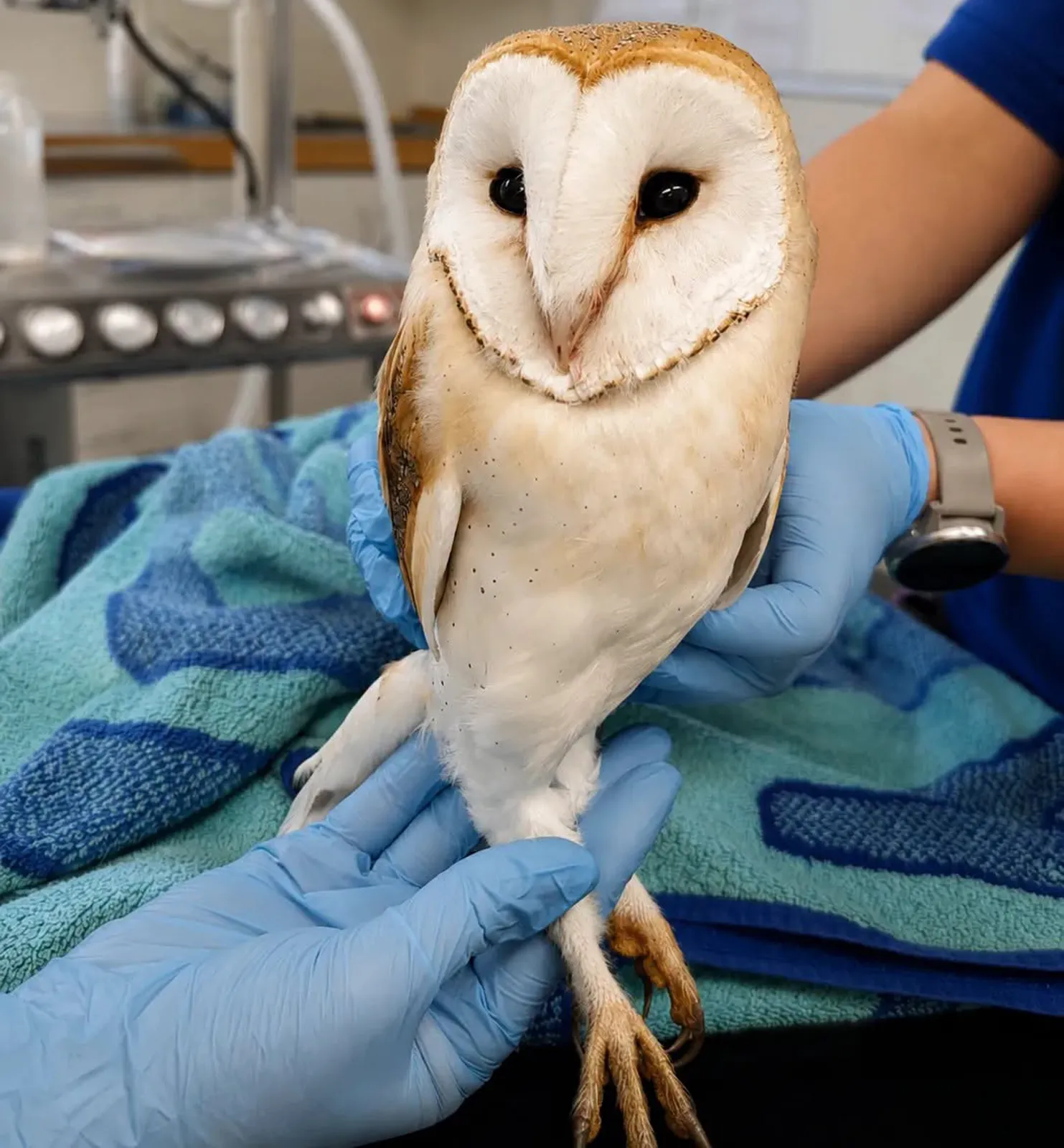
Once ashore, the owl was transferred to the RSPCA East Winch Wildlife Centre in King’s Lynn, England.
There, the severity of his ordeal became clearer.
In an Aug. 21 update, the wildlife center said Little Reg was extremely thin and weak.
The staff immediately began providing the basics his body desperately needed: fluids, nutrition, warmth and rest.
The center said its team was doing everything possible to help him recover.
Supporters were also asked to contribute supplies for his rehabilitation, including heavy-duty cat beds that could be used during his care.
For an owl that had recently been dropping helplessly into the sea, reaching a warm wildlife facility represented a dramatic change in circumstances.
His recovery was not complete, but he was no longer alone.
A Chance Encounter Changed the Owl’s Fate
There were several moments when Little Reg’s story could easily have ended differently.
He could have become trapped aboard the vessel that experts believe accidentally carried him offshore.
He could have exhausted himself before another boat appeared.
He could have fallen into the sea one final time without enough strength to rise again.
Instead, he crossed paths with a racing crew that recognized an animal in distress.
Those sailors sheltered him until others could take over.
A conservation officer helped organize the next stage of the rescue.
A lifeboat carried him back toward land.
And wildlife specialists were waiting to provide the care his weakened body needed.
The sailors had set out to compete in a race around Britain and Ireland.
They could hardly have expected that one of the most memorable parts of their journey would involve a small barn owl desperately searching for somewhere — anywhere — to land.
For Little Reg, that unexpected boat may have arrived at exactly the moment he needed it most.