OHIO “HOUSE OF HORRORS” CASE TAKES ANOTHER TURN: PROSECUTORS SEEK NEW SERIOUS FELONY CHARGES AGAINST MOTHER OF 16

OHIO “HOUSE OF HORRORS” CASE TAKES ANOTHER TURN: PROSECUTORS SEEK NEW SERIOUS FELONY CHARGES AGAINST MOTHER OF 16
The investigation into the Vinton County family whose 16 children were removed from a deeply troubling home has taken a major new turn. Prosecutors say a grand jury could consider additional serious felony charges against Elizabeth Siders and other adults already facing child-neglect allegations.
VINTON COUNTY, OHIO — What began as a child-neglect investigation has continued to expand, with prosecutors now signaling that the adults accused in the Ohio “House of Horrors” case could face new and more serious felony charges.
Elizabeth Siders, 33, is the mother of 16 children who were removed from the family home in Hamden, Ohio, on June 30. She and three other adults were initially charged with 16 counts of child neglect each. All four have pleaded not guilty.
Now, prosecutors say the case is heading toward another potentially significant legal development.
 GRAND JURY COULD DECIDE THE NEXT CHARGES
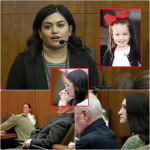
Vinton County Prosecutor William Archer revealed in court filings that a grand jury will consider whether to bring “new serious felony charges” against Elizabeth and the other adults involved in the case.
The disclosure came as attorneys sought reductions in the defendants’ $300,000 bonds. Prosecutors opposed reducing Elizabeth’s bond, arguing that she could present a risk and should remain subject to significant restrictions.
A grand jury indictment would not mean the defendants had been found guilty. It would mean prosecutors had obtained an indictment authorizing additional criminal charges to proceed through the court system.
16 CHILDREN WERE REMOVED FROM THE HOME
Authorities descended on the property after an investigation uncovered 16 children ranging in age from 18 months to 18 years.
Investigators have said the children were living in extremely poor conditions and that many had been confined largely to a small room inside the home.
Authorities also reported that some of the children had difficulty communicating and had not been enrolled in school.
The discovery shocked officials and prompted a major emergency response.
Ohio subsequently allocated $1 million in emergency funding to help Vinton County provide care and treatment for the children after they were removed from the home.
:max_bytes(150000):strip_icc():focal(556x270:558x272):format(webp)/Elizabeth-Ann-Siders-mugshot-71026--e1245f0e97aa4a0f99962d83727fe370.jpg) THE INVESTIGATION HAS GROWN FAR BEYOND THE ORIGINAL CASE
THE INVESTIGATION HAS GROWN FAR BEYOND THE ORIGINAL CASE
The investigation has continued to uncover additional allegations.
According to recent reporting, authorities are now investigating allegations involving sexual conduct with a minor who was not one of the 16 children removed from the home.
Those developments have expanded the scope of the investigation and could explain why prosecutors are now considering substantially more serious charges.
Authorities have stressed that the investigation remains ongoing.
ELIZABETH’S ATTORNEY SAYS SHE MAY HAVE BEEN A VICTIM HERSELF
Elizabeth’s defense has presented a very different picture.
Her attorney, Thomas Stolley, has requested a mental-health evaluation to determine whether she is competent to stand trial.
He has also raised the possibility that Elizabeth could have been legally insane at the time of the alleged offenses if she is found competent to proceed.
The defense has argued that Elizabeth herself may have been subjected to years of control and isolation.
That argument is now becoming an important part of the legal battle.
But prosecutors have rejected the request to simply reduce her bond while the investigation continues.
THE CHILDREN’S YEARS OF ISOLATION
The emerging picture of the family’s history has raised even more questions.
Investigators have said the family moved around southern Ohio over a period of years and allegedly avoided leaving a conventional paper trail.
Ohio Attorney General Dave Yost previously said authorities encountered a family that had managed to keep the children largely hidden from the outside world.
Some of the children reportedly lacked basic documentation, while questions have been raised about their education, healthcare and interactions with the outside world.
The investigation is now attempting to establish how long the alleged conditions existed and who knew about them.
FOUR ADULTS REMAIN AT THE CENTER OF THE CASE
The original defendants include:
- Elizabeth Siders, 33
- Gary Siders Jr.
- Gary Siders Sr.
- Christina Siders
All four initially faced 16 counts of child neglect.
Their cases are separate from the criminal allegations involving the children themselves, and each defendant is presumed innocent unless proven guilty in court.
WHY THE NEW FELONY CHARGES COULD CHANGE EVERYTHING
The original neglect allegations were already serious.
But prosecutors now appear to believe the evidence may support additional felony charges carrying potentially much greater consequences.
The grand jury process could therefore become the next major turning point.
If indictments are returned, prosecutors would have to prove the new allegations beyond a reasonable doubt at trial.
For now, however, the public does not yet have a complete picture of what evidence prosecutors intend to present.
And that may be why the case continues to generate so much attention.
THE BIG QUESTIONS REMAIN
How could 16 children live inside the same home for years without receiving the education, medical attention and outside contact expected for children their age?
Who knew what was happening?
Were there earlier warning signs?
And what evidence has investigators uncovered that could justify the new serious felony charges prosecutors are now considering?
Those questions remain unanswered.
What is clear is that the Ohio investigation is not over.
The children are now in state custody, while prosecutors continue building their case against the adults accused of failing to protect them.
16 CHILDREN.
FOUR ADULT DEFENDANTS.
A $300,000 BOND.
AND NOW, POTENTIAL NEW FELONY CHARGES.
The next major development could come from the grand jury — and whatever happens there could dramatically reshape the case.