“MIRACLES DO HAPPEN!” — SIR CHRIS HOY SHARES A HOPEFUL UPDATE IN HIS CANCER BATTLE
“MIRACLES DO HAPPEN!” — SIR CHRIS HOY SHARES A HOPEFUL UPDATE IN HIS CANCER BATTLE
The six-time Olympic champion says his current medication is working, while exciting new drugs in clinical trials could offer further options in the future.
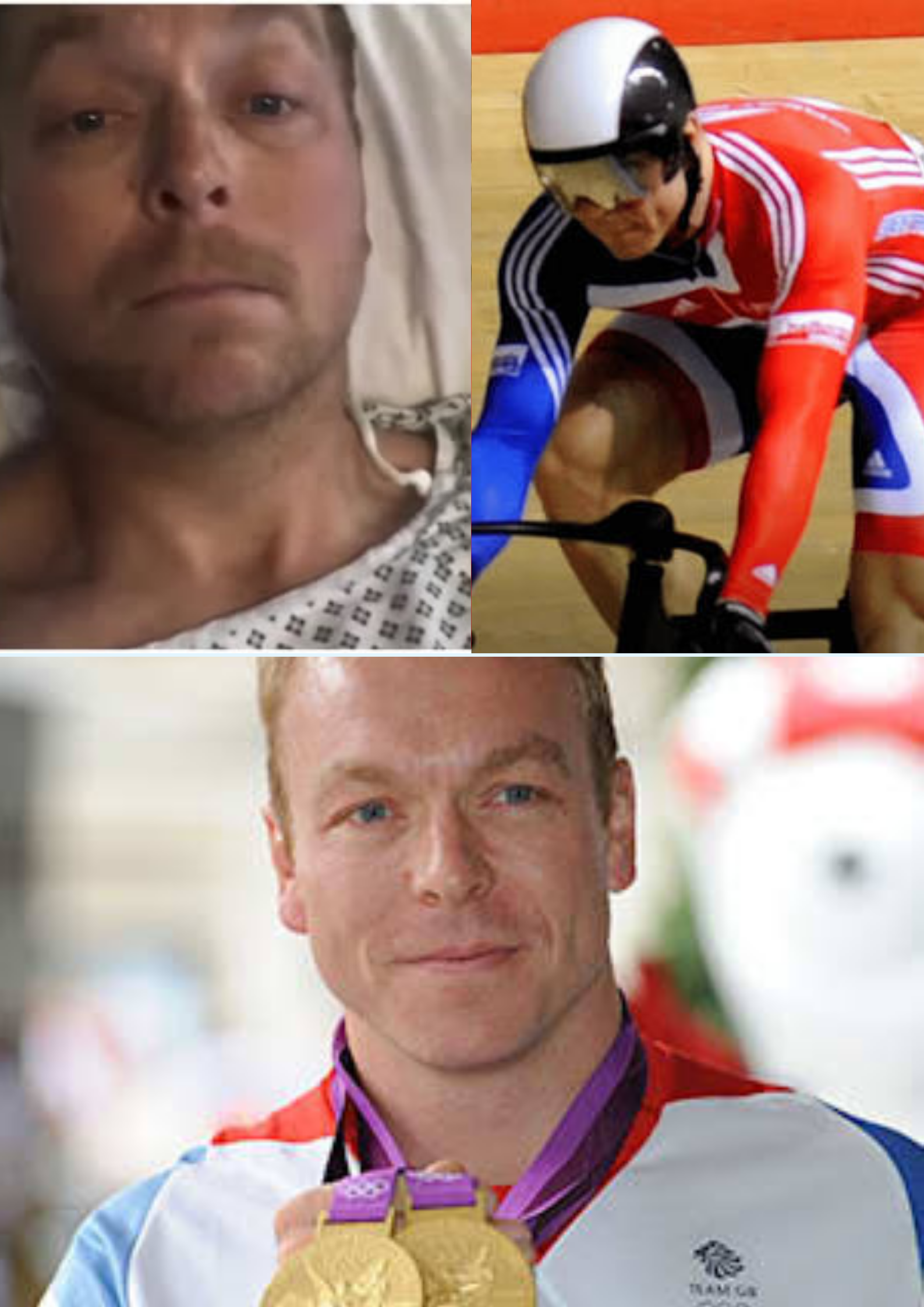
Sir Chris Hoy has shared a hopeful update on his ongoing battle with stage 4 prostate cancer, revealing that his current medication is still working while new treatments are being developed that could potentially extend his life.
The six-time Olympic gold medallist was diagnosed with prostate cancer in 2023 after what initially appeared to be an unrelated shoulder problem led to further medical investigations.
Doctors discovered that the cancer had already spread to his bones, including his pelvis, hip, spine, ribs and shoulder.
Hoy was subsequently given an estimated two to four years to live.
But almost three years into his diagnosis, the Olympic legend continues to live an active life — and says his current treatment is working.
“I’m doing well,” Hoy said in a May 2026 interview, explaining that he lives from scan to scan and blood test to blood test.
He added that his medication is “working for now” and that when it eventually stops working, doctors can switch to another treatment.
 NEW DRUGS COULD OFFER ANOTHER LINE OF DEFENCE
Perhaps the most encouraging part of Hoy’s latest update is what he says could be coming next.
The former cycling champion revealed that new cancer drugs are currently at the trial stage, giving him hope that medical science may continue to provide additional options.
“There are some really exciting new drugs in the trial stage,” Hoy said.
He has also spoken previously about putting his faith in scientific research and the possibility that advances in medicine could continue extending the lives of people living with advanced prostate cancer.
For Hoy, that does not mean pretending his diagnosis has disappeared.
Instead, it means understanding that treatment for advanced cancer can involve a series of different therapies, with doctors changing medication when one treatment eventually becomes less effective.
“I’m doing fine,” he said in another 2026 update.
THE DIAGNOSIS THAT CHANGED EVERYTHING
Hoy was 47 when he learned that he had stage 4 prostate cancer.
In September 2023, he visited a physiotherapist because of persistent pain in his shoulder.
He initially believed he had injured himself while exercising.
But a scan revealed a tumour.
Further examinations delivered the devastating diagnosis: the primary cancer was in his prostate and had already spread to multiple bones.
Hoy later revealed that his doctors had told him he might have only two to four years to live.
He has described the moment as learning how he might die.
Yet the diagnosis did not stop him from planning for the future.
Instead, he has repeatedly encouraged people living with stage 4 cancer to resist the idea that their lives are already over.
In June 2026, Hoy said there was “plenty of life left in us”, explaining that people living with advanced cancer should not allow the diagnosis to define everything they can still do.
 HE CONTINUES TO CYCLE
One of the most striking parts of Hoy’s journey has been his determination to remain active.
Cycling was at the heart of his life long before his cancer diagnosis, and he has continued to ride despite the physical challenges he has faced.
He even completed a major charity cycling challenge in Spain with fellow riders including five-time Tour de France winner Miguel Induráin.
Hoy has also faced a serious setback unrelated to his cancer.
A mountain-bike accident left him with a badly injured leg and compartment syndrome, with the possibility of amputation becoming a concern during his recovery.
Despite that ordeal, he continued looking ahead.
His attitude has remained remarkably consistent: focus on what can be done today rather than constantly living in fear of what might happen tomorrow.
TURNING HIS OWN EXPERIENCE INTO A CAMPAIGN
Hoy has used his public profile to raise awareness of prostate cancer and encourage men to understand their personal risk.
His own family history has made the issue particularly important to him.
Both his father and grandfather had prostate cancer, and Hoy has repeatedly encouraged men with a family history to speak to their doctors about their risk.
He has also argued for better approaches to early detection, saying too many men discover they have prostate cancer only after it has advanced.
In August 2026, he said the responsibility for encouraging men to get checked should not fall solely on high-profile figures like himself.
He has called for a more systematic and proactive approach to informing men about prostate-cancer risk.
THE TOUR DE 4: A MESSAGE OF HOPE
That mission has become the driving force behind Hoy’s Tour de 4 cycling event.
The event was created to challenge perceptions surrounding stage 4 cancer and demonstrate that a diagnosis does not necessarily mean someone has to stop living, planning or pursuing goals.
The 2026 event took place in Glasgow in September and attracted more than 4,500 cyclists.
Participants had already raised around £2.7 million for cancer charities this year, following more than £3.1 million raised during the inaugural 2025 event.
For Hoy, the ride is about much more than fundraising.
It is also a statement to people who have recently received devastating news.
There can still be goals.
There can still be adventures.
There can still be family moments.
And there can still be hope.
“DON’T FORGET TO ENJOY THE PRESENT”
Hoy has acknowledged that living with an advanced cancer diagnosis can make every medical appointment feel like a countdown.
He regularly undergoes blood tests and scans, sometimes every three to six months.
Waiting for results can be emotionally difficult because every scan can bring the possibility of discovering that treatment is no longer working.
But Hoy says he has learned to focus on the present.
He has spoken about making plans with his family, appreciating ordinary moments and refusing to spend all of his time worrying about what might happen in the future.
His message is not that cancer should be ignored.
It is that life should continue alongside it.
THE HOPE IS IN WHAT COMES NEXT
There has been no announcement that Hoy is cured, and his stage 4 diagnosis remains serious.
But his latest comments provide a reason for optimism.
His current medication is working for now.
Doctors have other treatment options available if circumstances change.
And scientists are continuing to develop and test new medicines that could potentially give patients additional choices in the future.
For someone once told he might have only two to four years, that possibility matters enormously.
Hoy knows that medicine cannot promise what tomorrow will bring.
But he also knows that medical science keeps moving forward.
And that is where his hope lies.
The Olympic champion who spent his career racing against the clock is now facing a very different race — one measured not in seconds or medals, but in time with his family, new treatments, new research and the moments still ahead.
His diagnosis changed his understanding of time. It did not take away his determination to make every moment count.