THREE PENSIONERS KI//ED HOURS APART AFTER MAN WAS RELEASED FROM POLICE CUSTODY, INQUEST HEARS
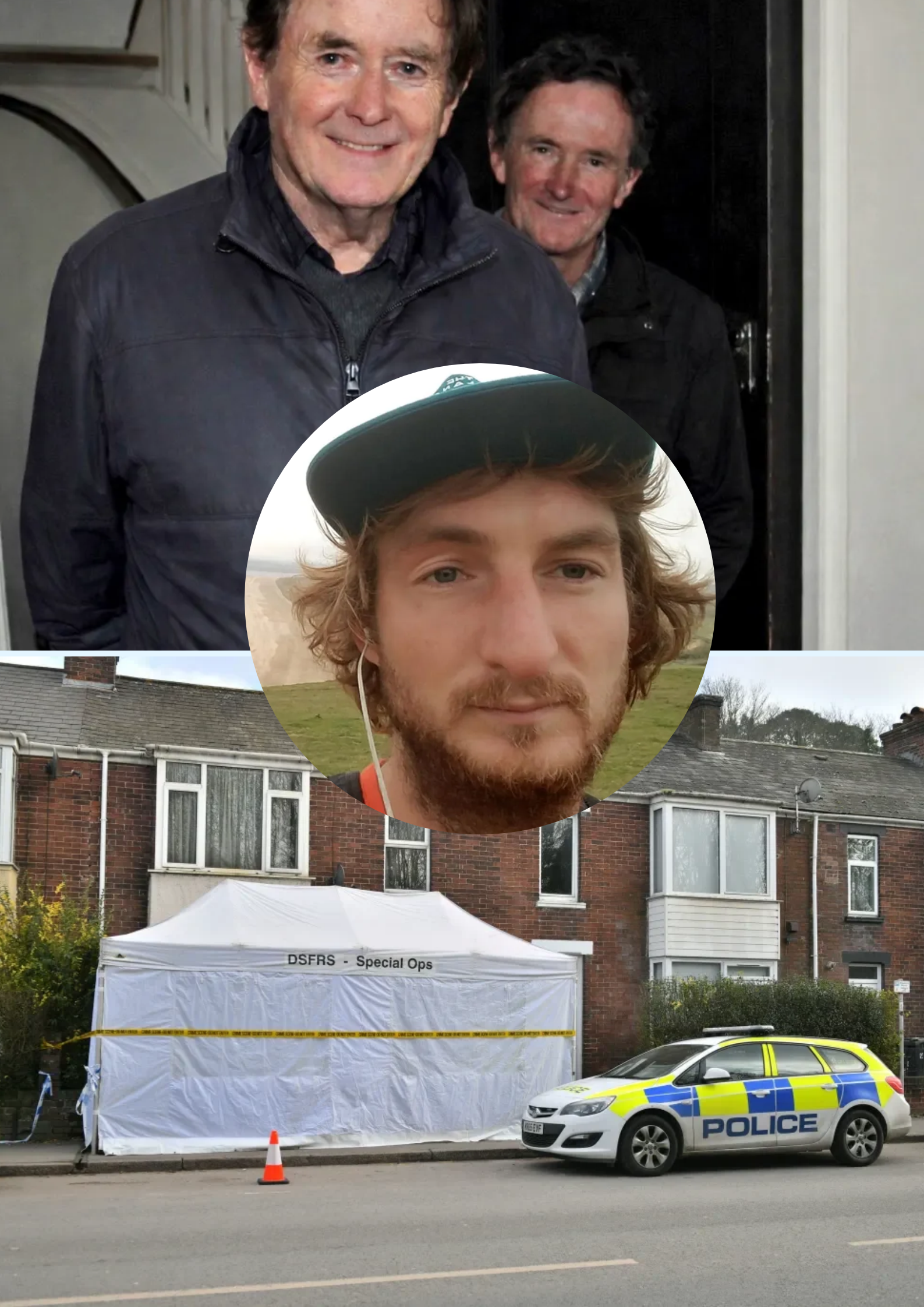
THREE PENSIONERS KILLED HOURS APART AFTER MAN WAS RELEASED FROM POLICE CUSTODY, INQUEST HEARS
Three elderly men were killed in their own homes just hours apart after the man responsible had been released from police custody, a joint inquest has heard.
Anthony “Tony” Payne, 80, was attacked with a hammer, while identical twins Dick and Roger Carter, both 84, were killed with a shovel in Exeter, Devon, on February 10, 2019.
The attacks happened just three hours apart, at homes around a mile and a half from one another.
The man responsible, Alexander Lewis-Ranwell, now 35, was later found not guilty of murder by reason of insanity and was detained indefinitely in a psychiatric hospital.
The latest evidence has emerged during joint inquests into the deaths, with the hearing examining Lewis-Ranwell’s contact with police and health professionals in the days immediately before the killings.
 RELEASED AFTER A SERIES OF INCIDENTS
Senior Coroner Philip Spinney told the jury that Lewis-Ranwell had already been arrested twice in the 24 hours before the pensioners were killed.
He had initially been detained over an alleged attempted burglary at a farm.
Around seven hours later, he was arrested again after attacking elderly farmer John Ellis with a saw.
Lewis-Ranwell was taken into custody at Barnstaple police station, where the inquest heard that his behaviour was aggressive and increasingly disturbed.
The coroner said he had to be moved between three cells after damaging them.
He was also said to have spat and repeatedly punched the hatch of his cell.
At one point, the inquest heard, he grabbed an officer’s Taser and tried to pull it from its holster before being restrained and searched.
 MENTAL HEALTH ASSESSMENT QUESTIONS
While Lewis-Ranwell was in custody, police officers carried out risk assessments and reviews.
He was examined by a force medical examiner, but a Mental Health Act assessment was not recommended at that stage.
The inquest heard that a mental health nurse was supposed to see him the following morning.
However, that assessment did not take place before Lewis-Ranwell was released from custody.
He was released from Barnstaple police station at 2.49am on February 9, according to the evidence reported by Sky News.
He later returned to custody after the incident involving Mr Ellis and was eventually released again on February 10.
He then travelled to Exeter.
It was there that the three fatal attacks took place.
THREE ATTACKS IN A MATTER OF HOURS
Anthony Payne was the first victim.
The inquest heard that Lewis-Ranwell entered Mr Payne’s home on Bonhay Road and attacked him with a hammer.
He then went to the home of identical twins Dick and Roger Carter on Cowick Lane.
The brothers were attacked with a shovel.
All three men died.
The properties were only around a mile and a half apart, with the attacks occurring approximately three hours apart.
The following morning, Lewis-Ranwell was arrested for a third time after an incident at a hotel in Exeter involving allegations of affray and possession of an offensive weapon.
It was during that period that he underwent a Mental Health Act assessment.
The assessment concluded that he was acutely psychotic, the coroner told the jury.
At that point, investigators had not yet established that he was responsible for the three deaths.
He was later identified as the suspect and arrested in hospital.
JURY FOUND HIM NOT GUILTY BY REASON OF INSANITY
Lewis-Ranwell was subsequently tried for the three murders.
In December 2019, a jury found him not guilty of murder by reason of insanity.
Three psychiatrists agreed that he was suffering from severe mental illness at the time of the attacks.
The court previously heard that he had been experiencing paranoid delusions and believed he was involved in a mission to rescue young girls from a supposed paedophile network.
The jury returned unanimous verdicts after deliberating for more than six hours.
He was subsequently detained indefinitely in a psychiatric hospital.
The case raised questions about how Lewis-Ranwell’s deteriorating mental health had been handled during his interactions with police and healthcare professionals before the killings.
Those issues are now being examined again as part of the inquests.
FAMILIES REMEMBER THE THREE MEN
Before evidence began, statements from the families of the victims were read to the inquest jury.
Dick and Roger Carter had spent virtually their entire lives together.
Their niece Amanda Taylor described the twins as gentle, kind and considerate men who remained closely involved with their wider family throughout their lives.
The brothers had worked in their family’s mushroom-growing business and continued living in the family home built by their father.
Their lifelong relationship was described as a bond that was “constant and unshakable.”
The family said they could not imagine how terrible the brothers’ final moments must have been.
‘A QUIET AND PRIVATE LIFE’
Anthony Payne’s niece Caroline Gillespie described her uncle as an animal lover who enjoyed tending his allotment.
She said Tony had built a peaceful life around simple pleasures and enjoyed activities that gave him time and privacy.
Although he was living with a friend at the time, he regularly returned to his own home to feed his cats.
It was while he was at that property on Bonhay Road that he was attacked.
His family said his sudden death was completely at odds with the quiet life he had created for himself.
INQUEST CONTINUES
Lewis-Ranwell has been formally listed as an “interested person” in the inquests but is not participating in the proceedings and is not legally represented.
The continuing hearing is examining the circumstances surrounding the deaths, including Lewis-Ranwell’s interactions with police and healthcare professionals in the days before the attacks.
The inquest is ongoing.
The case has renewed attention on the sequence of events that unfolded in Devon over several days in February 2019 — and on whether more could have been done to respond to Lewis-Ranwell’s deteriorating mental state before the three pensioners were killed.