BREAKING: Christa Pike’s Remarkable Recovery — From Believed Brain-Dead to Walking Again After Failed Execution

BREAKING: Christa Pike’s Remarkable Recovery — From Believed Brain-Dead to Walking Again After Failed Execution
Doctors reportedly feared the worst. Days later, Christa Pike was awake, speaking and taking steps with assistance. Now, serious questions remain about the lasting effects of Tennessee’s failed execution attempt.
Christa Pike’s recovery has taken an extraordinary turn after she survived Tennessee’s September 30, 2026, attempt to execute her by lethal injection.
Pike, 50, was initially unconscious and placed on a ventilator after receiving two doses of pentobarbital. According to her attorneys, she was later believed to be brain-dead, and hospital staff were preparing to withdraw life support before she unexpectedly regained consciousness and began speaking. <Cite refs={[“turn982489search1″,”turn982489search4”]}/>
What followed surprised even those closely monitoring her condition.
Within days, Pike was reportedly awake, communicating with her attorneys and beginning to move again. Her physical recovery became a major development in a case that had already raised serious questions about Tennessee’s execution procedures.
But her progress has not meant that the ordeal is over.
From Critical Condition to Taking Her First Steps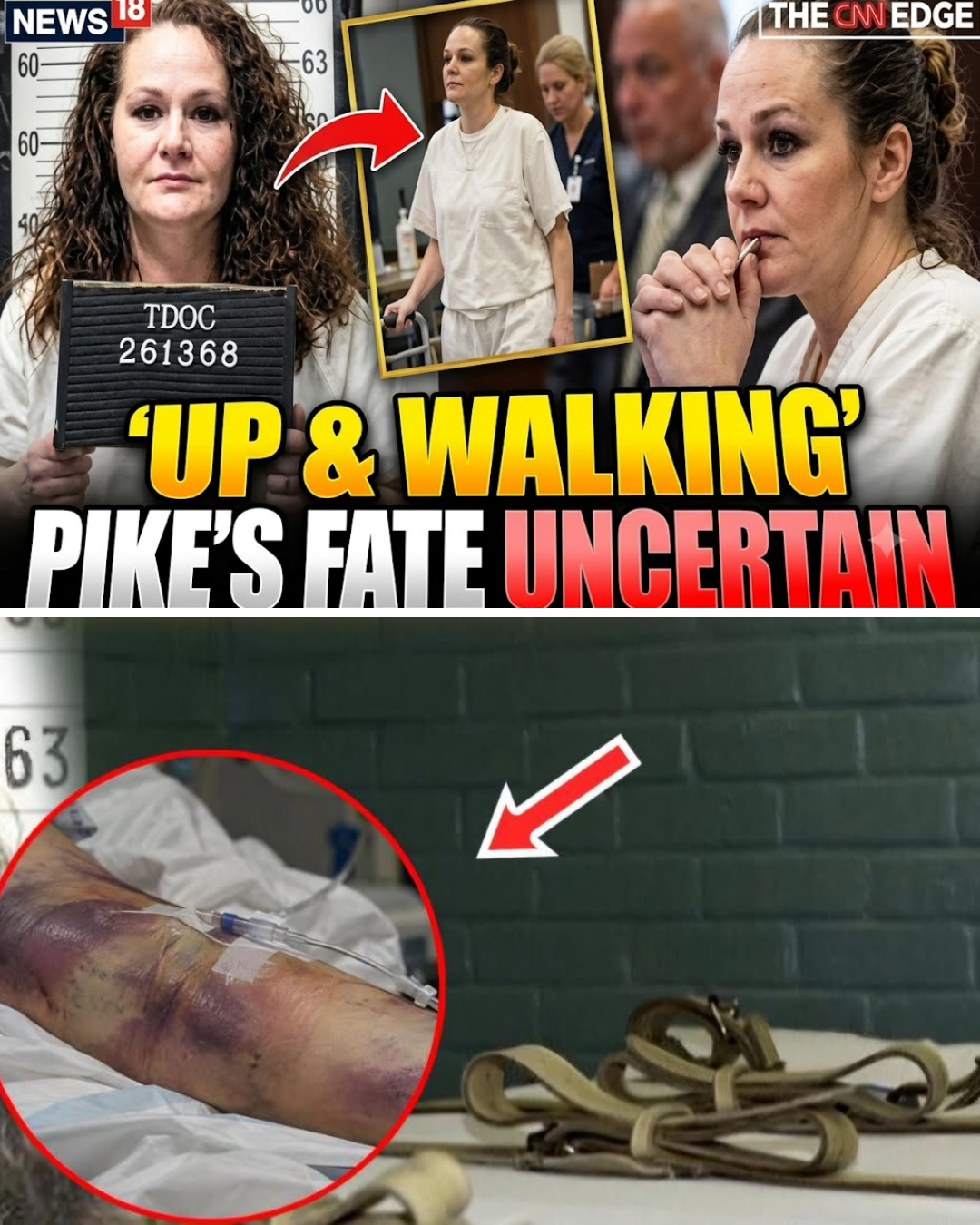
On October 8, Pike’s attorneys announced that she had begun walking short distances with assistance and had started eating again.
Her recovery marked a dramatic change from the days immediately following the failed execution, when she was unconscious, receiving respiratory support and suffering serious injuries to her arms.
Her legal team described her physical improvement as remarkable, but cautioned that doctors could not yet determine whether she would experience permanent damage. <Cite refs={[“turn982489search0″,”turn982489search1”]}/>
The injuries reportedly included burns and blistering around the injection sites. Her attorneys also described significant swelling and difficulties using her hands.
Although Pike had regained some mobility, the extent of her recovery remained uncertain.
The Hidden Battle: Memory, Concentration and Trauma
While Pike’s physical condition improved, her attorneys said she continued to struggle with cognitive difficulties.
They reported problems with concentration and memory, including losing track of thoughts while speaking. Her lawyers said medical professionals warned that it could take months to understand whether the incident had caused lasting cognitive impairment.
The psychological effects were another major concern.
According to her legal team, Pike was confused and distressed after regaining consciousness. Her attorneys also described the experience of surviving an execution attempt as profoundly traumatic.
These statements reflect information provided by her legal representatives; a definitive long-term medical prognosis has not been publicly established. <Cite refs={[“turn982489search1″,”turn982489search2”]}/>
For now, her recovery involves more than regaining the ability to walk. The extent to which she will recover her previous physical and cognitive functioning remains an open question.
Why Did Tennessee’s Execution Attempt Fail?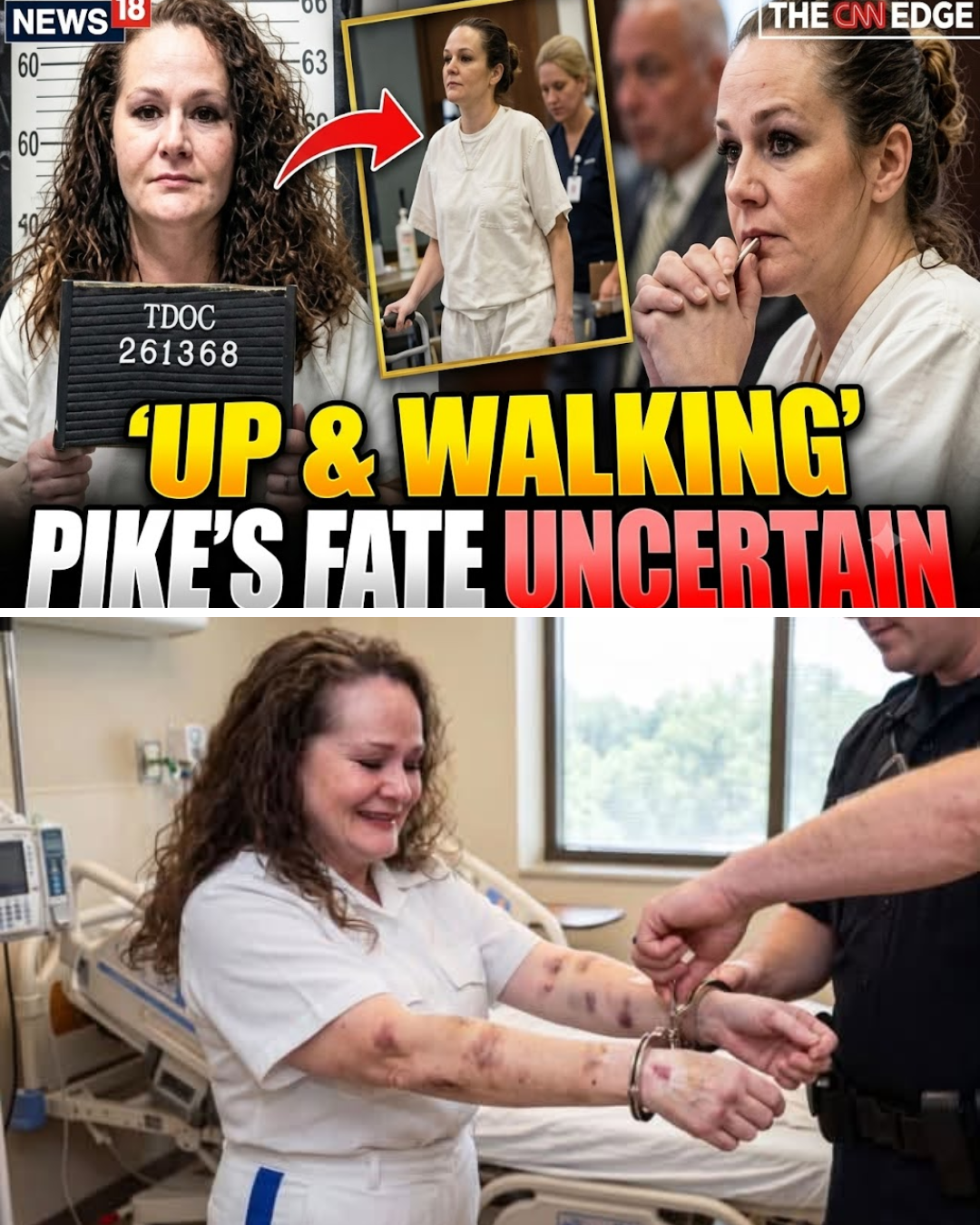
On September 30, Tennessee attempted to carry out Pike’s death sentence for the 1995 murder of her classmate, Colleen Slemmer.
The execution did not result in her death despite the administration of two doses of pentobarbital.
Pike reportedly complained that her arm was hurting during the procedure. She was subsequently taken to a hospital for emergency treatment.
Her attorneys have questioned whether the intravenous lines were correctly placed and whether the execution team recognized that something had gone wrong. Medical experts have also raised the possibility that some of the drug entered surrounding tissue rather than her bloodstream.
However, state officials have not publicly provided a definitive explanation for the failure. <Cite refs={[“turn982489search0″,”turn982489search4”]}/>
A Tennessee judge has ordered officials to preserve evidence connected to the attempt, including medical equipment, photographs, recordings and relevant documentation.
The preservation order could become important as investigators work to establish what happened inside the execution chamber.
Released From Hospital — But the Questions Remain
On October 10, Pike was discharged from the hospital and returned to the Debra K. Johnson Rehabilitation Center, where she had been incarcerated for more than 30 years.
Her attorneys confirmed that she would continue receiving medical care in prison.
The transfer marked another milestone in her recovery, but it did not establish that she had fully recovered from the injuries or cognitive difficulties reported by her legal team. <Cite refs={[“turn982489search3″,”turn982489search5”]}/>
Tennessee Governor Bill Lee has ordered an independent review of the failed execution and suspended the state’s remaining executions for the rest of 2026.
The review is expected to examine how the procedure was conducted and why it failed. No new execution date for Pike has been announced.