THE FORGOTTEN PRINCESS: THE ENDURING LEGACY OF ALEXANDRINE OF PRUSSIA
THE FORGOTTEN PRINCESS: THE ENDURING LEGACY OF ALEXANDRINE OF PRUSSIA
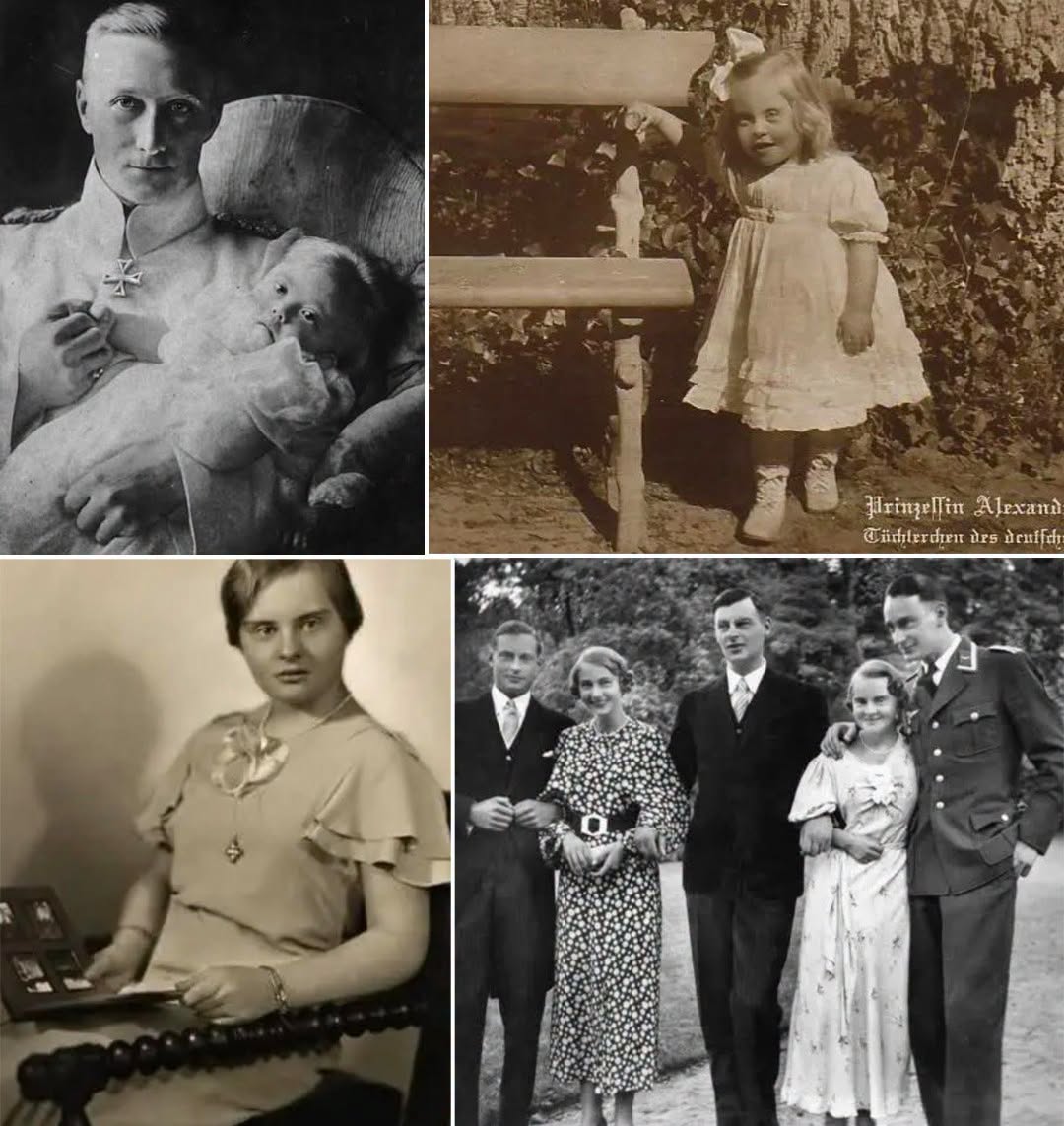
In early twentieth-century royal portraits, a young girl named Princess Alexandrine of Prussia quietly made history through her presence alone. Born on April 7, 1915, to Crown Prince Wilhelm and Crown Princess Cecilie, “Adini”—as her family affectionately called her—was the granddaughter of Germany’s last emperor, Kaiser Wilhelm II. What made her inclusion in public photographs and official postcards remarkable for her era was that Alexandrine was born with Down syndrome. At a time when society often hid individuals with intellectual disabilities from public view, her family chose to include her in the visible image of their dynasty.
Alexandrine grew up alongside her siblings, receiving specialized care and an education tailored to her needs. Between 1932 and 1934, she attended the Trüpersche educational institution in Jena, a school known for supporting children with developmental differences. Later in life, she moved to Bavaria and lived near Lake Starnberg, where relatives, particularly her brother Louis Ferdinand, regularly visited her and maintained close family ties.
Living through the fall of the German monarchy and two devastating world wars, Alexandrine passed away on October 2, 1980, at the age of sixty-five. Today, historians study her life to gain insight into the historical representation of disability, social prejudice, and family acceptance within European aristocracy. She left behind no political accomplishments or grand speeches, yet her presence in preserved portraits offers a moving testament to her humanity—a reminder of a daughter and sister whose quiet story challenges us to consider how many similar lives have been left out of mainstream history.