JAMIE OLIVER OPENS HIS HEART ABOUT RAISING NEURODIVERGENT CHILDREN — AND THE MESSAGE EVERY PARENT NEEDS TO HEAR
JAMIE OLIVER OPENS HIS HEART ABOUT RAISING NEURODIVERGENT CHILDREN — AND THE MESSAGE EVERY PARENT NEEDS TO HEAR
The celebrity chef has spoken emotionally about the challenges his family has faced with dyslexia, ADHD and autism, urging parents to help children recognise their strengths rather than feel ashamed of being different.
Jamie Oliver is sharing a heartfelt message about parenting, reminding families that children who learn or experience the world differently should never be made to feel less intelligent or less capable.
The father of five has previously spoken openly about the neurodiversity within his family, revealing that several family members have received diagnoses involving dyslexia, attention deficit hyperactivity disorder (ADHD) and autism spectrum disorder.
Rather than treating those differences as something to hide, Jamie says understanding how his children see the world has helped him and his wife, Jools, become more supportive parents.
Speaking in a video shared by Good Housekeeping UK, the television chef addressed parents who worry about their children struggling at school.
He acknowledged how exhausting it can be for parents to repeatedly fight for their children to receive the understanding and support they need.
Jamie explained that children who are described as rude, aggressive or impatient may actually be struggling with frustration because they feel misunderstood.
“They’re frustrated because they always feel thick, stupid, and dumb, and unseen,” he said.
He also offered reassurance to parents who sometimes question whether they are doing enough.
“The fact that you care means you’re an amazing parent,” Jamie said, encouraging families to help children build confidence around the things they are good at.
 A different way of seeing the world
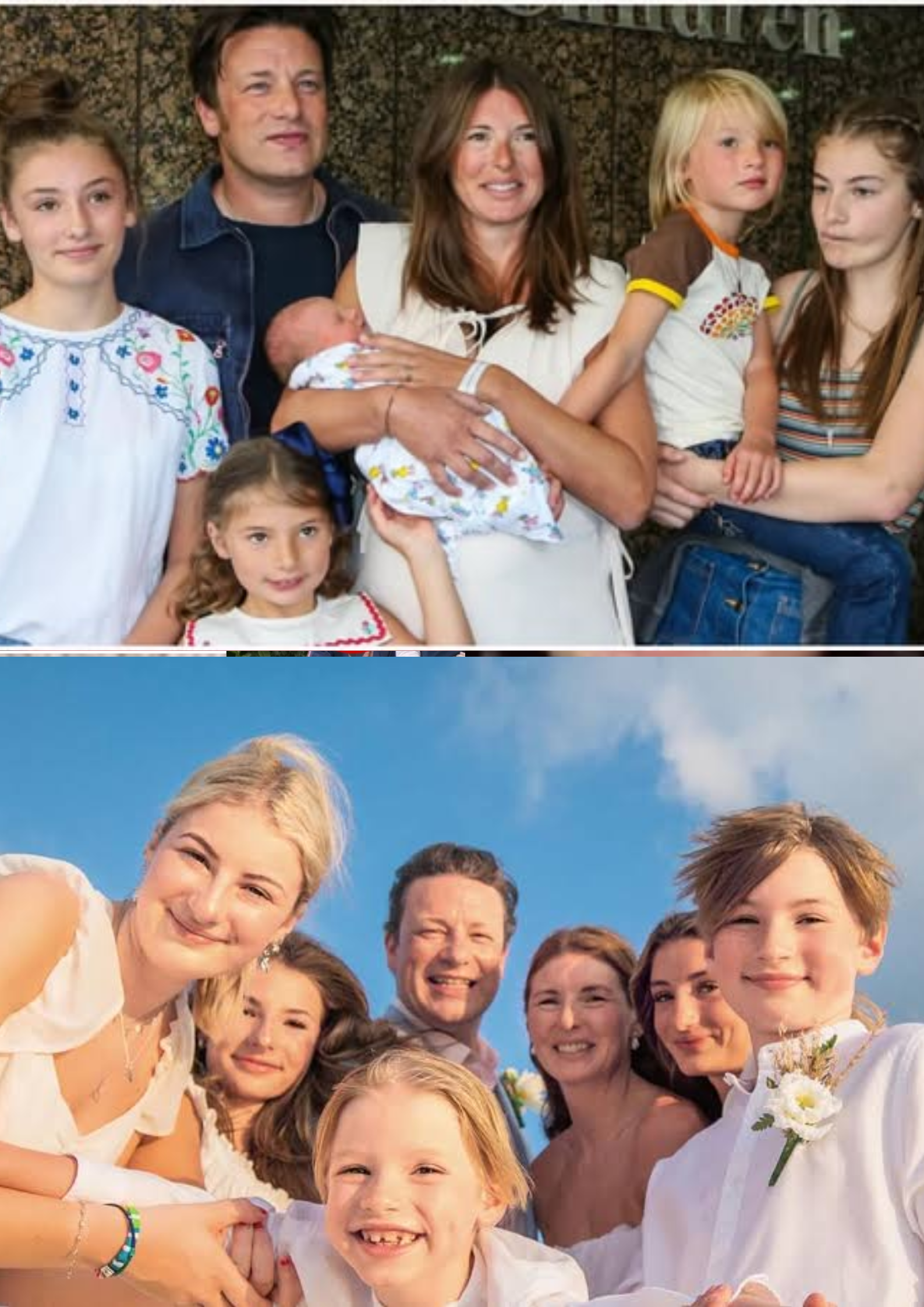
Jamie and Jools share five children: Poppy, Daisy, Petal, Buddy and River.
In an interview with The Sunday Times Magazine in 2025, Jamie revealed that several of their children had received neurodivergence-related diagnoses.
He explained that he and Jools regularly talk about their children and have gradually learned to understand that some behaviours come from seeing and experiencing situations differently.
“Knowing that allows you to be a better parent,” he said.
The chef has not publicly identified which of his children has each diagnosis, but he has made clear that understanding their individual needs has changed the way the family approaches everyday life.
Jamie has also described their household as wonderfully chaotic, joking about what happens when several neurodivergent family members are trying to get their points across around the dinner table.
 Jamie knows what it feels like to struggle at school
His passion for the subject is also deeply personal.
Jamie has spoken for years about growing up with dyslexia and finding traditional education difficult. Reading and writing were major challenges, and he has described how being misunderstood at school affected his confidence.
Cooking eventually gave him a way to discover his abilities and build a career, despite the difficulties he experienced in the classroom.
In 2025, he presented Jamie’s Dyslexia Revolution, a Channel 4 documentary exploring the challenges faced by children with dyslexia and calling for better support within the education system.
He has also visited schools to encourage pupils to celebrate their neurodiversity, explaining that people who think differently can approach problems in different ways and find solutions others might not see.
Jools Oliver shares her own diagnosis
The family’s conversation about neurodiversity has continued to develop.
In October 2026, Jools Oliver publicly revealed that she had been diagnosed with ADHD and autism. She explained that recognising similar experiences among her children encouraged her to seek answers about herself.
She described the experience of living without understanding her own neurodivergence as emotionally exhausting, saying it had affected much of her life.
Her revelation added another personal dimension to the family’s openness about the subject.
Every child deserves to feel valued
For Jamie, the message goes beyond diagnoses or labels.
He wants children to grow up understanding that struggling with reading, writing, concentration or social situations does not mean they lack intelligence or potential.
Parents, teachers and schools all have a role in recognising individual strengths and providing the support children need to develop confidence.
His message is a reminder that children do not all have to learn in the same way, follow the same path or fit the same expectations.
Sometimes, what a child needs most is simply someone who understands them, believes in them and helps them discover what makes them special.