1,300 FLIGHT HOURS AT JUST 20: THE RECORD AND TRAINING BEHIND NATHALIA FILGUEIRAS’ ROLE AS LEARJET 60 COPILOT
1,300 FLIGHT HOURS AT JUST 20: THE RECORD AND TRAINING BEHIND NATHALIA FILGUEIRAS’ ROLE AS LEARJET 60 COPILOT
As questions and speculation continue following the November 1 Learjet 60 crash in Florida, one issue has drawn particular attention: the qualifications of 20-year-old First Officer Nathalia Gadelha Filgueiras.
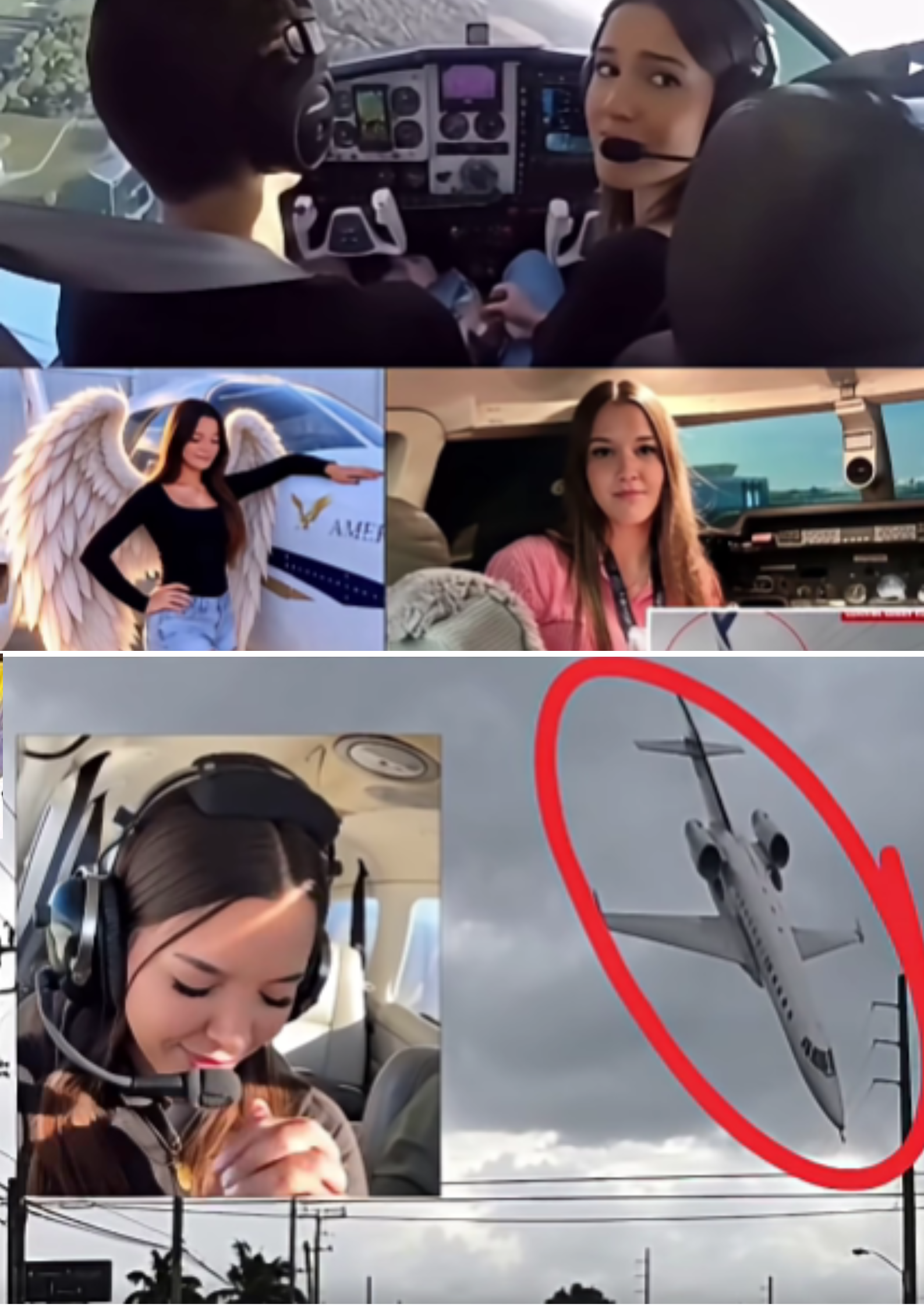
Her family has spoken out to defend her professional record, emphasizing that she was not an inexperienced newcomer to aviation. By the time of the fatal flight, Filgueiras had reportedly accumulated more than 1,300 hours in the air, held commercial pilot and Certified Flight Instructor credentials, and completed specialized training for the Learjet 60.
Her achievements are now an important part of the public discussion surrounding the crash — particularly after online commentary questioned whether someone so young could be qualified to serve as second-in-command on a private charter jet.
But understanding her qualifications requires looking beyond her age and total flight hours.
A YOUNG PILOT WHO HAD BEEN PURSUING AVIATION FOR YEARS
Filgueiras developed an interest in flying at an early age. Her father, Allan Filgueiras, introduced her to aviation when she was around 12, taking her on flights and helping nurture a passion that would eventually become her career.
By 17, she had earned her private pilot certificate — before she even obtained a driver’s license.
She continued building her experience through professional flight training, eventually earning commercial pilot and flight instructor credentials.
Her family described her as determined, hardworking and deeply committed to aviation.
In interviews following the crash, her father recalled how flying became the center of their relationship. They regularly discussed aircraft, procedures and the technical challenges of piloting.
As her experience grew, Nathalia even helped her father practice emergency procedures and instrument-flight scenarios.
For her, becoming a professional pilot was not a sudden opportunity. It was a goal she had pursued for years.
 WHAT DID HER 1,300 FLIGHT HOURS REPRESENT?
Reports following the crash placed Filgueiras’ total flight experience at more than 1,300 hours.
That figure is significant for a pilot who was only 20 years old. It reflects years of training and flying experience accumulated at an unusually young age.
Her background also included work as a flight instructor, meaning she had experience not only operating aircraft but helping other pilots develop their skills.
Her family and representatives have emphasized these credentials in response to criticism about her age.
However, flight hours alone do not determine whether a pilot is qualified for a particular aircraft or operation. The relevant certificates, ratings, recent experience, aircraft-specific training and operator checks must also be considered.
WHAT FAA PART 135 ACTUALLY REQUIRES OF A SECOND-IN-COMMAND PILOT
The legal requirements for a second-in-command pilot operating under FAA Part 135 are set out in 14 CFR § 135.245.
Generally, the regulation requires an SIC to hold at least a commercial pilot certificate with the appropriate aircraft category and class ratings, together with an instrument rating.
For operations conducted under instrument flight rules, the pilot must also satisfy the applicable instrument-experience requirements.
Part 135 operators have additional responsibilities involving crew training, testing and qualification. These requirements are addressed in other sections of the regulations, including Subparts G and H.
This distinction matters: the 1,300-hour figure is not a universal minimum imposed by § 135.245. Nor does that section, by itself, establish every requirement for serving on a specific Learjet 60 flight.
An aircraft-specific qualification or type-rating process is a separate part of the broader training and qualification picture.
Accordingly, Filgueiras’ reported credentials are relevant to assessing her professional background, but a complete determination of regulatory compliance would require reviewing the operator’s records and the applicable FAA documentation.
 THE LEARJET 60 TRAINING AND HER PROFESSIONAL RECORD
Reports about Filgueiras’ training describe specialized preparation for the Learjet 60, including a type-rating check ride reportedly completed in March 2026.
Her family has also emphasized that she held the necessary professional credentials and had substantial experience before joining the charter operation.
These details help explain why her representatives have pushed back against claims that her youth alone should be treated as evidence of inadequate qualifications.
Still, the distinction between holding a pilot certificate, completing a type-rating process and satisfying all operator-specific SIC requirements is important.
The full training and employment records would be needed to establish every detail of her qualification for the accident flight.
WHAT INVESTIGATORS KNOW ABOUT THE NOVEMBER 1 CRASH
The Learjet 60 was operated by Aurora Aviation, doing business as Upper Jet, on a charter flight from Austin-Bergstrom International Airport in Texas to North Eleuthera in the Bahamas.
On November 1, 2026, the aircraft crashed near Greenacres, Florida. All nine people aboard were killed.
The crew had reported icing conditions and moderate turbulence before the aircraft entered a rapid descent.
Investigators are examining the aircraft’s breakup and the sequence of events leading to the impact.
One particularly important discovery was the recovery of portions of the left elevator in multiple pieces, some found miles from the main crash site. That evidence indicates that parts of the aircraft separated before impact, although investigators have not established whether the elevator’s separation initiated the emergency or occurred as a consequence of other forces.
THE COCKPIT VOICE RECORDER COULD PROVIDE CRITICAL EVIDENCE
The National Transportation Safety Board announced on November 9 that investigators had recovered the cockpit voice recorder from the initial impact area.
The device was taken to the NTSB’s Vehicle Recorders Laboratory in Washington, D.C., for evaluation.
The recorder may help investigators reconstruct the crew’s communications, cockpit warnings and actions during the final moments of the flight.
The NTSB has also recovered components from the wings, engines, flight deck, horizontal and vertical stabilizers, elevator and other aircraft structures. Some pieces have been sent to its laboratories for further examination.
At this stage, investigators have not announced a final cause.
Icing, turbulence, aircraft performance and the structural breakup are among the issues requiring careful examination. It would be premature to conclude that any one factor caused the crash.
REMEMBERING NATHALIA BEYOND THE INVESTIGATION
For her family, the discussion about certificates, flight hours and aircraft qualifications is also deeply personal.
They want Nathalia remembered as a young woman who worked relentlessly toward a dream she had carried since childhood.
Her father has spoken about the bond they shared through aviation and his determination to continue flying in her memory.
At just 20 years old, Filgueiras had already built a professional flying career and accumulated experience that many people spend years working toward.
The investigation into the Learjet 60 crash continues. The NTSB’s findings will ultimately determine what happened to the aircraft — not speculation about the age or appearance of one of its pilots.
For now, her family is asking that her dedication, training and love of flying be recognized alongside the tragedy that took her life.