TENERIFE MANAGER HITS BACK AT PIQUÉ OVER OWONO’S 12-GAME BAN AFTER PLAYER’S DEATH: “THE INCIDENT COULD HAVE BEEN AVOIDED”
TENERIFE MANAGER HITS BACK AT PIQUÉ OVER OWONO’S 12-GAME BAN AFTER PLAYER’S DEATH: “THE INCIDENT COULD HAVE BEEN AVOIDED”
The tragic death of Spanish footballer Jesús de Miguel has sparked a growing dispute between FC Andorra owner Gerard Piqué and CD Tenerife manager Álvaro Cervera over the punishment handed to goalkeeper Jesús Owono.
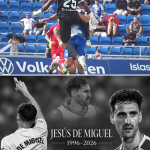
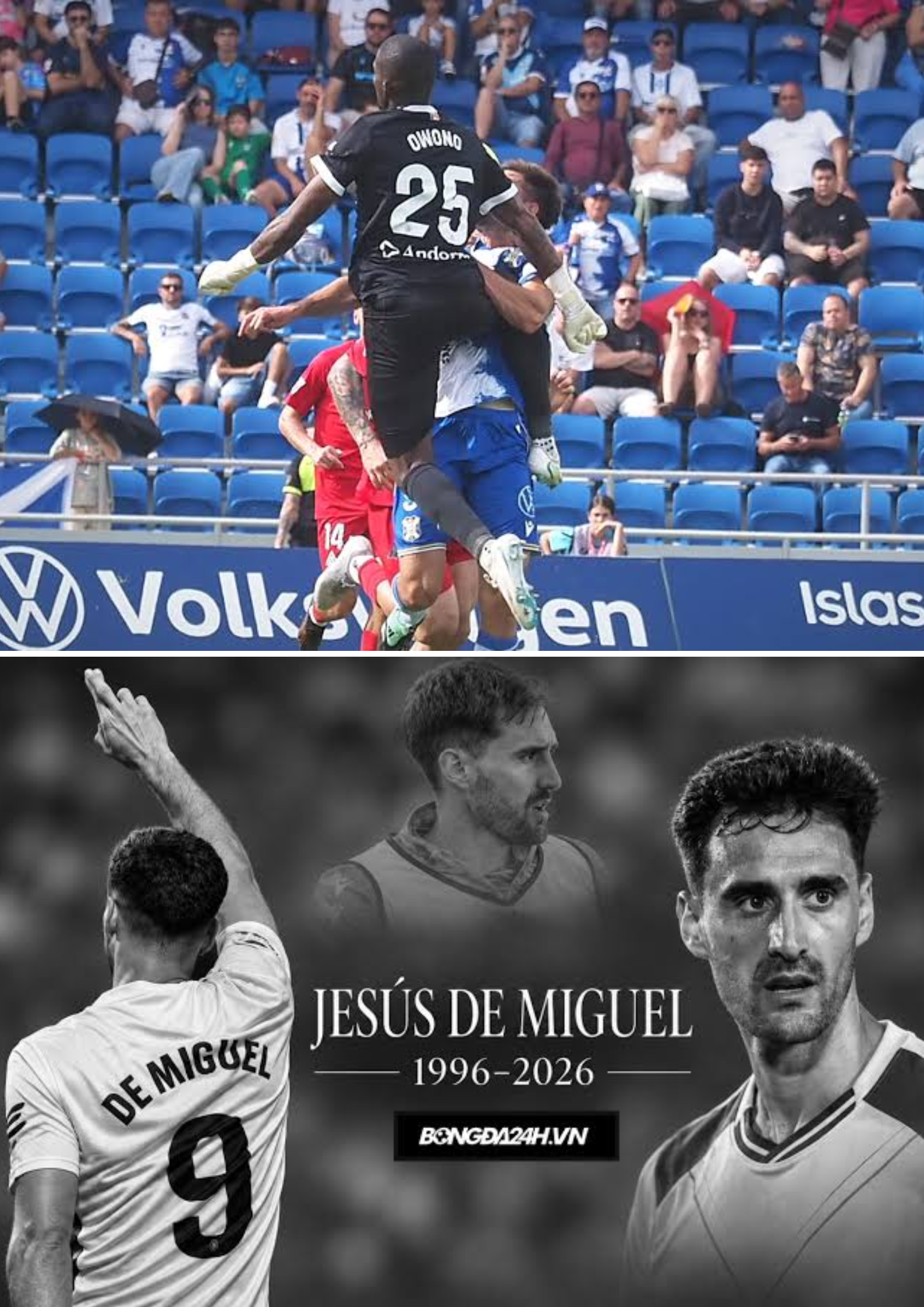
Owono was suspended for 12 matches after a collision with De Miguel during a Spanish second-division match on November 2. The Tenerife striker, 30, died in hospital the following day.
While Piqué believes the goalkeeper has been unfairly punished for the tragic consequences of what he considers an accident, Cervera has challenged that interpretation, arguing that the incident itself could have been avoided.
The disagreement has reignited debate over responsibility, disciplinary rules and how football should respond when an on-field collision ends in the death of a player.
 THE COLLISION THAT SHOCKED SPANISH FOOTBALL
The incident happened late in the match between CD Tenerife and FC Andorra at the Heliodoro Rodríguez López Stadium on November 2, 2026.
During a challenge for an aerial ball, Andorra goalkeeper Jesús Owono came out of his goal and collided with Tenerife forward Jesús de Miguel.
The referee sent Owono off in the 90th minute after the goalkeeper struck De Miguel in the chest with his raised leg.
The official match report described the contact as a forceful impact involving excessive force while the ball was in play.
Medical staff rushed onto the pitch to assist De Miguel. The forward was eventually taken to hospital and admitted to intensive care.
Despite medical efforts, De Miguel died on November 3, at the age of 30.
The match was abandoned following the emergency, with both teams unable to continue. The Spanish football authorities later decided that the 2-2 scoreline would stand.
OWONO RECEIVES THE MAXIMUM 12-MATCH SUSPENSION
On November 13, the Spanish Football Federation’s Disciplinary Committee announced a 12-match suspension for Owono, the maximum punishment available under the relevant disciplinary provision.
In its decision, the committee said it had assessed the incident using the facts recorded in the referee’s report.
The ruling specifically referred to the raised leg, the force of the impact and the referee’s description of excessive force.
The committee classified the conduct as a serious offence under Article 102 of the RFEF Disciplinary Code and concluded that the circumstances justified the maximum suspension.
The decision did not mean that the federation had determined criminal responsibility for De Miguel’s death. The sporting disciplinary process and the separate police investigation are distinct matters.
Owono, 25, an international goalkeeper for Equatorial Guinea, has expressed deep sorrow over De Miguel’s death.
In a statement released through FC Andorra, he described the period as the hardest days of his life and said his thoughts were with De Miguel, his family and everyone who loved him.
He also said he would face the issues arising from the incident with respect.
 GERARD PIQUÉ QUESTIONS WHETHER THE PUNISHMENT IS FAIR
FC Andorra owner Gerard Piqué publicly defended Owono after the disciplinary decision.
In a video shared on social media, the former Barcelona and Spain defender argued that the punishment should be based on the action itself rather than the tragic consequences.
Piqué said he believed the incident was an accident and that Owono should not be held responsible for everything that happened as a result.
He also questioned whether the goalkeeper deserved the maximum possible suspension.
To explain his position, Piqué referred to another recent incident in Spanish football involving Albacete winger José Corpas and Sabadell midfielder Quadri Liameed.
Corpas accidentally kicked Liameed in the head during a match. Liameed was knocked unconscious but later left hospital after medical checks. Corpas received a three-match suspension.
Piqué compared the two disciplinary decisions, asking whether football authorities were punishing the action itself or the consequences that followed.
He also acknowledged the human cost of the Tenerife tragedy, saying that no suspension could bring De Miguel back.
Piqué added that Owono would likely need considerably more than 12 matches before he felt ready to return to competitive football.
ÁLVARO CERVERA RESPONDS: “THE ACTION COULD HAVE BEEN AVOIDED”
Tenerife manager Álvaro Cervera has now pushed back against Piqué’s comments.
Speaking to reporters on November 17, Cervera said he understood that Piqué, as FC Andorra’s majority owner, had a responsibility to defend his club and its players.
However, he disagreed with the suggestion that the incident should simply be viewed as an unavoidable accident.
Cervera said he had not watched Piqué’s video but had read his comments. He suggested that Piqué should review the actual footage of the collision before reaching a conclusion.
The Tenerife manager then made his position clear.
“I think the action could have been avoided. It is not one of those actions we see every day,” Cervera said, according to Cadena SER.
Cervera also acknowledged that people close to him held different opinions about the incident. He said he did not intend to make a more extensive public judgment about what happened.
His comments nevertheless highlighted the fundamental disagreement between the two football figures: Piqué is emphasizing the accidental nature of the collision and the limits of disciplinary punishment, while Cervera believes the nature of the challenge deserves closer scrutiny.
FC ANDORRA SAYS OWONO MAY NEED MORE TIME
FC Andorra sporting director Jaume Nogués has also spoken about the situation.
Although he shares concerns about the severity of the suspension, Nogués has urged people not to turn Owono into another victim of the tragedy.
He expressed hope that the goalkeeper would eventually be able to return to football after serving his punishment.
Piqué has indicated that the club is not expecting Owono to return immediately once the 12-match suspension is completed.
The goalkeeper has also withdrawn from Equatorial Guinea’s squad for its Africa Cup of Nations qualifying fixtures against Zimbabwe.
For now, his future in football remains uncertain.
POLICE INVESTIGATION REMAINS SEPARATE FROM THE FOOTBALL SANCTION
Beyond the disciplinary dispute, Spanish police have opened an investigation into the circumstances surrounding De Miguel’s death, including possible involuntary manslaughter.
The investigation is being conducted separately from the RFEF disciplinary proceedings.
The federation’s decision addressed Owono’s conduct on the pitch under football regulations. Any question of criminal liability must be examined through the appropriate legal process.
No criminal finding should be inferred from the 12-match suspension alone.
The tragedy has left both clubs and the wider Spanish football community mourning De Miguel, while also placing Owono in an extraordinarily difficult position.
A DEBATE WITH NO EASY ANSWERS
The disagreement between Piqué and Cervera reflects a difficult question for professional football: how should the sport judge a challenge when the action itself is disputed and the consequences are irreversible?
Piqué argues that Owono should not be punished simply because the outcome was fatal. Cervera believes the challenge could have been avoided and should not be treated as an ordinary collision.
Meanwhile, the official disciplinary ruling has imposed the maximum 12-match suspension, and the police investigation continues independently.
At the center of the debate remains the loss of Jesús de Miguel, a 30-year-old footballer whose death has deeply affected his teammates, supporters and the Spanish football community.